
Displaying items by tag: ETA Creative Arts Foundation
Detroit ’67: A Basement Becomes a City on the Brink
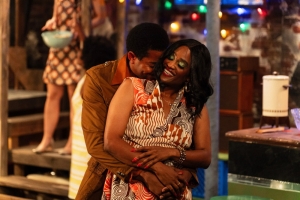
Detroit was burning in the summer of 1967, inside one basement, life was still going on.
That contrast is at the heart of Dominique Morisseau’s Detroit ’67, now being produced by Pulse Theatre Company in residence at eta Creative Arts Foundation. Directed by Pulse Executive Artistic Director Aaron Reese Boseman, with assistance from the wonderful AnJi White, the production takes us into the lives of people trying to maintain some sense of normalcy as their city moves toward upheaval.
The summer of 1967 was a year of enormous social and political upheaval. Detroit’s Black community was confronting racial discrimination, police brutality and economic inequality while the city was experiencing major changes in population, industry and employment.
Then came July 23.
A police raid on an after-hours establishment on Detroit’s 12th Street ignited five days of unrest. The uprising reflected longstanding tensions involving racial discrimination, police-community relations, economic inequality and the changing landscape of the city. Forty-three people died, hundreds were injured, thousands were arrested, and buildings throughout Detroit were destroyed or damaged.
Yet Morisseau doesn't put the uprising on display for us.
Instead, she puts us in a basement and allows us to listen to the people who have something to lose.
And what a basement it is.
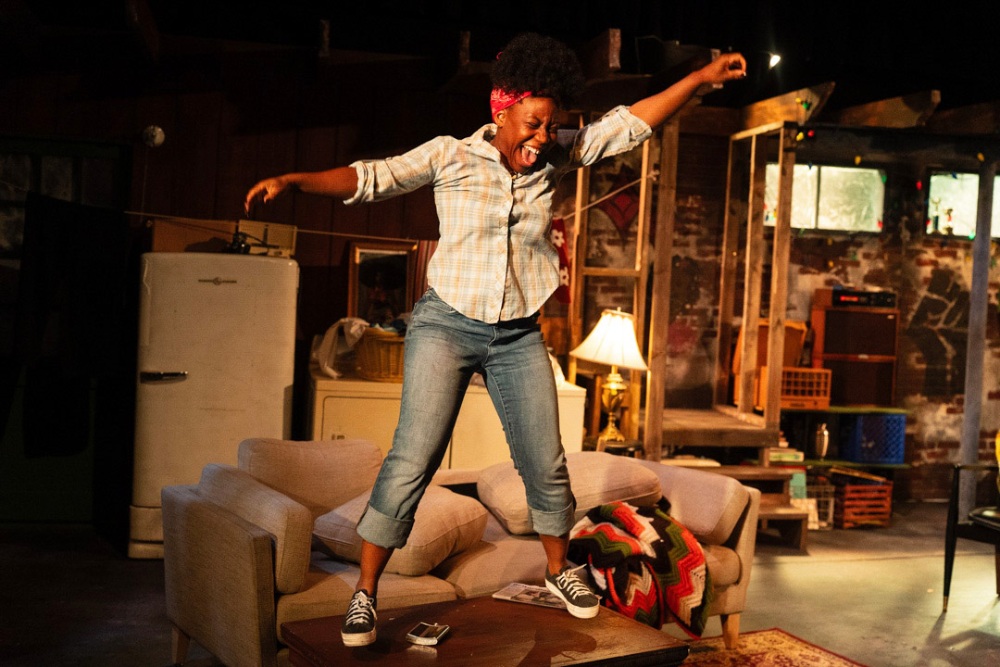
Photo Credit: Aaron Reese Boseman
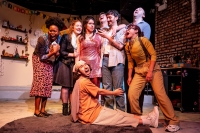
Kevin M. Rolfs has created a remarkably realistic environment for this after-hours joint. An old washer and dryer, a well-used sofa, a period bar, scraps of wood and exposed beams make the space feel genuinely lived in rather than simply designed. Look around and you will find virtually everything you would expect in a 1960s Detroit basement.
Rolfs has proven himself a master designer, and this is among his best work.
Levi J. Wilkins’ lighting design is equally impressive. The basement does not exist in isolation. Light from outside constantly reminds us that another world is happening beyond those walls. The working fixtures inside, combined with changing light through the windows, establish the passage of time with remarkable precision.
Together with Warren Levon’s sound design, Terri Devine’s period-perfect costumes, and Rueben Echoles’ hair and makeup, the production creates an immersive portrait of 1967 Detroit. The design team doesn’t simply tell us we are in Detroit in 1967—they make us feel that we are there.
To say the ensemble is outstanding would be an understatement.
Shenise Danyel, whom I vividly remember as the maid in Invictus Theatre’s The House That Will Not Stand, is exceptional as Chelle, the level-headed sister whose strength anchors the household.
Tamarus Harvell another exceptional actor, plays Lank, a recent Vietnam veteran carrying dreams and the complicated weight of returning home from war. His presence reflects another reality of 1967: America was deeply immersed in Vietnam, with young men—including many Black and working-class men—being drafted into military service.
Jimiece Gilbert brings confidence and energy to Bunny, the best friend who knows exactly who she is.
Emma Jean Eastlund plays Caroline, a woman carrying secrets beneath the surface.
And then there is Dairyon Bolden as Sly.
Bolden was the biggest surprise for me. He is a genuine scene stealer, commanding every moment he occupies. That is no small accomplishment with a cast of this caliber. Bolden understands that commanding a scene does not necessarily mean being the loudest person in it. His choices are specific, confident and compelling.
Boseman’s direction brings the emotional life of Morisseau’s play to the surface without forcing it. The pacing is deliberate, and his decision to avoid blackouts between scenes works particularly well. The scenes roll smoothly into one another, creating the sense that life in this basement simply continues. There is no interruption between one emotional moment and the next. The outside world may be changing dramatically, but inside this basement, people still have to live, love, argue, dream and make decisions.
That contrast becomes one of the production’s greatest strengths.
The audience knows what is happening outside. The characters know what is happening outside. Yet the basement remains a place of refuge, business, friendship and possibility.
And that makes the history feel personal.
Detroit ’67 is ultimately about much more than an uprising. Through Morisseau’s writing, it becomes a story about people trying to hold onto one another while the world around them changes. The historical events give the play its pressure, but the characters give it its heart.
Pulse Theatre Company’s 2026–27 season is dedicated to examining Black life, family, memory and mental health across generations. Beginning with Detroit ’67, the company has established a compelling foundation for that exploration.
For Pulse Theatre Company, Detroit ’67 is not simply a production about 1967.
It is a reminder that history lives in rooms, in families, in memories—and sometimes, in a basement where the outside world is beginning to burn.
Highly Recommended
When: Through Nov. 1
Monday, Friday & Saturday 7:30pm
Saturday & Sunday 3:00pm
Where: eta Creative Arts Foundation 7558 S. Chicago Ave. Chicago, Ill.
Running time: 2 hours, 30 mins.
Tickets: $25-$40
(872)306-5734
ETA’s for colored girls Honors the Enduring Power of Ntozake Shange
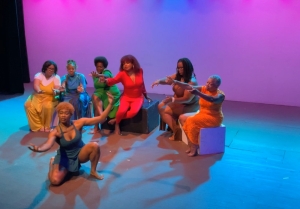
Nearly fifty years after its groundbreaking premiere, Ntozake Shange's for colored girls who have considered suicide / when the rainbow is enuf remains one of the most important works ever written for the American stage. Neither conventional play nor musical, Shange called her work a "choreopoem," a seamless fusion of poetry, dance, music, and theatrical ritual that forever changed the landscape of Black theatre.
When the work premiered in 1976 it shattered theatrical conventions. The original production gave Black women something rarely afforded on the American stage: the authority to tell their own stories without apology, through language that was lyrical, raw, sensual, political, and deeply personal. At a time when Black women were often relegated to supporting roles in theatre, Shange centered their voices, their pain, their joy, and ultimately, their survival. The production earned multiple Tony Award nominations and cemented itself as a cornerstone of the American theatrical canon.
Its relevance today is perhaps even more striking. In an era shaped by conversations surrounding gender-based violence, mental health, reproductive autonomy, identity, and the ongoing struggle for Black women to be fully seen and heard, Shange's words continue to resonate with astonishing clarity. The emotional truths embedded in her poetry refuse to age.
ETA Creative Arts Foundation's production, directed by Donn Carl Harper, wisely understands that the strength of for colored girls lies in trusting Shange's language. Harper resists the temptation to over-direct or impose unnecessary concepts upon the material. His direction is careful, respectful, and largely unobtrusive, allowing the poetry to remain the undeniable centerpiece.
The production, however, begins on an unfortunate note. Opening night started approximately thirty minutes late, a delay that inevitably affected the audience's energy. Compounding that issue was the decision to open with Nina Simone's haunting "Four Women." While Simone's anthem is unquestionably a masterpiece and shares thematic kinship with Shange's work, its placement here felt somewhat gratuitous. After already waiting half an hour, the audience was asked to spend another five minutes listening to a recorded song while nothing occurred onstage. Rather than heightening anticipation, the extended prelude tested the audience's patience before the choreopoem had the opportunity to speak for itself.
Once the production settles into Shange's text, however, it finds its rhythm.
Levi Wilkins' abstract scenic design provides an uncluttered visual landscape that allows the performers to inhabit both literal and emotional spaces. His lighting effectively supports the shifting moods of the evening, although both scenic and lighting concepts occasionally seem content to complement the material rather than challenge it. Given the limitless theatrical possibilities inherent in a choreopoem, I wish he would have made bolder visual choices that embrace the work's dreamlike qualities.
Markene Peavy's costume designs honor the play's iconic color symbolism, a safe choice, but it doesn't distinguish each woman as individuals, a missed opportunity. Peavy's choreography becomes the production's most compelling storytelling device. Rather than serving as decorative movement between monologues, the choreography extends Shange's language into the body, allowing emotion to continue flowing.
Among the ensemble, Madison Savannah (Lady in Purple) emerges as an exceptional physical storyteller. Her dancing possesses remarkable precision, grace, and emotional transparency, making every movement feel deeply connected to the poetry. She consistently commands attention without disrupting the ensemble's collective balance.
The performances throughout demonstrate a clear understanding that these women are not individual characters so much as facets of a shared experience.
Tina Marie (Lady in Red) delivers her poetry with commanding authority and emotional maturity. Margo Harper (Lady in Blue) brings quiet dignity and introspection, while Deborah Ross (Lady in Green) grounds her moments with warmth and humanity. Tracey Renee (Lady in Orange) finds welcome humor amid the heartbreak, providing necessary moments of emotional release. L.A. Holts (Lady in Yellow) infuses her work with youthful vitality and infectious spirit. Kennedi Coleman (Lady in Brown) offers moments of thoughtful restraint that contribute beautifully to the ensemble's collective voice.
Opening night also presented an increasingly familiar frustration that falls outside the production itself but nonetheless affected the theatrical experience. The persistent glow of cell phones and repeated audience distractions proved difficult to ignore. Theatre remains one of the few art forms built upon a shared agreement between artists and audience to be fully present in the moment. When that agreement is repeatedly broken, everyone in the room loses something.
Even with its uneven opening and a few missed opportunities for greater theatrical imagination,
ETA's production succeeds where it matters most: it trusts Shange.
That trust is ultimately enough.
Nearly fifty years after its premiere, for colored girls who have considered suicide / when the rainbow Is enuf continues to remind audiences that Black women's stories are not peripheral to the American experience - they are central to it. Their pain, laughter, sensuality, vulnerability, resilience, and joy remain as urgent today as they were in 1976.
Shange did more than write a play. She created a language for survival.
ETA Creative Arts Foundation honors that legacy with sincerity, sensitivity, and respect, reminding us that some masterpieces require no reinvention- only artists willing to listen deeply enough to let them speak.
Recommended
When: thru August 31
Where: 7558 South Chicago Ave Chicago
Tickets: $30 - $50 general admission
'Once on This Island' - A Caribbean Fairytale with a Modern Twist

“Once On This Island” is receiving a spirited and lively revival by Pulse Theatre at the once venerable ETA Creative Arts Foundation, now a rental space on the Southside of Chicago.
Set in the French Antilles, namely Haiti, this vibrant production rivals any Broadway In Chicago production. It is a large production with a cast of 25, including young children. The story follows the star-crossed love between Ti Moune, (the captivating Alexandria Simone Irby) a young peasant girl with a yearning for something more than her humble existence would allow and Daniel Beauxhomme (the gifted David Taylor) the son of the lighter skinned grand hommes who are rich and comfortable. Their romance is challenged by class and racial prejudices, quite a lot for a fairytale, luckily the gods are there to guide them. The gods, inspired by Haitian Vodou are Asaka (Marquetta Jackson) mother of the earth, Agwe (Kendall Devin Bell) God of Water, Erzulie (Paige Rene Brown) Goddess of Love and Papa Ge (Isis Elizabeth) the Demon of Death.
These four gods, each with their unique domains and influences, play a significant role in shaping the narrative of “Once on This Island” They test the characters faith, challenge their choices, and ultimately determine their fates.
Director Aaron Reese Boseman and Associate Director and Choreographer Florence Walker-Harris masterfully weaves dance and movement into the narrative, creating an immersive and captivating atmosphere. The audience is swept away by the energetic calypso rhythms, ecstatic ritual dances and even a jazzy French quadrille. All are seamlessly integrated into the storytelling.
The staging is further enhanced by the extraordinary work of scenic designer Russell Hogenson’s interpretation of the Palace of Sans-Souci in Haiti. Although I would have liked to see an actual gate separating the peasants from the leisure class, the artistry of the set cannot be denied. The same can be said for the lighting design by Levi Wilkins. The light show was unbelievable. The storm scene was so realistic. My issue is when the actors are performing in the voms, they must be lit. There are beautiful tableaus happening in the voms, unfortunately they are happening in darkness. Costume designer Terri Devine’s creations were otherworldly. They brought a tropical wonderland to life. I especially loved the dancers with magical lit umbrellas indicating a rainstorm. All these elements blended beautifully together to tell this story.
The music of “Once on the Island” is a delightful fusion of Broadway showtunes and Caribbean styles. The melodies are catchy and memorable, the lyrics witty and insightful. Pulse’s three-person band headed by Elliott Bell creates the idea of a much larger band. Every song is a production number. There are times when the band overpowers the singers especially in the song “Some Girls” sung By Daniel. Percussion isn’t needed. David Taylor, who has a beautiful voice, is competing with the arrangement.
The talented ensemble cast delivers powerful performances, each bringing their unique energy to the stage. Liane Williams as Mama Euralie, Keenen Wilson as Ton Ton Julian and Paige Rene Brown as Erzulie was quite impressive in a phenomenally talented cast.
“Once on This Island” is more than just a musical; it’s an enchanting tapestry weaving together love, loss and the enduring power of storytelling. It reminds us of our lives are shaped by the stories we tell ourselves and the stories we share with others. Pulse Theater’s “Once on This Island” transports their audience not only to a distant tropical island but to the depths of their own heart.
This production should really have a much longer run. It is a excellent production and many more people should be seeing it. Why such a short run is beyond me.
Highly Recommended
When: Through Nov. 19 Sat 3:30 and 8 pm Sun 3:30 pm
Where: eta Creative Ars Foundation 7558 South Chicago Avenue
Tickets: $45 – $35 seniors / $25 Students and children under 18

Trap Door Theatre Presents: The False Servant, Written by Pierre de Marivaux, Translated by Martin Crimp, Directed by Kay Martinovich. Opens January 14th, 2027
18 November 2026 in Upcoming TheatreTrap Door Theatre is thrilled to begin its mainstage work of their 33rd season with Martin Crimp's take on the…

Steppenwolf Theatre Presents JESSIE MUELLER WITH SETH RUDETSKY – December 18 & 19
18 November 2026 in Upcoming TheatreSteppenwolf Theatre Company and Mark Cortale welcome back Tony Award winner Jessie Mueller (Beautiful: The Carole King Musical, Waitress) for a…
A Midsummer Night’s Dream: Chicago Shakespeare’s Circus of Love and Mischief
16 November 2026 in Theatre in ReviewChicago Shakespeare Theater celebrates its 40th Anniversary season with the second production of its ambitious repertory. A Midsummer Night’s Dream…

THEATER UNSPEAKABLE ANNOUNCES MIME OR NOTHING, FEBRUARY 5 - 28, 2027
16 November 2026 in Upcoming TheatreTheater Unspeakable is proud to announce the cast and creative team for the Midwest Premiere of Mime or Nothing, February…

'Oh, Buddy' a Lighthearted Absurdist Look at Transgender Issues in the Workplace
16 November 2026 in Theatre in ReviewLeave it to Trap Door Theatre to find an absurdist play, their milieu, that’s a funny, fresh take on office…

"An Evening with Gary Sinise" Author of "Graceful Warrior" to Benefit WSFDV at the MAC November 23rd
16 November 2026 in Theatre BuzzWest Suburban Foundation for Disabled Veterans (WSFDV) presents "An Evening with Gary Sinise," Author of "Graceful Warrior" at the McAninch…

VAPE! THE GREASE PARODY CELEBRATES HOMECOMING WITH SPECIAL THEMED PERFORMANCES THIS WEEKEND
16 November 2026 in Theatre BuzzCHICAGO, Homecoming just got a whole lot greasier. With friends, family and college classmates making their way back to Chicago…

BrightSide Theatre announces cast and creative team for THE SECRET GARDEN IN CONCERT, January 8 -17, 2027
16 November 2026 in Upcoming TheatreBrightSide Theatre has announced the cast and creative team for its concert performance of THE SECRET GARDEN. The musical, based…

The Beatrix Potter Holiday Party at Chicago Children’s Theatre’s returns for the holidays, December 5-27
16 November 2026 in Upcoming TheatreChicago Children’s Theatre’s 21st Birthday Season continues with its annual holiday rite of passage for Chicago toddlers, The Beatrix Potter…

Filament Theatre announces 2026/27 Season With returning interactive family favorites: Fort-building fun with FORTS and performance installation for babies RAIN
16 November 2026 in Upcoming TheatreFilament Theatre (4041 N. Milwaukee Avenue in Portage Park), the Northwest Side’s premier theater for young audiences, is delighted to…

‘Our Town’ Finds Big Feelings in an Ordinary Small Town
15 November 2026 in Theatre in ReviewI’ll admit I had never seen, read, or even heard of Our Town before opening weekend. All I knew going…

The Latest 'Dante 360' Leads to Paradise, Particularly for Dante-philes
14 November 2026 in Theatre in ReviewDante 360 Virgil Edition is the latest iteration of a performance work first launched in 2021. Directed by Peggy Garvey,…

Citadel Theatre Captures the Magic of Old-Time Radio in It's a Wonderful Life: A Live Radio Play
14 November 2026 in Theatre in ReviewThere is something undeniably captivating about witnessing the magic of old-time radio brought to life on stage. In an era…
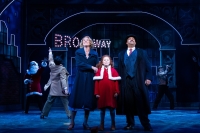
Genuine Heart Meets Classic Charm in Drury Lane’s Sunny Holiday Revival of Annie
13 November 2026 in Theatre in ReviewAlmost fifty years after she first sang her way into Broadway history, the sun is still shining bright in Oakbrook…
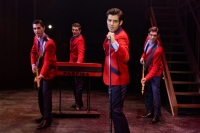
Beggin' For Something: Jersey Boys Falls Flat at CIBC
12 November 2026 in Theatre in ReviewWhen I was growing up in Southern California, the radio dial of our family car was always tuned to one…
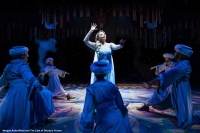
Warm Hearts in a Wintry Arendelle: Disney's Frozen the Musical Shines at Marriott Theatre
12 November 2026 in Theatre in ReviewDisney's Frozen the Musical arrives at Marriott Theatre's intimate in-the-round stage with a story most audience members already know, though…

Theater of the Mind: Not Your Typical Juggernaut
10 November 2026 in Theatre in ReviewAt this stage of his career, David Byrne’s name alone fills concert halls and theaters. The “singer, songwriter, musician, record…

Redtwist Theatre Announces its Cast and Creative Team for Robert Falls' Directed FLYING MONKEYS - Dec 6 - Jan 17
10 November 2026 in Upcoming TheatreAward-winning Redtwist Theatre announces the cast and creative team for this added special engagement to its 2026 - 2027 season,…
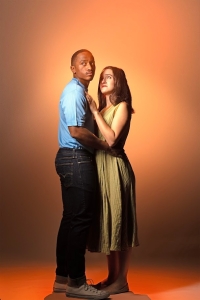
Romeo y Julieta - A bilingual adaptation of Shakespeare's classic is transported to 1960s Miami - January 29 – March 14, 2027
10 November 2026 in Upcoming TheatreChicago Shakespeare Theater (CST) announces the cast and creative team for Romeo y Julieta, Karen Zacarías and Henry Godinez's bilingual…

The Second City announces casting for the 5th annual Black Excellence Revue - February 5 – March 13, 2027
10 November 2026 in Upcoming TheatreFive years in, The Second City's Black Excellence Revue continues to bring bold comedy, fresh perspectives and an unmistakable sense…
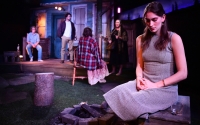
An Incredibly Good Snapshot of Our Social Discourse in 'Heroes of the Fourth Turning'
10 November 2026 in Theatre in ReviewSettling in for A Red Orchid Theatre’s Heroes of the Fourth Turning, I knew next to nothing, having no familiarity…

Porchlight’s Out of This World “Little Shop of Horrors” lands at Biograph Theater
10 November 2026 in Theatre in ReviewFew musicals are as fun to sing (and watch) as “Little Shop of Horrors”. It’s not a huge surprise that…
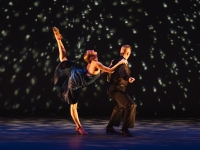
Giordano’s delectable Untamed Passion lights the fire of true love
10 November 2026 in Dance in ReviewFew dance companies can claim both the history and continued relevance of Giordano Dance Chicago. More than sixty years after…
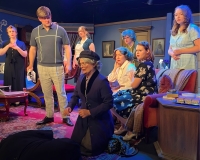
A Murder Is Announced Is Murderously Entertaining
09 November 2026 in Theatre in ReviewFew authors have mastered the art of the whodunit quite like Agatha Christie, whose intricate mysteries continue to captivate audiences…

Oil Lamp Theater Announces Single Tickets for its 2027 Season are Now On Sale
09 November 2026 in Upcoming TheatreOil Lamp Theater announces that single tickets are now available for its 2027 season in addition to four-show and three-show…
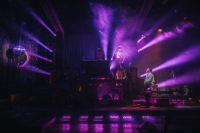
Mexodus Gives Voice to a Rarely Told Story of Freedom
08 November 2026 in Theatre in ReviewWhat is Mexodus? Part concert, part theatrical journey, and part history lesson, it explores a rarely told chapter of the…
Sardonic Love In The Time of Gen Z: World Premiere of The Break Up at Rivendell Theatre
08 November 2026 in Theatre in ReviewThere are more important things in the world to worry about. At some point in our lives we’ve heard this…

Finding Light in Winter: The Snow Queen at The Den Theatre
07 November 2026 in Theatre in ReviewFirst published by Hans Christian Andersen in 1844, The Snow Queen has captivated readers for nearly two centuries. Now, The…

25 Years of It's A Wonderful Life at American Blues Theater
06 November 2026 in Upcoming TheatreAmerican Blues Theater announces its 25th Anniversary production of It's a Wonderful Life: Live in Chicago! from Frank Capra's film…

Dear Rhoda, a new play set at Chicago’s Dil Pickle Club, opens January 7 at Theater Wit
05 November 2026 in Upcoming TheatreDear Rhoda invites audiences into the chaotic world of 1920s Chicago, where love refuses to surrender to fear. Inspired by…





Latest Articles
-
 Steppenwolf Theatre Presents JESSIE MUELLER WITH SETH RUDETSKY – December 18 & 19
Written by Buzz Center StageSteppenwolf Theatre Company and Mark Cortale welcome back Tony Award winner Jessie Mueller (Beautiful: The Carole King Musical, Waitress) for a special holiday engagement. Catch the Broadway star live in Chicago before she heads back to New York next spring in the…
-
Trap Door Theatre Presents: The False Servant, Written by Pierre de Marivaux, Translated by Martin Crimp, Directed by Kay Martinovich. Opens January 14th, 2027
Written by Buzz Center StageTrap Door Theatre is thrilled to begin its mainstage work of their 33rd season with Martin Crimp's take on the classic scandalous tale of Pierre de Marivaux's The False Servant, directed by resident director, Kay Martinovich. The False Servant will…
-
 A Midsummer Night’s Dream: Chicago Shakespeare’s Circus of Love and Mischief
Written by Wesley DavidChicago Shakespeare Theater celebrates its 40th Anniversary season with the second production of its ambitious repertory. A Midsummer Night’s Dream is directed by Artistic Director Edward Hall with all the magic, spectacle, and visual amazement of a circus extravaganza. Presented…
-
THEATER UNSPEAKABLE ANNOUNCES MIME OR NOTHING, FEBRUARY 5 - 28, 2027
Written by Buzz Center StageTheater Unspeakable is proud to announce the cast and creative team for the Midwest Premiere of Mime or Nothing, February 5 - 28, 2027 at Theater Wit, 1229 W. Belmont Ave. Mime or Nothing is written by and starring Marc…


Does your theatre company want to connect with Buzz Center Stage or would you like to reach out and say "hello"? Message us through facebook or shoot us an email at This email address is being protected from spambots. You need JavaScript enabled to view it..
*This disclaimer informs readers that the views, thoughts, and opinions expressed in the text belong solely to the author, and not necessarily to Buzz Center Stage. Buzz Center Stage is a non-profit, volunteer-based platform that enables, and encourages, staff members to post their own honest thoughts on a particular production.