
Displaying items by tag: Ronnie Marmo
'Bill W. and Dr. Bob' Tells About AA Founders, and What It Was Really Like to be their Wives

“Bill W. and Dr. Bob,” in its Chicago premiere at the Biograph Theater, tells the exciting story of the 1935 origins of Alcoholics Anonymous, or AA.
Ubiquitous (though by its own traditions it doesn’t advertise), AA has spawned some 200 similar addictive behavior treatment programs (for drugs, compulsive sex and gambling, overeating and more). All use variations on the 12 steps of recovery and structure laid down by its founder, Bill Wilson, a New York Stock broker, and co-founder Dr. Bob Smith, an Ohio surgeon.
With a spare set—a few chairs and a table—“Bill W. and Dr. Bob” delivers a series of quick-cut scenes that carry the exposition on Wilson and Smith as they descend into the depths of alcoholism, treading the same path but driven by different demons. Many of us active in recovery programs rooted in AA know these tales well. The play by Samuel Shem and Janet Surrey brings these stories to vibrant life, unfiltered from the official recovery version.
For one thing, it represents their wives. Known only in AA’s Big Book through the lens of Dr. Bob’s voice, the domestic turbulence in both households related by AA's "Big Book" is from the men’s perspectives.

On stage, see it lived, and find real women with agency. Though they are patient, loyal and long suffering, they are not helpless.
We watch Wilson (played remarkably well by Ronnie Marmo, who also directs) repeatedly struggle to stop drinking. Frequently fired, he continuously heads out to work on his latest venture, sober for the moment—only to return, sometimes days later, to his wife Lois (Katherine Wettermann) with a sob story, hungover, penniless, and filled with more grandiose dreams of how he will escape this latest reversal.
Wetterman gives a great performance as Lois, who challenges Wilson on his dreams, and his drunkenness. Lois harangues her husband when she finds out he has stolen money for drink from her purse—a common experience in the life of those co-habiting with substance abusers—money hard won as Lois works single handedly to keep their home afloat. Angry with Lois about this dressing down, Wilson lifts a chair to strike her, then arrests himself. Even Bill realizes he has gone too far and must find a way out of his alcoholism.
Dr. Bob (Steve Gelder turns in a great performance) is a different kind of drunk, happier, playful—but as a surgeon he is playing with fire every time he operates either hungover, or possibly under the influence. His wife Anne Smith (Elizabeth Rude is excellent) turns to religion, and attends services at the Oxford Group, which had some success helping alcoholics. There she befriends Ebby Thatcher, a recovering alcoholic who reaches out to Dr. Bob. His atheism makes Oxford Group repellant, but eventually Bill Wilson shows up at Dr. Bob’s doorstep in Ohio, in his own quest for a solution to his alcoholism. Wilson sobers up with Oxford, and is introduced to Dr. Bob to see if he can help him.

Wilson’s credibility as a fellow drunk works. He even pours Dr. Bob a drink to calm him enough to listen. When Wilson cites “God” as an aid, Dr. Bob bristles.
“Let’s leave God out of it,” says Wilson, ever the salesman, and they talk. Dr. Bob has agreed to a fifteen-minute chat. But the two end up talking for six hours, and in this connection the seeds of the AA movement are born. We see that Dr. Bob's healing skills as a doctor, and Bill Wilson's formidibale salesmanship, are a perfect combination for the creation of AA.
The second act traces the foundation of the AA organization, and Wilson and Smith’s excitement and conviction that the mutual support of fellow alcoholics is a key to recovery. Dr. Bob and Wilson learn as they go, and there are missteps.
“What we need is a steady supply of stable alcoholics,” Wilson declares.
On stage we meet a second Bill (Phil Aman in the role of Man), an alcoholic hospitalized for treatment. Later his wife (Marla Seidell in the role of Woman) meets up with Lois Wilson and Anne Smith, and this trio of wives creates Alanon, a mutual support group for those living with alcoholics. It can be plausibly argued that AA is the foundation of today’s many, many peer-to-peer support groups rooted in grass-roots action.
Once word spreads about AA, they get them in spades. The organization forms: no dues or membership fees, just a willingness to stop drinking to join. And it spreads rapidly across the U.S., and soon, around the world.
When AA formed, the world was in the throes of the Great Depression, and millions of men lost their jobs, putting their families under duress as well. Bill Wilson was among the many executives whose high flying careers were dashed. Wilson turned to alcohol for solace and escape. As scheme after scheme failed to salvage his career, Wilson found he was more and more dependent on alcohol for relief. Soon enough the balance shifted, as his dependency on alcohol tripped him up just as he seemed set for a successful comeback.
It’s hard to imagine that before this time, there was no methodical, effective program for treating alcoholics, though for centuries charities operated homes for inebriates to sober up. Alcoholism and drug addiction were regarded as moral failings; willpower to stop drinking was seen as the solution. Wilson and Smith offered a different approach: surrender to the understanding substance abusers were powerless to stop, and that they needed some power outside themselves to control the urge to drink or use, and to support them when they were tempted.
At the time of the play, psychotherapy was being developed by Freud and Jung. Jung offered early on that for some “hopeless” alcoholics he had treated, only a more spiritual solution would be effective. “Dr. Bob and Bill W.” explains how AA works, covering all the key developments in the program—surrender to the process, a self examination of one’s weaknesses, support of fellow alcoholics, and making amends to those who have been injured along the way.
The set is designed by Danny Cistone with lighting design by Cortney Roles, who give the stage a noirish feel. Performed more than 350 times by Marmo’s New York/Los Angeles-based Theater 68, “Dr. Bob and Bill W.” will pass muster for those in a 12-step program for its accuracy. And it will appeal to everyone for the exciting story of the origins of this program, which is the foundation of the many self-help and recovery groups that are woven into the fabric of U.S. society. “Dr. Bob and Bill W.” runs through April 14 at the Richard Christiansen Theater of the Biograph Theater in Chicago (2433 N. Lincoln Ave.), in repertory with Marmo’s other and quite wonderful one-man show, “I’m Not A Comedian…I’m Lenny Bruce.”
*Extended through April 28th
Riveting, heartfelt and sure to shake things up: 'I'm Not A Comedian...I'm Lenny Bruce'

*Now extended through February 16th due to popular demand
“Lenny Bruce was the defender of all people. Notorious from his belief that people give words power. It’s not the words itself, but the intention,” says playwright and performer Ronnie Marmo in the show’s playbill - A Note from the Playwright titled “Why Lenny Bruce? Why Now?”
‘I’m not a Comedian…I’m Lenny Bruce’ should be one of the hottest shows in Chicago this Fall. Coming hot off a sold-out Los Angeles run, the story of one of the most controversial, yet influential comedians, Lenny Bruce, comes to the Royal George Cabaret Theatre. Directed by legendary actor Joe Mantegna and produced by Lenny Bruce’s daughter, Kitty Bruce, we get a production that is hard-hitting, hilarious and flat out ballsy.
Ronnie Marmo as Lenny Bruce is a powerful force to be reckoned with and his deliciously vivid script couldn’t be performed any better. I’d be hard-pressed to say which is more impressive, Marmo’s dark, daring and funny script or his acting prowess as the controversial 1960’s comic. Let’s just say the two fit perfectly together to give audience members a thrill ride that doesn’t let you go.
‘I’m not a Comedian…I’m Lenny Bruce’ puts Bruce onstage in a stand-up atmosphere where he delivers intimate stories that shaped his life and beliefs – some tragic, some humorous and some heartwarming. He was close to his mother, revered his life love Honey and loved his daughter to no end. He was often arrested for his words. He fought drug addiction – and lost. Marmo as Bruce also becomes the vessel for the fearless and outspoken comedian who tells it like he sees it, often using obscenities and rants about the same topics that are touchy in today’s world – fifty years later – such as racism, government aid, religion, the criminal justice system, gender inequality, etc., etc., but probably most of all censorship. An unwavering advocate for the First Amendment, Bruce vehemently preaches the dangers of losing the right to free speech, often musing the crowd with stories of arrests and harassment by authorities for simply saying words not everyone wanted to hear.
“I disapprove of what you say, but will defend to the death your right to say it.” Evelyn Beatrice Hall (a.k.a. S. G. Tallentyre) wrote in 1906’s The Friends of Voltaire. This quote epitomized Bruce’s beliefs.
Since Bruce, many comedians have followed in his footsteps, often citing him as their greatest influence, such as Richard Pryor, George Carlin and more recently Sarah Silverman and Bill Maher, the latter very outspoken about the censorship put in place by tech communication giants Twitter and YouTube. It is without doubt, Lenny Bruce would cringe at what has been happening over the past few years where some comedians are not allowed to perform on certain college campuses or where “disagreeing” is often quickly labeled a hate incitement and therefore censored no matter your political stance, religious views or assessments on life. Silence opinions - delete instead of discuss.
The perception of recent fragility wafting in the air where people get overly offended at very little or seemingly nothing these days (words over intention) has been a huge talking point for comedians like Jerry Seinfeld, Chris Rock and David Chapelle (to name a very small few) to the point some might wonder if someone like Bruce could have survived today’s social climate. But, as a betting man, I’m sure Lenny Bruce would still be knocking down walls and fighting to his last breath to exercise the right of free speech.
Ronnie Marmo’s play has come at just the right time at its relevancy in today’s world couldn’t be timelier. Marmo makes his point on the importance of free speech to perfection in this powerful production while also delivering an engaging, inside look at someone who changed the landscape for comedy as we knew it.
Comedy great Richard Lewis says of Marmo’s performance, “Lenny’s life pours out of him,” while Kitty Bruce goes a step further by calling it, “The best portrayal of my father I have ever seen. Brilliant.”
Compelling, inspiring and thought-provoking, ‘I’m not a Comedian…I’m Lenny Bruce’ is highly recommended.
‘I’m not a Comedian…I’m Lenny Bruce’ is being performed at the Royal George Cabaret Theatre through December 1st. For more information visit LennyBruceOnStage.com.
*Extended through February 16th 2020
Chicago City Opera Delivers a Rare Operatic Haunting with Der Vampyr
08 October 2026 in Theatre in ReviewWith Halloween creeping closer, there’s something fitting about revisiting one of opera’s earliest flirtations with macabre horror - especially in…

Goodman's Dead Girl’s Quinceañera: When Fifteen Meets the Adult World
07 October 2026 in Theatre in ReviewAt fifteen, the world can feel like a television show you haven't quite figured out how to turn off. For…
Steppenwolf Theatre's ADIRONDACK CHAIR CIRCLE In Rehearsal – Playing October 22 – December 6, 2026 – World Premiere!
07 October 2026 in Upcoming TheatreSteppenwolf Theatre Company, the nation's premier ensemble theater company, is pleased to launch its 51st Season with the world premiere of…
Hell in a Handbag Productions Announces 25th Anniversary Season!
07 October 2026 in Upcoming TheatreHell in a Handbag Productions is thrilled to announce its 25th Anniversary Season, featuring three "camptacular" shows guaranteed to delight lovers of…
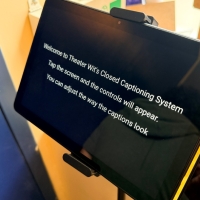
Chicago’s Theater Wit introduces new Watchword closed captioning system, dramatically improving access in all three of its theaters
07 October 2026 in Theatre BuzzChicago’s Theater Wit is now offering new, state-of-the-art closed captioning service, marking a dramatic improvement in making live theater more…

Paramount Theatre’s reimagined A Christmas Carol promises to be a dazzling new, all-ages spectacle for Chicago’s holiday theater season, November 11-January 3
07 October 2026 in Upcoming Theatre“God bless us, everyone,” because there’s a fresh, new, reimagined version of Charles Dickens’ classic tale A Christmas Carol debuting…
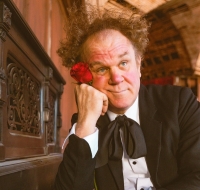
"John C. Reilly is Mister Romantic" Returns to Steppenwolf Theatre - December 10 – 13, 2026
06 October 2026 in Upcoming TheatreFollowing last year's critically acclaimed, sell-out engagement, Steppenwolf Theatre Company is pleased to announce the return of John C. Reilly…
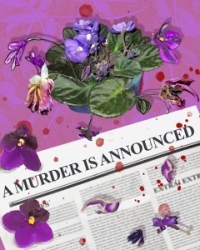
Saint Sebastian Players Open 45th Season With A Murder Is Announced by Agatha Christie Classic Miss Marple Mystery Runs Oct. 23–Nov. 15
06 October 2026 in Upcoming TheatreThe Saint Sebastian Players open their 45th season of travels to different places with A Murder is Announced, a classic Miss Marple mystery…

Announcing "The Goodman, For Good" Campaign
06 October 2026 in Theatre BuzzToday, Goodman Theatre raises the curtain on its future as leadership and artists share a vision for its next century…

Two Edge Theater Company to stage A VIEW FROM THE BRIDGE as its inaugural Chicago production, December 4 through January 10
05 October 2026 in Upcoming TheatreTwo Edge Theater, a reincarnation of the Edge Theater Company that enjoyed eight successful seasons in the Denver, Colorado area,…
Frankenstein at Studebaker Theater adds performances for Halloween run
05 October 2026 in Upcoming TheatreChicago's historic Fine Arts Building and Studebaker Theater are thrilled to announce their Halloween co-production of Manual Cinema's acclaimed Frankenstein…
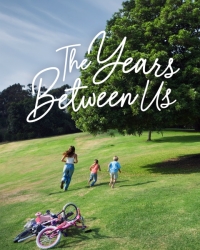
Chicago-Area World Premiere of Liana Sonenclar's The Years Between Us - October 15-18
05 October 2026 in Upcoming TheatreJonathan James Productions presents the world premiere of The Years Between Us, a new play by Liana Sonenclar, directed by…

Oil Lamp Theater Announces its 2027 Season
05 October 2026 in Upcoming TheatreOil Lamp Theater, currently presenting the highly recommended Dial M for Murder, through November 1, is proud to announce its…
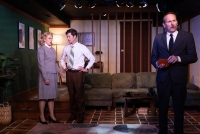
Dial M for Mastery: Oil Lamp’s Thriller Tightens the Screws
04 October 2026 in Theatre in ReviewAs a lifelong Hitchcock fan, Dial M for Murder has always been one of my comfort film thrillers - the…

ARTEMISIA REVEALS PLAYWRIGHTS AND DIRECTORS FOR THE 2026 WEWOMEN PLAY FESTIVAL At Bramble Arts Loft from Nov 16 - 18th
03 October 2026 in Upcoming TheatreArtemisia Theatre is proud to announce the return of the WeWomen Play Festival, its annual celebration of new feminist work.…
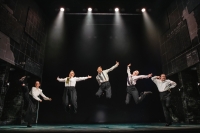
Operation Mincemeat: A Smart, Scrappy Musical That Shines When Its Cast Takes the Wheel
01 October 2026 in Theatre in ReviewIn the 2019 film Yesterday, a struggling musician wakes up in a world where The Beatles never existed. A similar…
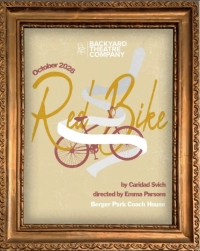
Backyard Theatre Company’s Red Bike - Berger Park Coach House Theatre - Through October 24th
30 September 2026 in Now PlayingRed Bike is an intimate, movement‑driven play that follows a young person navigating a town transforming faster than they can…

Red Theater presents the world premiere of CHURCH HURT October 24 - November 21, 2026
30 September 2026 in Upcoming TheatreRed Theater is thrilled to announce the cast and production team of the world premiere of Church Hurt by Brynne…
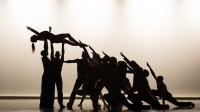
Ballets Jazz Montréal Makes Chicago debut at THE AUDITORIUM Saturday, November 7th
30 September 2026 in Upcoming DanceThe Auditorium (Chicago's landmark stage at 50 E. Ida B. Wells Drive) continues its 2026-27 Dance Season titled North American…

A Red Orchid Theatre Opens 34th Season with Chicago Premiere of HEROES OF THE FOURTH TURNING October 29 – December 6, 2026
29 September 2026 in Upcoming TheatreA Red Orchid Theatre is pleased open its 34th Season, exploring the theme of "world on fire," with the Chicago…
Lookingglass announces new leadership team
29 September 2026 in Theatre BuzzLookingglass Theatre Company today announced a new leadership structure that brings together four longtime members of its acclaimed ensemble and…
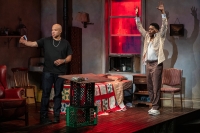
Steppenwolf’s Topdog/Underdog: When History Deals the Cards
28 September 2026 in Theatre in ReviewSusan-Lori Parks’ Topdog/Underdog, the Pulitzer Prize-winning masterpiece, is the kind of play that changes depending on when—and how many times—you…
MAMMA MIA! and HADESTOWN Return to Chicago in Spring 2027
28 September 2026 in Upcoming TheatreBroadway In Chicago is excited to announce two fan-favorite shows are returning to our stages this year: MAMMA MIA! and…

Collaboraction to premiere Mud Life, drawn from Willie Round’s experience as a writer and rapper on Chicago’s west side, October 21-November 15
27 September 2026 in Upcoming TheatreMud Life, a world premiere drama by Chicago writing duo G. Riley Mills and Willie Round, drawn from Round’s life…

'I’m Going to Marry You Tobey Maguire,' Full of Laughs, Ends With a Fizzle
25 September 2026 in Theatre in ReviewHere’s a play that should be really good, based on its reputation alone. Written by Chicago comedy writer Samantha Hurley,…

ALL THINGS EQUAL: THE LIFE AND TRIALS OF RUTH BADER GINSBURG 2027 NATIONAL TOUR - tickets now on sale
25 September 2026 in Upcoming TheatreInnovation Arts & Entertainment, along with Broadway In Chicago, are thrilled to announce single tickets for ALL THINGS EQUAL: THE…

League of Chicago Theatres announces "It's Theatre Season" and celebrates the industry's impact
24 September 2026 in Theatre BuzzThe League of Chicago Theatres announces the return of It's Theatre Season, a campaign inviting Chicagoans and visitors to discover…

Steppenwolf Theatre Continues 51st Season with World Premiere of ADIRONDACK CHAIR CIRCLE October 22 — December 6
24 September 2026 in Upcoming TheatreSteppenwolf Theatre Company, the nation's premier ensemble theater company, is pleased to launch its 51st Season with the world premiere of…

Lookingglass’ Kowalski Ignites a Battle of Wits Between Two Icons
24 September 2026 in Theatre in ReviewLookingglass Theatre’s production of Kowalski offers a gripping, fictionalized glimpse into the first meeting between two theater greats: Tennessee Williams…

Writers Theatre continues its 35th Anniversary Season with explosive, high-stakes boxing drama The Royale October 22 – November 29
23 September 2026 in Theatre in ReviewWriters Theatre, under the leadership of Executive Director Kathryn M. Lipuma and Alexandra C. and John D. Nichols Artistic Director Braden Abraham, continues…




Latest Articles
-
 Goodman's Dead Girl’s Quinceañera: When Fifteen Meets the Adult World
Written by Wesley DavidAt fifteen, the world can feel like a television show you haven't quite figured out how to turn off. For Salma (Jacqueline Guillen), it may be even more difficult. She watches too much television—especially detective shows—and has begun to see…
Goodman's Dead Girl’s Quinceañera: When Fifteen Meets the Adult World
Written by Wesley DavidAt fifteen, the world can feel like a television show you haven't quite figured out how to turn off. For Salma (Jacqueline Guillen), it may be even more difficult. She watches too much television—especially detective shows—and has begun to see… -
 Chicago City Opera Delivers a Rare Operatic Haunting with Der Vampyr
Written by Ken PayneWith Halloween creeping closer, there’s something fitting about revisiting one of opera’s earliest flirtations with macabre horror - especially in a production presented and performed by Chicago City Opera (COT). Der Vampyr may not enjoy the mainstream familiarity of later…
Chicago City Opera Delivers a Rare Operatic Haunting with Der Vampyr
Written by Ken PayneWith Halloween creeping closer, there’s something fitting about revisiting one of opera’s earliest flirtations with macabre horror - especially in a production presented and performed by Chicago City Opera (COT). Der Vampyr may not enjoy the mainstream familiarity of later… -
 Collaboraction to premiere Mud Life, drawn from Willie Round’s experience as a writer and rapper on Chicago’s west side, October 21-November 15
Written by Buzz Center StageMud Life, a world premiere drama by Chicago writing duo G. Riley Mills and Willie Round, drawn from Round’s life experiences as an emerging writer, rapper and producer, opens Collaboraction Theatre’s 2026-27 season, October 21 - November 15.Round and Mills…
Collaboraction to premiere Mud Life, drawn from Willie Round’s experience as a writer and rapper on Chicago’s west side, October 21-November 15
Written by Buzz Center StageMud Life, a world premiere drama by Chicago writing duo G. Riley Mills and Willie Round, drawn from Round’s life experiences as an emerging writer, rapper and producer, opens Collaboraction Theatre’s 2026-27 season, October 21 - November 15.Round and Mills… -
Steppenwolf Theatre's ADIRONDACK CHAIR CIRCLE In Rehearsal – Playing October 22 – December 6, 2026 – World Premiere!
Written by Buzz Center StageSteppenwolf Theatre Company, the nation's premier ensemble theater company, is pleased to launch its 51st Season with the world premiere of Chicago playwright Stephanie Alison Walker's biting satire Adirondack Chair Circle, directed by Tony Award winner Pam MacKinnon (Downstate, Edward Albee's Who's Afraid of Virginia…


Does your theatre company want to connect with Buzz Center Stage or would you like to reach out and say "hello"? Message us through facebook or shoot us an email at This email address is being protected from spambots. You need JavaScript enabled to view it..
*This disclaimer informs readers that the views, thoughts, and opinions expressed in the text belong solely to the author, and not necessarily to Buzz Center Stage. Buzz Center Stage is a non-profit, volunteer-based platform that enables, and encourages, staff members to post their own honest thoughts on a particular production.