
Displaying items by tag: Trap Door Theatre
The Man Who Fell - Trap Door Theatre - Through September 19th
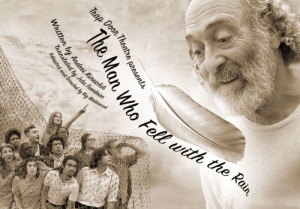
Trap Door Theatre is thrilled to begin its 33rd season with the World Premiere of The Man Who Fell with the Rain, written by Andrei Kureichik and directed by resident director Kay Martinovich. The Man Who Fell with the Rain will play September 3rd – 19th, 2026 at Trap Door Theatre, 1655 W Cortland St. in Chicago. Tickets are now on sale at trapdoortheatre.com or by calling (773)-384-0494.
Based on the short story by Gabriel García Márquez, Kureichik's play is a darkly comic fable about a mysterious old man with enormous wings who falls from the sky into the yard of an ordinary couple. As neighbors, opportunists, and skeptics descend upon the strange visitor, wonder gives way to greed, fear, and spectacle.
PRODUCTION DETAILS:
Title: The Man Who Fell with the Rain
Author: Andrei Kureichik
Translator: John Freedman
Adaptor/Director: Kay Martinovich
Cast (in alphabetical order): Carolyn Benjamin (2nd Neighbor/Woman), Tony-Elias Choufani (Fisherman/Sleepwalker), Dan Cobbler (Husband), Rich Cotovsky (Old Man with Enormous Wings), Heraldo Hermosillo (1st Neighbor/Son), Emily Lotspeich (3rd Neighbor), Laura Nelson (Wife), Keith Surney (Priest), and Gracie Wallace (Daughter of Neighbor/Spider Woman).
Location: Trap Door Theatre, 1655 W. Cortland St. Chicago, IL 60622
Regular Run: Thursday, September 3rd –Saturday, September 19th, 2026
Curtain Times: Thursdays, Fridays, and Saturdays at 8:00 pm. With a special performance on Sunday, September 13th at 7 pm including a talk back after the performance with the playwright.
Press performance: Press are encouraged to attend opening night.
Tickets: $25. Tickets are currently available at https://our.show/the-man-who-fell-with-the-rain or by calling (773) 384-0494.
Gabriel Garcia Marquez's Dark Children’s Tale Translates to Stellar Show in ’The Man Who Fell with the Rain’
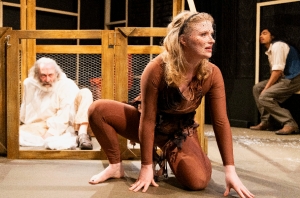
An exceptionally good show is now on stage at Chicago’s Trap Door Theatre. This wonder—The Man Who Fell with the Rain— has been translated through three languages on its way to the footlights in its U.S. premiere, right here on the tiny stage on Cortland Ave.
Originating in Spanish as a children’s tale by Columbian Nobel Laureate Gabriel Garcia Marquez, it was turned into a script by Andrei Kureichik, a Belorussian playwright, then translated to English by John Freedman. All that before being adapted and directed by Kay Martinovich for a perfect and very cogent rendering by the Trap Door players in its U.S. premiere.
The Man Who Fell with the Rain hews closely to Marquez’s original short work, “A Very Old Man With Enormous Wings: A Tale For Children,” while playwright Kureichik has unpacked the important details touched only lightly in the original. It becomes truly theatrical as we watch the story unfold that Marquez charted.
The script brings us an Old Man With Enormous Wings (Richard Cotovsky) who is discovered unconscious in the backyard of the Husband (Dan Cobbler) and the Wife (Laura Nelson). The couple also happen to have a two-week-old baby in their house, and a nosy know-it-all Neighbor Woman (Emily Lotspeich) is certain the winged creature is an aging angel who was intending on taking the baby. Her advice: beat him to death with a cudgel.
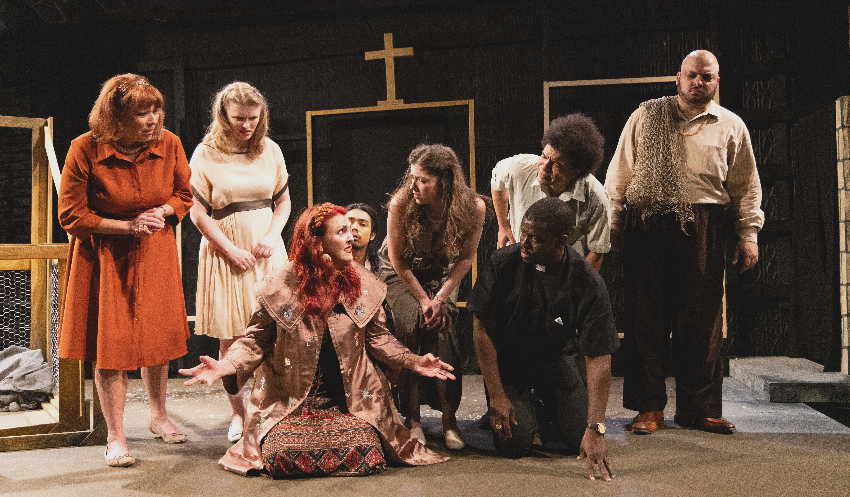
The cast of The Man Who Fell with the Rain at Trap Door Theatre through September 26, 20206
The couple take pity on the Old Man, and instead place him in their chicken coop, intending to keep his presence a secret. But word gets out and neighbors, and then spectators descend on their abode. The Old Man has regained consciousness and the couple try communicating—but he speaks only his own unknown tongue. Neighbors speculate on what to do with him, suggesting vriously to put him over the military and end wars; or make him a governmental magistrate; perhaps put him out to stud to generate a winged human master race.
The local Priest (Keith Surney) is called in, since the Old Man seems perhaps to be an angel, but there is nothing in the doctrinal books that explains the possibility of an aged, injured angel. So he writes his bishop, who writes his primate, who will then write the Pope for guidance. As this lengthy process continues, and the crowds grow, the couple decides to charge admission for a look at the Old Man.
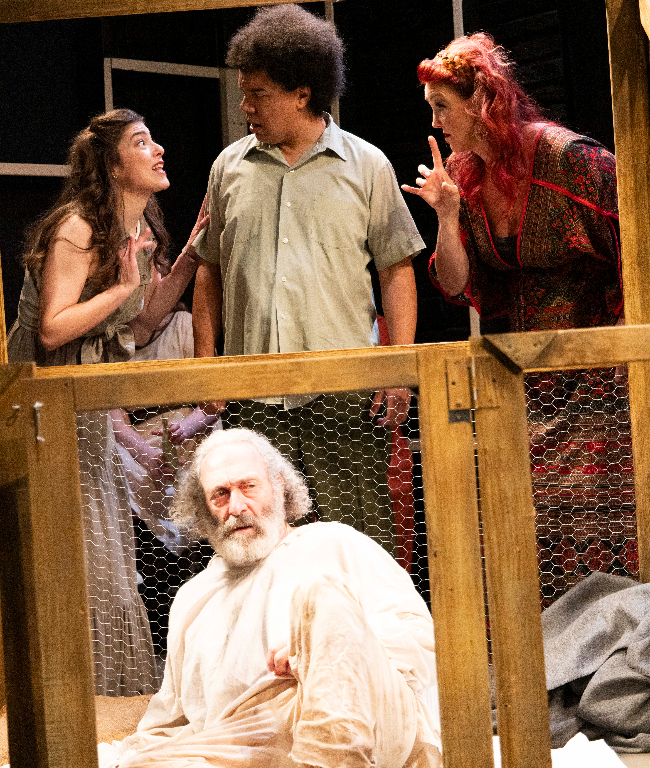
Laura Nelson, Dan Cobbler, Emily Lotspeich, and (foreground) Richard Cotovsky in The Man Who Fell with the Rain.
Marquez and the playwright Kureichik provide us a scenic display of society, and the human comedy that so readily arises in its waters. The convoluted religious hierarchical pronouncements delivered by the Priest extend the fun of this strange state of affairs. Other characters arrive, including a girl who has become a Spider Woman (Gracie Wallace), all natural to the magical realism that is Marquez’s stock in trade.
Yet this show is not played for broad comedy. The story line and gradual revelations unfold with restraint. And it is the performances that director Martinovich has drawn from these performers that make this show stratospherically good.
Most memorable for me are two performances: Richard Cotovsky’s Old Man, whose mostly silent acting is magnetic as he quietly gets his bearings and increasingly engages the neighbors and spectators. And Emily Lotspeich’s Neighbor Woman, who is so perfectly recognizable from life. She moves from one certainty to another and always speaks authoritatively, even as her previous pronouncements have proven false. She knows, for example, that this Old Man should be fed a dangerous chemical which she supplies for $50—”Angel food is not cheap!” she declares.
When the Old Man goes dormant and the couple thinks he has died, she advises on his burial: cut off his wings, fold them over him, place a ring of 49 candles around him, then burn him. Despite her certitude, they decide to use a hot branding iron on the Old Man, and he immediately rises and flaps his wings. For his part, the Priest brings only questions, not answers, from the church. They are adsked if the Old Man has a navel, for example, to determine if he is human rather than angelic.
Yes it is a rather dark children’s tale. The Brothers Grimm are also dark, in the original text. What a fairy tale can do is describe to children (and grown-ups) the inexplicable behavior of adults. And the resolution of the play is positive and very satisfying. The townspeople are left as the Old Man found them, and we expect nothing changes, no one learns anything—just like real life.
Highly recommended, advanced ticket sales had driven an extension of the run of The Man Who Fell with the Rain even before opening night, but make haste. The extended run ends September 26, 2026 at Trap Door Theatre at 1655 W. Corland in Chicago.
Standing Room Only Crowd for Chicago’s Leading Theater Artistic Directors
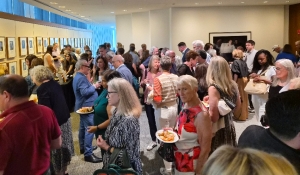
It must have been heavenly for the creative leaders of Goodman, Steppenwolf, Chicago Shakespeare and Court, Chicago’s top regional theaters, to be greeted by a standing room only crowd. But there they were, on a panel moderated by the eminent Chicago Tribune theater critic Chris Jones. The program was introduced by Marla Mendelson, MD, then by her daughter, Tova Wolff, who also happens to be artistic director at Refracted Theatre Company.
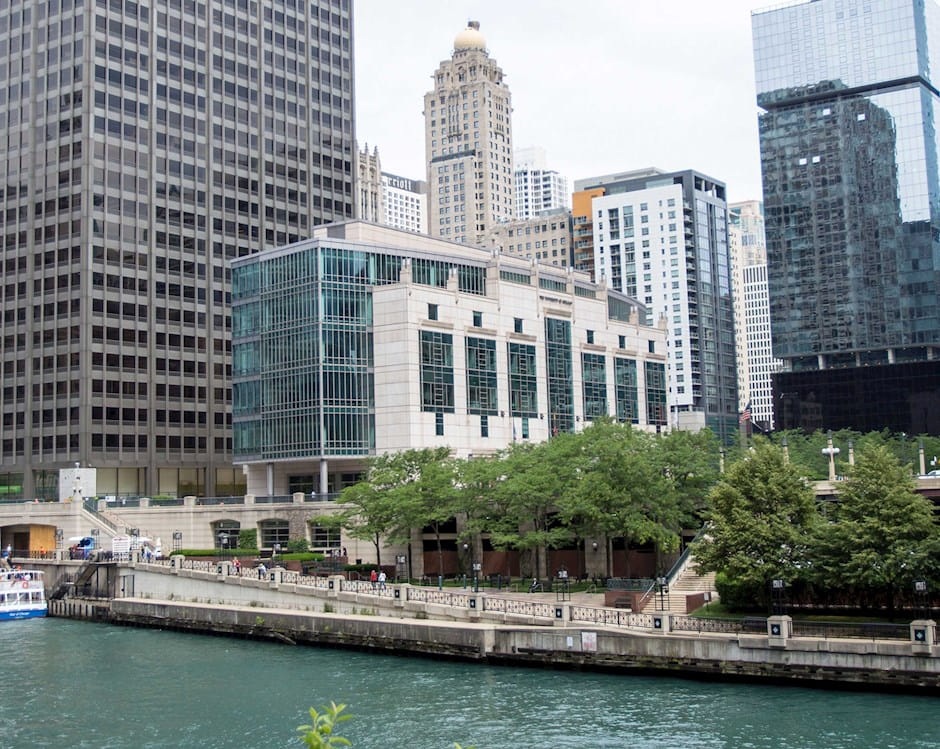
Held on the 6th floor of the airy University of Chicago Gleacher Center overlooking the Columbus Drive bridge at the Chicago River, the event was part of the Evening Inquiry Series founded by Mendelson and her husband Stephen Wolff, and arriving on the heels of a landmark report from the Arts Alliance Illinois that shows the creative sector is the sixth largest business sector in the state. In Chicago, where nearly half (47.5%) of the overall state’s direct creative economy output takes place, the sector supports 212,875 jobs, generates $50 billion in output, and generates $5.7 billion in tax revenue. It is Chicago’s 3rd largest industry (11.3%), larger than educational services (10.2%), retail (8.3%), and manufacturing (7.9%).
Citing that as a backdrop, moderator Chris Jones led the panelists through the discussion.
Also referencing the report, Edward Hall, artistic director at Chicago Shakespeare Theater noted, “This city has a very powerful, strong cultural economy as well, which I think feeds social and cultural life, but also it's an economic driver. And you haven't even begun to count the trickle-down effect of people's secondary spending when they fly into town and see Iceboy, or they see Lord of the Rings, whatever they come and see. They're taking cabs. They're going to hotels. They're spending money.”
Jones's questions led to the perhaps surprising revelation: subscriptions to theaters have dwindled. Audrey Francis, artistic director for Steppenwolf, said that at its height, Steppenwolf had 25,000 season subscription holders. “And now we have 5,000,” she said, which was the number when she started her tenure at the theater.
“It's challenged me as an artist to say, ‘Okay, this is the game,’” said Francis. “And it's not about, for us, necessarily what's popular. It's about how are we being our best to make sure that when you come dance with us, we're the best dance partner you have.” According to Francis, “Being challenged to evolve and to keep up and to say, ‘Okay, we can't keep doing the same thing. The rules are changing, and everybody's getting better, and how do we keep up?’”
Budget-wise, ticket revenue overall covers just half the operations of any of these theaters.What that means for theater operators is audience preferences and marketability to individual ticket buyers is a key driving force in the creative selection of scripts to be produced at larger Chicago theaters. Given that, how do artistic directors determine the roster of shows for each season?
What came up in the course of the panel is that there is serious tension (as might be expected) between including the established “canon” of playwrights—Eugene O’Neil, Ibsen, Chekov, Shakespeare, Shaw, etc.—and new works from rising talents around the country. Over recent years new works have risen in prominence, while the number of scripts from the old guard have diminished.
The event was preceded with an open bar reception and generous array of hor d'oeuvres, during which the audience mingled. There were actors, creatives from theater companies, and the regulars who attend these Evening Inquiries sessions at the University of Chicago’s Gleacher Center. As a theater critic for Buzz Center Stage, I recognized a number of publicists from theatrical groups and agencies that specialize in communications for this marketplace.
One woman I spoke to was the spouse of an actor. I also met a man who was a retired professor of drama from Bates College in Lewiston, ME, who complained heartily of the numerous new works in seasons just announced by the panelists’ theaters, to the exclusion of Shaw and other traditional canonical works. “What’s the best thing you’ve seen in the last year?” he asked me, his voice ripe with challenge. I answered unequivocally: “The Devil Comes to Town at Trap Door Theater.” (It was adapted and directed by Jeremy Ohringer who is also on the faculty at DePaul University.)
This was a perfect lead-in to the discussion of seasons filled with newer works, discovered through careful dramaturgy of who and what is trending around the country, which may be unfamiliar to Chicago audiences. There is risk attached to trying such unknown works as part of a mission for exposing audiences to what the theaters think they might or should like.
“If you go back to that origin statement about serious, mission-driven work, fully fifty percent of your annual income is box office dependent,” said Susan Booth, artistic director at Goodman Theatre. Producers can no longer rely on subscription ticket holders to weather through whatever they’re given in a season. “That box office number is a reality in our day-to-day life,” Booth said. “And I would love to hear from my colleagues on the panel about the challenge of selling mission-driven work versus selling popular work.”
Chicago Shakespeare’s Hall noted that theater lives in a perpetual recession. “There has never been a moment when I've heard any of my colleagues say, ‘What do we do with all this excess money?’ And theater has always been striving to do mission-driven work. And the idea that if you go popular, it's easy,” Hall said, “it's a lie, actually.” (Though the exception proving the rule perhaps are the lavish productions at Paramount Theatre in Aurora, generously underwritten by its neighboring casino profits.)
Avery Hoffman, who was named artistic director just last November at Court Theatre at the University of Chicago, described her theater’s audiences as many layered: the students and faculty on campus, individuals throughout the surrounding Hyde Park area, and the entire south side of Chicago, the city at large and the region. “This knowledge of your audiences is really, really important to that collective thinking, certainly to my collective thinking,” Hoffman said. “It means that our seasons maybe take a little bit longer to come to fruition. But then at the end of the day, you have a collective agreement about what your mission is, what shows that you're doing that serve that mission, and an audience that knows that mission and is there to support [it].”
A lengthy discussion covered the shifting role of these big regional theater companies from gatekeepers of what should be seen by audiences, to collaborative facilitators of what audiences want—even if that means bringing them unfamiliar scripts that meet their latent interests. Francis noted that the ensemble-powered company of Steppenwolf has long meant that the establishment of each season's offerings is the product of intense creative conflict, in the best sense of those words.
Best Question of the Night
After 30 minutes, Jones entertained a few questions from the audience, and the first out-of-the-gate came from a long-haired young man who cited the recent transfer of the a cappella musical Octet from Raven Theatre’s space on Clark St. to extend its run at the Goodman’s Owen Theater for three weeks this summer.
Goodman’s Booth responded that she had an immediate reaction when she saw Octet at Raven: “I thought the ceilings are just too low for these great voices.” And so it happened, but that is a rarity in Chicago. “The big theaters are often dark,” the questioner pointed out, and these successful storefront shows need to be able to get to bigger venues in order to extend their runs, rather than simply close to accommodate a subsequent planned production from their own season. "All of us are keenly aware that we benefit from the ecosystem," Booth said, referring to Chicago's many storefront and small theaters.
Of course, this is the natural ecosystem in New York, where Off Off Broadway shows frequently transfer to Off Broadway and sometimes on to Broadway—usually driven by proven audience demand. Why couldn’t that happen more frequently in Chicago? This led to an intriguing proposition from Chicago Shakespeare's Hall for a separate non-profit theatrical entity that might serve as a development center for co-producing shows, lef by Chicago's regional theaters.
Three cheers to University of Chicago and Mendelson's Evening Inquiry series for putting this remarkable discussion of theater on stage.
No Dialog, Yet Strongly Affecting, Trap Door's 'Le Bal' Is Like Nothing You've Seen

Can you have a play run 90 minutes with no dialog? Indubitably, as Trap Door Theatre demonstrates with its new production, “Le Bal.”
Adapted to the stage by Stephen Buescher, it is inspired by a 1983 French film of the same title. Of the absence of dialog, one Trap Door company member told me “Actors love it.” With no lines to memorize, the audience gets to see more clearly all the other things actors do to bring characters and scenes to life—and that is amazing to witness. Like the film, sans dialog scenes in “Le Bal” on stage are set against a backdrop of sound and music that captures the sweep of history, each reflecting those moments in time.
The film follows 50 years in the life of a Parisian dance hall, and the characters are drawn entirely from the patrons and employees as it evolves from from the 1930s through the war years, German occupation, into present day. Trap Door’s version which was commissioned to the playwright, Buescher (he also directs), shows a longer sweep of time—nearlya century—and we move in reverse chronological order from the current times back to the 1930s.
A pastiche of skits reflects the period of the music, and evokes not just the passage of time, but the feel and spirit of those moments. Unlike the film, which sticks with dancing, Buescher gives us dynamic vivant tableaus, opening with music, drugs and sex then coursing backward through powerful settings expressing post-war grief, or the shocking onslaught of COVID. As corpses are shrouded by masked nurses, I was moved and the melancholy that enveloped us in those days arose for me. And the unvisited sorrow at the deaths.

We witness the incredulity and unchained anger of younger generations as the Black Lives Matter movement sweeps the nation. In this, Buescher allows for a departure, as the cast gasps George Floyd's words: “I can’t breathe!” We see the tumult of the 1960s political revolt against Viet Nam, the 1950s housewives awaiting their men’s return from the Korean War, and back and back through WWII and the formalized grief that met millions of deaths. Then through the pre-WWII Depression accompanied by a Franklin Roosevelt inaugural address. And back further to the bursting bubble of speculation that brought on the Great Depression, with its breadlines, soup kitchens, and hard times. All of it shown, including the thundering oppressiveness of the factory lines that fueled the riches, with risky working conditions that could be dangerous, even deadly, and that spawned the sometimes violent labor movement.
Two recurring themes Buescher brings forth are the fragmentation of social frameworks, and the recurring response of Americans to unite and demonstrate for justice and a better life. In insightful Dramaturgy Notes, these listings of recurring unrest and mass demonstrations have touched so many areas: that labor unrest of the 1930s, through demands for racial equality arising in the 1950s, the political and anti-war unrest of the 1960s (though it’s not called out in the notes I detected it on the stage), ACTUP’s demand for support during the AIDs crisis, Occupy Wall St. in the early 2000s, then Black Lives Matter, rising Gay Pride visiblity, MAGA rallies, women’s and immigrants rights marches, and much more.
It is not just music accompanying the major timeframes on stage, but sounds - Dany Rockett, sound technician, does a remarkable job working in real-time with the cast. The costumes designed by Rachel Sypniewski, are just enough to create the impressions needed, from sailor suits, to poodle skirts. Quick changes, usually onstage, are handled with minimal fuss, as the scenes of epochs elide one to another.
Buescher's vision for "Le Bal," and the work of the amazing cast at Trap Door—Dan Cobbler, Genevieve Corkery, Cat Evans, Emily Nichelson, Gius Thomas, Jasz Ward and Carl Wisniewski—stretch the bounds of what theater can be.
“Le Bal,” adapted and designed by Steven Buescher comes recommended; a unique theatre experience and another example of why Trap Door is a treasure. “Le Bal” runs through June 20, 2026 at Trap Door Theatre 1655 W. Cortland in Chicago.
This review is proudly shared with our friends at www.TheatreInChicago.com.
A Farcical Feverdream that Works: Trapdoor Theatre's 'The Cuttlefish'

Trapdoor Theatre’s “The Cuttlefish” ought to be confounding, but somehow this 1920’s surrealist play from Poland is clear as a bell. Though ostensibly about the philosophical struggle between art and politics, the audience easily recognized echoes of the present-day overall fix in which society finds itself.
Before any dialog, even before house lights go down, “The Cuttlefish, or the Hyrcanian Worldview” (its full title) opens somewhat bewilderingly on a stage with four characters: a masked, gold-clad Statue of Alice D’Or (Keith Surney), whose postures beside a short classic stone column suggest a Greek sculpture. Further backstage is a high ranking church cleric in mitre and liturgical robes, gesturing spiritually—Pope Julius II (Emily Lotspeich), patron of Raphael and Michelangelo. Stage left, a figure in a suit slouches and periodically collapses against a wall, the artist Pavel Rockhoffer (Nicole Wiesner). And a woman wanders, hands outspread—the Mother (Venice Averyheart) of Rockhoffer, who settles into a seat and manages percussion.
What is going on? The audience puzzles through these characters, trying to make sense of the silent tableau, and the lights go down and dialog begins. Rockhoffer has become pessimistic about his creative works, which we learn have been condemned by a government council. “My art is a lie, a carefully planned hoax,” says Rockhoffer.
“Even prisoners serving a life sentence still want to live,” the Statue offers. Along the way Julius remarks, “A man without a worthy adversary is like God without Satan,” and leaving, offers “I wish you a short and unexpected death.” With very little naturalism or conventional exposition, these snippets reveal the conflict that is to be resolved by the end of “The Cuttlefish.”
But it is with the arrival of King Hyrcan IV (David Lovejoy) when the story comes alive. A villainous despot, he smooth-talks Rockhoffer, coaxing him to abandon his dedication to absolute artistic ideals, and come on over to pragmatic freedom of Hyrcania, the land he rules.
Lovejoy is an energetic force on stage, and brings the play to life. “I am a superman, or ‘an uber mensch’” King Hyrcan declares, convincingly. He offers to unchain the artist from historic patronage of entities like Julius, and to have full freedom.
“What do you believe in?” queries Rockhoffer.
“In myself,” King Hyrcan shoots back, and as inexorably as the manosphere today sucks in its lost, wandering adherents, Rockhoffer, after a bit of resistance, falls under his spell. He obeys when Hyrcan tells him to jettison his fiance Ella (Gus Thomas), as unfitting for the new Hyrcanian order. King Hyrcan works his wiles on a weakened Julius, who admits to doubt and crumbles too.
As the action unfolds and the plot thickens, it becomes clearer that the times prophesied by “The Cuttlefish,” which unfolded in the rise of fascist Germany, offer parallels to today —when cultural centers are being expropriated and renamed, arts funding cancelled, and freedom of expression curtailed.
The magic of Trap Door is its penchant for mining an obscure work of 1920s playwright Stanislaw Witkiewicz (translated by Daniel Gerould) to find a work that is regarded as a precursor to later absurdist and expressionist stage works in the 1930s. Under the direction of Nicole Wiesner, what might have been an inscrutable drama instead is intuitively understandable. As we laugh with relief at the line, “One can only hope” (the Mother’s interjection about the end of such terrible times), we may be reminded of Kurt Vonnegut’s advice: “The arts are not a way to make a living. They are a very human way of making life more bearable.”
“The Cuttlefish, or the Hyrcanian Worldview” runs through April 25 at Chicago’s Trap Door Theatre and comes recommended.
This review is proudly shared with our friends at www.TheatreInChicago.com.
Spectacular and Mesmerizing, Trap Door’s ‘A Devil Comes To Town’ Is Must-See Theater

With the mesmerizing hold of a Moth Hour radio story and the visual creativity of the (late, lamented) Redmoon Theatre show, Trap Door Theatre’s production of “A Devil Comes To Town,” is so incredibly good that I urge you to stop reading this review and just get a ticket.
Here’s why.
First: there is the source material., adapted and directed by Jeremy Ohringer from a novel by Italian author Paolo Maurensig from his elegantly crafted 2018 page-turner (from the English translation by Anne Milano Appel). This gripping yarn and its magnetic charm is distilled creatively into Ohringer’s script - maintaining the dramatic tension of the original book, concentrating it into a 60-minute elixir of a story that moves with compelling interest to its satisfying resolution. The promotional thumbnail captures its well: “In a town obsessed with writing, the arrival of a mysterious devilish publisher sets off a sinister chain of events, as literary ambition turns feral.”
Second: The tiny Trap Door Theatre becomes, through ingenious stagecraft, a magical window to one delightful scene after another - sometimes worlds away. Simple practical effects with lighting, puppetry, scale models, and even a shadow lantern delight in their simplicity, pulling our attention despite our surfeit of exposure to perfect CGI recreations in film and gargantuan stage machinery on Broadway. Credit Ohringer in his direction, Karen Wallace for lighting design, Saskia Bakker for puppet design, Finnegan Chu for costumes, and Oskar Westbridge on sound design and as stage manager.

The play, like Maurensig’s novella, is set in Switzerland, opening at a conference in Kusnacht for professional psychologists at which a parish priest, Father Cornelius, delivers a paper on the prevalence of human manifestations of Satan. Afterward he returns to his home village of Dichtersruhe, population 1,000, where indications of an inordinate interest begin to appear among many townsfolk - the butcher, the baker, children, shopkeepers, a senescent cleric - all begin writing manuscripts for publication by major book publishers.
A subplot on a rise of rabid foxes adds zest to the storyline, and a shadowy past for Father Cornelius adds intrigue. The fixation by the townsfolk with being published mirrors in so many ways the passion for TikTok influencer status, while the presentation of the publishing storyline reminds us of the cunning self-publishing hucksters that abound.
In the stage adaptation of the book, Ohringer gives us five actors playing Father Cornelius, with Shail Modi in a stunning performance as the principle one. Ohringer has inventively choreographed the performances of these Father Cornelius characters, at times having them march and prance in lockstep together. The four other Father Cornelius figures (Dina Berkeley, Juliet Kang Huncke, Lydia Moss, and Y’vonne Rose Smith) serve as a kind of chorus that doubles as the author’s omniscient voice and general exposition. These four at various points take on other roles as well, Y’vonne Rose Smith particularly notable as the devilish publisher, Dr. Fuchs, and Lydia Moss as the decrepit cleric Father Christoforo. Dinah Berkeley is a manic delight in several roles.
Indescribably good, really, “A Devil Comes To Town” comes highly recommended and has already had its run extended, playing through December 6 at Trap Door Theatre, 1655 W Cortland St in Chicago. Don’t miss it.
Riding the Ghost Train: Trap Door’s Dutchman Reimagines Baraka’s Curse

Amiri Baraka’s Dutchman remains one of the most incisive allegories in American drama—a modern tale in which seduction, power, and racial history collide in the confined space of a subway car. Trap Door Theatre’s production, directed with precision and calculated risk by Keith Surney, resurrects the play’s mythic and political undercurrents, deepening its resonance as both ritual and warning.
Baraka titled his 1964 play after the legend of the Flying Dutchman, the ghost ship doomed to sail the seas forever, unable to find port. In Baraka’s interpretation, a subway car becomes that ship—an eternal vessel circling the underworld of American consciousness. The passengers are ghosts of history; the cycle of desire and destruction never ends. Surney underscores the play’s endless cycle of seduction and destruction by dividing Lula among three actresses—Carolyn Benjamin (white dress), Genevieve Corkery (red dress), and Ali Foley (blue dress)—each embodying a different facet of America’s recurring racial performance. Together, they form a chorus of seduction and menace, representing the shifting faces of white America—erotic, violent, and self-possessed. Their presence before the play begins, prowling the stage like sirens holding apples, transforms the theatre into a space of temptation and foreboding.
Surney himself plays Clay, the young Black intellectual aboard this spectral train unaware of his fate. His Clay is both composed and vulnerable—buttoned suit, tie, but no shirt—an image that literalizes the illusion of assimilation stripped of safety. Lula, one at a time, approaches him with the ferocity of predators, their sexuality exaggerated to the edge of discomfort. Surney embraces that discomfort deliberately, making it clear that the erotic tension in Baraka’s play is not merely physical—it is historical, rooted in the dangerous seductions of American liberalism and white desire.
The production’s design reinforces the tension between abstraction and reality. Viscaya Wilson’s bare stage of metal poles offers a skeletal suggestion of a subway car, though it lacks the oppressive grit that defines the New York underground. For a native New Yorker, the environment may not fully convince, yet its sparseness allows the actors’ physical and emotional choreography to dominate the space. Gary Damico’s lighting cuts through the minimalism - isolating bodies in sharp contrast. The uncredited sound design fills in what the set omits. The deep metallic rumbles immerse the audience in a world both real and hallucinatory, the jazz soundscape itself becoming the heartbeat of Baraka’s infernal train.
At moments, Surney allows erotic interplay to linger past its breaking point, delaying the eruption of Clay’s righteous fury. Yet when that fury finally arrives, the scene ignites with the same volatility that scandalized audiences in 1964. The words still wound; the violence still feels inevitable.
One critic described Baraka’s original Dutchman as “an explosion of hatred,” a reflection of a truth white America could barely confront. Trap Door Theatre’s version does not soften that explosion—it contextualizes it. Baraka’s play is a parable of historical repetition. The subway, like the ghost ship, circles endlessly, carrying the same sins and the same souls. In this staging, Dutchman becomes a ritual exorcism—a reminder that America’s voyage through its own darkness is far from over.
Baraka would soon transform from LeRoi Jones, the bohemian poet of downtown New York, into Amiri Baraka, the militant architect of the Black Arts Movement. Dutchman marks that turning point—a theatrical bridge between personal identity and collective consciousness. Surney’s production captures this moment of awakening, reminding us that Baraka’s rage was never chaos but clarity: a demand that America look into its mirror and recognize the ghost at its shoulder. Trap Door Theatre’s Dutchman sails that ghost ship again, not to escape the curse, but to make us hear, once more, the hum of its unending voyage beneath our feet.
That clarity also defines Keith Surney’s directorial debut, a bold and fearless entry that takes genuine risks—some raw, some revelatory— announcing a director unafraid to challenge both text and audience. If Dutchman is a voyage into the heart of America’s contradictions, Surney steers it with both daring and intellect. I’ll be looking to see more of him in the future.
Highly Recommended
Where: Trapdoor Theatre, 1655 W Cortland St, Chicago
Running time: 50 minutes
Tickets: $22
Review: Ghost Fetus at Trap Door Theater

Opening Trap Door Theatre’s 32nd season as part of the Trap Open Series with its world premiere, Suz Evans’ Ghost Fetus is a rough-edged, bold original work that delivers a performance as both humorous and cathartic as it is unexpected.
With a small, five-person cast, the play centers on two queer teenage girls, Whitney and Sarah Jane, as they navigate their relationship and identities within their church community. While turning to Pastor Craig for guidance, the trio encounters a ghost fetus and must also confront the more personal “ghosts” within themselves.
The play, experimental and unpolished, tells a timeless coming-of-age story, creating space for the audience to laugh both with the characters and, at times, at them, and the absurdities that may accompany a strict religious upbringing. Evans’ script balances wry, biting humor with a keen sense of the dissonance between belief and lived experience. Sprinkled throughout are bursts of original music (by Laila Eskin) – hymn-like chants with absurd lyrics – that heighten the satire and draw frequent laughter from the audience.
Under the direction of Anna Klos, the 45-minute production radiates a raw, communal energy. It was clear that the full cast was committed to the show entirely: even without mics, the cast filled the theater with every line delivery, and took up the whole space with every movement, at times even invading the audience. Although not polished in the traditional sense, the acting aligned with the unvarnished vibe of the production perfectly. While Ghost Fetus is truly an ensemble show, Tia Pinson (playing Ghost Fetus) was a particular standout, with emotional delivery and physicality that feel almost otherworldly.
The production’s design further reflects the overall feeling of raw authenticity, with a modest but impressively constructed set mainly consisting of a scaled-up picnic basket full of surprises. The lighting (which includes one prolonged instance of heavy strobing, a fair warning to sensitive audience members) and sound were fitting and understated, tying the show together without being a primary focus. Adding to the spirit of the production, the program arrives in the form of a zine, an inventive touch that sets the playful, offbeat tone before the first line is spoken.
Ghost Fetus may not offer the polish of a mainstage production, but its rawness – feeling more like a communal act of introspection than a neatly packaged play – is precisely what makes it compelling. The audience responded in kind: laughter bubbled up at obvious jokes and, just as often, at the uncomfortable truths the characters voiced. That shared reaction—half amusement, half recognition—was part of the evening’s quiet power. It captures the messy, often contradictory feelings of grappling with faith, sexuality, and loss, and it does so with a mix of audacity and heart. For those willing to embrace its unvarnished energy, the play offers a uniquely personal – and unexpectedly healing – experience.
Ghost Fetus is running at Trap Door Theatre through October 27th. Tickets are available at https://trapdoortheatre.com/ghost-fetus/.
Trap Door's 'Galileo,' Beautifully Produced, Is a Knowing Parable for Our Times

“Galileo” written in 1938 by German playwright Bertolt Brecht, tells the straightforward story of the 17th century physicist and astronomer’s run-in with church authorities for asserting that the earth revolved around the sun. For this Galileo, played with Brechtian finesse by Trap Door’s David Lovejoy, was hauled before the Roman Inquisition, and threatened with torture until he recanted.
Brecht’s play centers on how this conflict played out in Galileo’s personal and professional life, and his final years under house arrest under the watchful eyes of the authorities. Galileo was torn between unfettered scientific assessment of the world, and his need to make a living. Even before the play opens, director Max Truax has Lovejoy’s Galileo seated, nearly naked, facing away from the audience posing in contemplation, reminiscent of Rodin’s famous sculpture. Throughout the scenes that follow, Galileo’s nakedness seemed to represent the periods when he was thinking most freely. He seemed to be dressed when he was engaging the public or the authorities.
But the style of Brecht’s script for “Galileo” is not naturalistic - this version of the script was the second, written in English with Charles Laughton who starred in it in 1947 - and the audience is distanced from the characters who dwell with him: Galileo’s daughter Virginia (Genevieve Corkery), his protege Andrea (Shail Modi), his student Ludovico (Caleb Lee Jenkins), and a character, the Inquisitor, who is present throughout. Brecht wanted audiences to be unattached to the emotions of the characters, so they could focus intellectually on the story and the social values he wanted to convey, a style known as Epic.
Lines are repeated multiple times with different emphases. At certain points, the actors address the audience directly, breaking the fourth wall, said to be another technique favored by Brecht. The Inquisitor (Joan Naid) who is blindfolded in early scenes, at times seems more like a spouse to Galileo in the household.
Lovejoy’s performance of Galileo is described by Trap Door as “a humanizing portrait,” and he is in this respect distinct from the other characters on stage. One example: when his daughter Virginia’s betrothal is threatened by Galileo’s branding as a heretic for his work, she registers no emotion. We simply hear the facts of the matter. Lovejoy’s performance is intense, and a remarkable achievement overall: and he is on stage every minute of the two hour show. Also notable is Modi as Andrea, a character with whom I was able to connect.
I can’t say I am a fan of Brecht, and am always surprised that he continues to be popular among troupes and actors. For me Brecht takes a lot of work to appreciate and enjoy. But “Galileo” has remarkable currency for our times, as the retreat from modernism finds factual science and the age of reason under attack by the authorities. For this concern alone the Trap Door production of “Galileo” is valuable. Kudos to Merje Veski for stage design and Jonathan Quigley for projection design that gives us synopses of historical contexts at key moments.
“Galileo” runs through June 14, 2025 at Trap Door Theatre, 1655 W Cortland St. inChicago. Tickets are now on sale at trapdoortheatre.com
*Extended through June 28th
Emile Zola Adaptation 'Nana' Is a Triumph at Magical Trap Door Theater

For the final show of its 30th anniversary season, Trap Door Theatre—the little company that could—has selected a sure-fire hit with a production of “Nana,” a play based on the 19th century melodrama about an actress and bordello courtesan, Nana, by French author Emile Zola.
Adapted for the stage by the late Olwen Wymark, and co-directed by choreographer Miguel Long and managing director Nicole Weisner, this reimagining of the original 2002 production at the tiny theater—tucked away behind a restaurant at 1655 W. Cortland—was flawless on opening night. It’s a cabaret style musical, and the premise of the story gives us a Parisian cabaret that doubles as a bordello, allowing occasions for song and dance that fit the storyline perfectly.
As the audience arrives, the actors are already in character, welcoming us as patrons of the establishment. At curtain time, the anticipation builds among onstage patrons—mostly emotionally overwrought, palavering males—all hoping for a glance of recognition from Nana when she arrives.
After this artful build-up, which heightens the expectation of the audience as well, drapes are snapped opened for the big reveal: Nana (Maryam Abdi is miraculous) emerges on a swing as a vision of Venus—long blonde tresses, and a gossamer robe opened to barely cover her breasts, minimally hidden by glittery clamshell pasties. It’s all very nineteenth century, and the men fit exactly in our expectations of swooning romantic gestures salted with salacious innuendo.

Amber Washington in "Nana"at Trap Door Theatre through May 19.
We also meet the coterie of sophisticated ladies in orbit around Nana. There is Sabine (Amber Washington) just too too, all wrapped in a gorgeous gown and chapeau, waving a cigarette holder while delivering bon mots and pithy observations. And her dresser Zoe (Emily Lotspeich), who carefully manages the arrivals of suitors, parceling them out to every room until Nana’s apartment is filled. And Satin (Emily Nicholson), Nana’s BFF and occupying the same role, just at a lower echelon than our diva.
The song and dance numbers were quite good, and flawlessly performed.

Dan Cobbler, Emily Nichelson, and Emily Lotspeich in "Nana" at Trap Door Theatre through May 18, 2024.
Always in need of cash, Nana is pursued by a chorus of snarling creditors, who snarl in unison, to powerful effect on stage.Yet there is a substantial core to Zola's story: Nana, as she rises in stature as the object of desire for wealthy men, extorts them in their ardor, then walks all over them when their funds are depleted. She does this with greater rapidity, yet their generosity never falters. For example, Steiner (David Lovejoy is terrific) has given her a country retreat amid a high society and royal enclave, yethe never receives thanks or very much of Nana’s attention, who only escalates her demands for cash and orders this paramour to surrender his own key to the house he bought for Nana.
Indeed, Nana plays all her many suitors to the limit, relenting only enough when she senses she has pushed too far, an incredibly adept dominatrix.
Yet amid all this, Nana has a private life, and we learn where her earnings go. She retains her maiden aunt (Tia Pinson is the essence of propriety) to care for her infant. And she also has a significant other, Fanton (Caleb Lee Jenkins is the playful, yet mercenary scoundrel). We soon see that Fanton does to Nana what she does to her suitors, though far worse, as he is also physically abusive.
Nana, whose reputation has preceded her, is rejected by the "polite" society around her country home, though local suitors visit surreptitiously. And ultimately, Nana meets her fated downfall in full expression of melodramatic justice.
Costumes (Rachel Sypniewski) are spectacular, as are wids (Igor Shashkin) and make-up (Zsofia Otvos). Most amazing in this Trap Door Theatre production is the performance of Maryam Abdi as Nana. Abdi dominates her suitors, and the stage. She is fully in the role, inhabiting Nana’s character in a star-is-born delivery that would fit comfortably in an Off-Broadway, or even Broadway. So too for the entire cast. The Trap Door Theatre has outdone itself with “Nana,” a jewel in its 30th season celebration. “Nana” runs through May 19 at Trap Door Theatre, 1655 W. Cortland St. in Chicago.
*Extended through May 25th
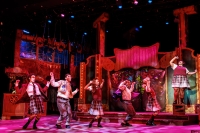
STEP RIGHT UP AND RIDE THE CYCLONE (THE MUSICAL) AT METROPOLIS ARLINGTON HEIGHTS
22 September 2026 in Theatre in ReviewIf anyone has ever told you to buckle up and enjoy the ride, they were talking about life—and even if…
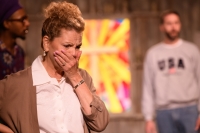
Funny ‘Prayer Circle’ Is Loaded With Laughs
22 September 2026 in Theatre in ReviewErik Gernand is resident playwright at Redtwist Theatre, and his Prayer Circle is absolutely laugh-out-loud funny. The strength of this…

Steppenwolf Presents GRACEFUL WARRIOR: AN EVENING WITH GARY SINISE - Tuesday, November 24, 2026
22 September 2026 in Upcoming TheatreSteppenwolf Theatre Company, the nation's premier ensemble theater company, is pleased to present Graceful Warrior: An Evening with Gary Sinise on Tuesday, November…

Acclaimed Mexodus musical makes Chicago premiere November 7-21 at Studebaker Theater
22 September 2026 in Upcoming TheatreStudebaker Theater, P3 Productions and Audible, in collaboration with Teatro Vista Productions, present the Chicago premiere of the groundbreaking, award-winning new hip-hop musical Mexodus, written and performed…

American Blues Theater hosts its annual costumed fundraiser HALLOWEEN BOO BASH October 25th
21 September 2026 in Theatre BuzzAmerican Blues Theater, under the continued leadership of Executive Artistic Director Gwendolyn Whiteside, presents Halloween Boo Bash, its annual costumed fundraiser benefiting artists' wages…
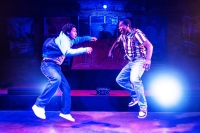
Definition's How We Got On: A Mixtape for the Stage
21 September 2026 in Theatre in ReviewWhat happens when three young people discover hip-hop and realize they might have something to say? Idris Goodwin’s How We…

Open Space Arts Presents BEFORE WE ARE HISTORY October 23 – November 8
21 September 2026 in Upcoming TheatreOpen Space Arts presents BEFORE WE ARE HISTORY, a three-week theatrical exploration of LGBTQ+ theater created during and in response to…
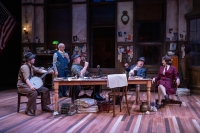
Northlight Delivers a Headline-Making, Hilarious Front Page
20 September 2026 in Theatre in ReviewNorthlight Theatre opened its new venue with Jeffrey Hatcher’s smart, rejuvenated adaptation of The Front Page. Commissioned by Artistic Director…
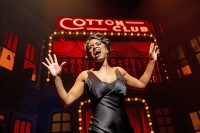
Chicago Shakes' Play On!: With a Syncopated Harlem Beat
20 September 2026 in Theatre in ReviewThere are some productions you watch, and then there are productions that make your heart swoon and your toe tap.…

Overshadowed's Flame of Fire Finds Humanity, Strength, and Forgiveness in a Tragic Chapter of Missionary History
19 September 2026 in Theatre in ReviewOvershadowed Productions’ Flame of Fire revisits one of the most polarizing true stories in mid‑century missionary history, and the result…
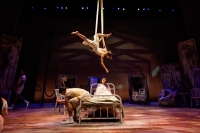
The Attic at Goodman Theatre Redefines Memoir Through Breathtaking Physical Storytelling
19 September 2026 in Theatre in ReviewAt intermission, I sent Ken, Buzz Center Stage’s managing editor, a text: “So thankful I made it!! It’s intermission, and…
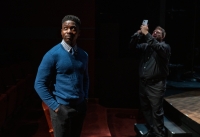
Class is back in session with Victory Gardens’ World Premiere of The Humanities
19 September 2026 in Theatre in ReviewCoincidentally (or not), Victory Gardens’ new play about a controversial campus speaker opens just days after the one-year anniversary of…

Babes With Blades's Announces William Shakespeare's KING LEAR, playing October 22 - November 21
18 September 2026 in Upcoming TheatreBabes With Blades Theatre Company’s (BWBTC) announced today new production dates for the final production in its 2026 season, William Shakespeare’s King…

Layered, Lovely, and Lasting; The Joffrey Ballet's Liliom Lights up The Lyric Opera
18 September 2026 in Dance in ReviewSometimes when we reach into the past to resurrect or revive an old story, we find it doesn’t age well.…

Cast and Production Team Announced for Fleetwood-Jourdain Theatre's THE NICETIES, October 31 – November 15
18 September 2026 in Upcoming TheatreFleetwood -Jourdain Theatre, an award-winning theatre company that has been thrilling audiences with over four decades of unique, inspirational, and invigorating Black…

Goodman’s centennial is its all‑time most successful year, with 300,000 patrons at 4,000 performances & events
18 September 2026 in Theatre BuzzThe Goodman wraps its 2025/2026 Centennial Season, an unprecedented line-up marking the 100th anniversary of Chicago's flagship not-for-profit theater, as the…

The Jinkx & DeLa Holiday Show - December 6th at Auditorium Theatre
17 September 2026 in Upcoming TheatreThe greatest holiday show south of the North Pole returns for its 9th year with another brand spankin' new wintertide…
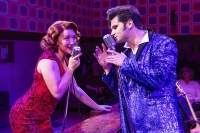
Paramount’s smash hit, immersive Million Dollar Quartet returns for its final run at Aurora’s Stolp Island Theatre, October 7-January 3
17 September 2026 in Upcoming Theatre“Great Balls of Fire!” Chicago audiences have just one last chance to catch Paramount Theatre’s immersive musical Million Dollar Quartet, returning more…

Holiday Cheer (and an earlybird discount) come to The Second City November 25th through December 27th
17 September 2026 in Upcoming TheatreTis' the season for laughter and cheer! The Second City is decking its holiday lineup with shows for every sense…
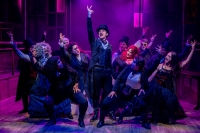
Kokandy Productions’ Jekyll & Hyde: A Fearless Reworking Elevated
17 September 2026 in Theatre in ReviewKokandy Productions’ Jekyll & Hyde, now presented by Broadway In Chicago at the Broadway Playhouse, arrives with the momentum of…

Chicago City Opera presents Chicago premiere of Der Vampyr October 7-11
16 September 2026 in Theatre in ReviewChicago City Opera (CCO) presents the Chicago premiere of gothic horror opera Der Vampyr by composer Heinrich Marschner to a…

Full Casting Announced for A Red Orchid Theatre's HEROES OF THE FOURTH TURNING - October 29 – December 6, 2026 - Chicago Premiere!
16 September 2026 in Upcoming TheatreA Red Orchid Theatre is pleased to announce full casting for its Chicago premiere of Will Arbery's politically-charged drama Heroes of the Fourth Turning, directed…

Chicago Legend Da Brat to Host and MC THE HIP HOP NUTCRACKER
16 September 2026 in Upcoming TheatreBroadway In Chicago is thrilled to welcome trailblazing hip hop artist and Chicago legend Da Brat as special guest host…
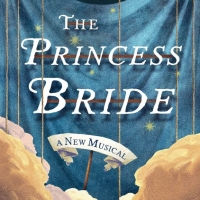
THE PRINCESS BRIDE to have Pre-Broadway World Premiere in Chicago July 19 - August 22, 2027
16 September 2026 in Upcoming TheatreProducer Jeffrey Seller and Broadway In Chicago have announced the world-premiere of the new musical THE PRINCESS BRIDE will begin performances in…

American Son - Friendship Community Place - Through October 4th
16 September 2026 in Now PlayingGhostlight Ensemble's production of American Son, written by Christopher Demos-Brown and directed by Ebby Offord, opens on Friday, September 18,…

MARRIOTT THEATRE REVEALS A 2027 SEASON OF SHOWSTOPPING MUSICALS AND BELOVED STORIES
16 September 2026 in Upcoming TheatreMarriott Theatre, Chicagoland's longest-running musical theatre, presents its 2027 subscription season featuring five thrilling and memorable musicals: Pippin, A Gentleman's Guide to…

Kokandy Productions Concludes 2026 Season with A CLOCKWORK ORANGE: A PLAY WITH MUSIC November 5, 2026 – January 10, 2027 - Full Casting Announced!
15 September 2026 in Upcoming TheatreKokandy Productions is pleased to conclude its 2026 Season with A Clockwork Orange: A Play with Music, a live adaptation of Anthony Burgess's dystopian…

Raíces to Roots’ Unpacking Home - Collaboraction's House of Belonging - Through September 27th
15 September 2026 in Now PlayingCollaboraction Theatre Company is thrilled to host a limited run of Unpacking Home by Chicago’s Raices to Roots as part of the 9th Destinos…
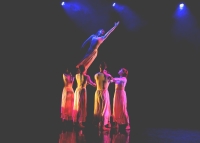
Identity Performing Arts Celebrates 5 Years with Gala Performance at MCA's Edlis Neeson Theater October 18th
14 September 2026 in Upcoming DanceIdentity Performing Arts celebrates five years as a dance company embracing artistic innovation, collaboration and community at their Fifth Anniversary Gala at MCA…
BIRDS OF NORTH AMERICA - Do we listen to each other as much as birdsongs?
14 September 2026 in Theatre in ReviewBirds of North America, written by Anna Ouyang Moench, is a story of a father daughter relationship spanning a decade…




Latest Articles
-
 Chicago Shakes' Play On!: With a Syncopated Harlem Beat
Written by Wesley DavidThere are some productions you watch, and then there are productions that make your heart swoon and your toe tap. Sheldon Epps’ Play On! is definitely the latter. Now playing at Chicago Shakespeare Theater, this exuberant musical takes Shakespeare’s Twelfth…
Chicago Shakes' Play On!: With a Syncopated Harlem Beat
Written by Wesley DavidThere are some productions you watch, and then there are productions that make your heart swoon and your toe tap. Sheldon Epps’ Play On! is definitely the latter. Now playing at Chicago Shakespeare Theater, this exuberant musical takes Shakespeare’s Twelfth… -
 STEP RIGHT UP AND RIDE THE CYCLONE (THE MUSICAL) AT METROPOLIS ARLINGTON HEIGHTS
Written by Anne RakowieckiIf anyone has ever told you to buckle up and enjoy the ride, they were talking about life—and even if they didn’t know it, they were talking about Ride the Cyclone, the musical. When six teenagers die in a rollercoaster…
STEP RIGHT UP AND RIDE THE CYCLONE (THE MUSICAL) AT METROPOLIS ARLINGTON HEIGHTS
Written by Anne RakowieckiIf anyone has ever told you to buckle up and enjoy the ride, they were talking about life—and even if they didn’t know it, they were talking about Ride the Cyclone, the musical. When six teenagers die in a rollercoaster… -
 Funny ‘Prayer Circle’ Is Loaded With Laughs
Written by Bill EslerErik Gernand is resident playwright at Redtwist Theatre, and his Prayer Circle is absolutely laugh-out-loud funny. The strength of this script is the characters—who are clearly defined and familiar types—and the performances, directed by Dusty Brown, are uniformly outstanding. Set…
Funny ‘Prayer Circle’ Is Loaded With Laughs
Written by Bill EslerErik Gernand is resident playwright at Redtwist Theatre, and his Prayer Circle is absolutely laugh-out-loud funny. The strength of this script is the characters—who are clearly defined and familiar types—and the performances, directed by Dusty Brown, are uniformly outstanding. Set… -
 American Blues Theater hosts its annual costumed fundraiser HALLOWEEN BOO BASH October 25th
Written by Buzz Center StageAmerican Blues Theater, under the continued leadership of Executive Artistic Director Gwendolyn Whiteside, presents Halloween Boo Bash, its annual costumed fundraiser benefiting artists' wages during Season 41. This popular, all-ages celebration features live performances and ghost stories, trick or treating in the theater, contests,…
American Blues Theater hosts its annual costumed fundraiser HALLOWEEN BOO BASH October 25th
Written by Buzz Center StageAmerican Blues Theater, under the continued leadership of Executive Artistic Director Gwendolyn Whiteside, presents Halloween Boo Bash, its annual costumed fundraiser benefiting artists' wages during Season 41. This popular, all-ages celebration features live performances and ghost stories, trick or treating in the theater, contests,…


Does your theatre company want to connect with Buzz Center Stage or would you like to reach out and say "hello"? Message us through facebook or shoot us an email at This email address is being protected from spambots. You need JavaScript enabled to view it..
*This disclaimer informs readers that the views, thoughts, and opinions expressed in the text belong solely to the author, and not necessarily to Buzz Center Stage. Buzz Center Stage is a non-profit, volunteer-based platform that enables, and encourages, staff members to post their own honest thoughts on a particular production.