
Displaying items by tag: on stage
Reservation Mayhem, One Man, Forty Voices: Mike Newquist Ignites 'Fully Committed' at The Den

Get ready - those phones are about to explode, and Sam is already spinning like a top trying to catch every single one. It’s a full‑blown ring‑storm, and he’s diving into it with the hectic energy of someone who knows the chaos is coming and still can’t outrun it.
A brisk, razor‑funny powder keg of a play, Fully Committed tracks a single frantic day in the life of Sam, the lone reservationist at one of Manhattan’s most elite - and most impossible - restaurant. Becky Mode’s script is a full‑tilt high‑wire act, and Mike Newquist tears across nearly forty characters with the kind of breakneck precision that makes your head spin. As Sam, he’s already a live wire - but then he’s also snapping into entitled celebrities, neurotic assistants, tyrannical chefs, and every flavor of fine‑dining madness that dares to ring his desk. It’s dazzling, anxious, and wildly fun to watch him juggle it all without ever dropping the thread. The comedy snaps because each character is so sharply etched, and Newquist seamlessly shifts among them with the kind of finesse that turns mayhem into art.
At its heart, the nearly 90-minute play gleefully skewers the rituals of status and the agitated, almost feral hunger for exclusivity, exposing just how ridiculous people become when a reservation turns into a badge of power. Sam becomes the unseen fulcrum of that world, and his day unravels from merely hectic to outright surreal as he absorbs tantrums, negotiates impossible demands, and fights to keep a grip on his own sense of worth. Watching Newquist as Sam behind that reservation desk in a constant tinderbox had me instantly aware that I wouldn’t survive two hours in his shoes. His frantic charm and barely contained panic sells the chaos and sparks a whole new respect for the people who actually thrive in that kind of daily combustion.
Fully Committed lands as hard as it does because it’s rooted in real industry absurdity. Mode shaped these characters straight out of real restaurant‑world encounters, giving the show a mix of satirical whirlwind and a bite of truth that feels both sharply recognizable and wickedly real.
Throughout the play, I loved how Sam’s dad kept slipping into the heavy commotion with that gentle, grounding voice - just long enough to let the whole room exhale. Each time he called, Sam’s entire demeanor flipped in an instant; you could watch him go from frazzled to peaceful like someone had hit a reset switch. Those brief check-ins made it clear how a few steady words from a gentle, supportive father (or friend/family member) can cut straight through the noise, offering a tiny pocket of calm even when everything else is burning down around him.
Mike Newquist is pure kinetic joy onstage, delivering a commanding turn in Fully Committed. The Chicago‑based actor and improviser thrives in the city’s storefront trenches, bouncing between sharp‑edged comedy, character chameleon work, and the kind of ensemble disorder where anything can - and usually does - happen. He’s popped up with PrideArts, AstonRep, and The Comrades, tackling everything from contemporary drama to high-velocity comic mayhem. In Fully Committed, it’s his quick‑switch agility that makes him a blast to watch.
Directed by Derek Bertelsen, this Chicago staging arrives with a jolt of fresh energy and real immediacy. Newquist’s performance becomes the engine that drives the whole night, while Bertelsen keeps the momentum razor‑sharp, the pacing tight, and every character shift snapping cleanly into place.
The Den Theatre hosts the run March 13–28, 2026, with performances on Friday and Saturday nights at 7:30 p.m. Tickets for Fully Committed at The Den Theatre are just $26. For tickets and/or any more show information, click here.
Recommended.
This review is proudly shared with our friends at www.TheatreInChicago.com.
Static, Signals, and Surprises: City Lit’s Changing Channels Tunes In

The year is 1952. Television is rapidly gaining popularity over radio, to the delight of some and the disgust of others. Senator Joseph McCarthy has just been re-elected and is accusing hundreds of people of having connections to the Communist Party, provoking a nationwide climate of paranoid hysteria. Thousands of people, particularly in the mass media, are being blacklisted and expelled from their jobs. One would think (hope!) the lessons of this Red Scare might relieve us of government overreach and of accusations due to differing ideologies … sadly, not so much, as attested to by Stephen Colbert.
CHANGING CHANNELS opens in a backstage dressing room at the DuMont Television Network, a dressing room tenanted by Maggie Carlin (Kat Evans) for her popular comedy show. Kat Evans as Maggie Carlin and Orion Lay-Sleeper as her comedic partner Eddie Gilroy are both absolutely terrific. I don’t generally like comedy; a television laugh track is like fingernails on a blackboard to me, but as CHANGING CHANNELS takes place on the set of a comedy TV show, some jokes are inevitable. Happily, they are truly good jokes. We all know the sound of an audience trying to laugh cos they know it’s expected, as opposed to honestly breaking up over a droll line delivered skillfully, and in CHANGING CHANNELS even I was LOL! And later when the script turned serious, Evans and Lay-Sleeper both demonstrated superior range.
Skyler Tipton played Maggie’s husband Peter Bell, a truly stellar spouse, unswerving in his devotion and succor (I love using the word ‘succor’ – it’s like getting away with talking dirty). Andrew Pappas plays the handyman Kenny, a role that might have been a bit part but turns out to be pivotal. It’s not easy to flesh out a character from only a handful of appearances and lines, but Pappas succeeds in making Kenny real, a person whom one might like to have around.
Eddie’s lawyer, misfortunately (albeit appropriately) named Bullets, is played by Johnny Moran. The lawyer arrives bearing tidings of great joy – a breakthrough advance for Maggie and Eddie’s show! Next, however, he has to deliver the caveat: in order to accept the promotion they must sign a document that amounts to a loyalty pledge. Here is the crux around which the story turns: refusal to sign is not so much what anyone wants to do; it’s being expected to sign that rankles.
The set, designed by Joe Larkin, was inspired. The entire show takes place in Maggie’s backstage dressing room, giving the performance a pleasing sense of intimacy – Maggie can make all her many costume changes right onstage behind the big dress/costume rack – it is, after all, her dressing room! The wall is hung with posters showing some of Maggie and Eddie’s performances, and I was delighted to see on the coffee table a vintage copy of True Confessions – brilliant prop, Meg X McGrath! Emily McConnell’s costumes were spot on, totally in sync with the characters and the period, as well as a shining testament to Chicago’s resale shops! Lighting by Liz Cooper and Sound by Petter Wahlbeck combined to form an effective vintage milieu. And the overall smooth production is a testament to Stage Manager Tseela Sokolin-Maimon’s skill.
Why did I like CHANGING CHANNELS so much, given my dislike of comedy theatre? Well, CHANGING CHANNELS isn’t truly a comedy show – the comic repartee is because the characters are comediennes. The play itself, while very funny at times, is actually political commentary, and the raillery serves to lighten and brighten what might otherwise have been a heavy-handed delivery of the message. To my mind this serves to make the message more powerful as well as more accessible.
Edmund Burke said:” The only thing necessary for the triumph of evil is for good men [sic] to do nothing.” Hear hear!
CHANGING CHANNELS plays at City Lit Theatre, 1020 W Bryn Mawr Ave, through April 12
HIGHLY RECOMMENDED!
This review is proudly shared with our friends at www.TheatreInChicago.com.
A Night in Jellicle Heaven: Music Theater Works Delivers a Stunning 'Cats'

Andrew Lloyd Webber’s Cats remains one of musical theatre’s most distinctive creations - a sung‑through, dance‑driven spectacle that swaps traditional plot for atmosphere, character portraits, and pure theatrical immersion. Drawn from T. S. Eliot’s Old Possum’s Book of Practical Cats, the musical unfolds as a moonlit gathering of the Jellicle tribe, each feline stepping forward to claim the spotlight before the climactic “Jellicle Choice,” when one is chosen for rebirth into the Heaviside Layer – a new life. Its unconventional structure, eclectic score, and iconic choreography helped define the mega-musical era, earning Cats major awards and record‑breaking runs in both London and New York. And now it’s here!
To kick off their 2026 season, Music Theater Works brings Cats to the North Theatre in the North Shore Center for the Performing Arts, offering Chicago audiences a fresh trip into the Jellicle universe. It’s the perfect time to pounce on this legendary musical - whether you’re drawn by its nostalgia, its high‑energy movement, or the simple delight of watching a community of cats chase belonging and second chances.
Cats has always been one of my very favorite Andrew Lloyd Webber musicals, and revisiting it reminds me why. Its blend of atmosphere, movement, and character‑driven storytelling creates a world that feels both whimsical and strangely profound – a world that is so easy to get lost in.
What continues to give Cats its staying power is the blend of spectacle and emotional resonance. While much of the evening plays as a parade of emotionally grounded ensemble-anchored numbers - playful, mischievous, or grand - the heart of the piece rests with Grizabella (magnificently played in this production by Ava Lane Stovall), the faded glamour cat whose ballad “Memory” became a global standard. The production’s emphasis on movement, atmosphere, and immersive world‑building over traditional linear storytelling makes Cats both polarizing and unforgettable, and its decades‑long staying power proves just how deeply that approach resonates across generations. Music Theater Works captures that essence beautifully, channeling the show’s dreamlike logic and ritualistic energy in a way that feels both faithful and freshly imagined.
Astutely directed and choreographed by Mandy Modic, Music Theater Works makes inventive use of the North Shore Center’s intimate space, transforming nearly every nook and cranny into part of the Jellicle playground. The result is a production where activity seems to spark from every direction, creating a sense of constant motion that borders on ingenious. From the moment the show begins - after a playful prelude of cat videos on a large TV - the cast emerges in the dark, parading down the aisles with glowing cat‑eye glasses that immediately pull the audience into their world. Throughout the performance, strategically placed perches and platforms scattered around the theater keep the action mere inches away, giving some audience members the rare thrill of being fully surrounded by the Jellicle tribe. Though I’ve seen Cats countless times in both the Chicagoland area and New York, this production may well be the one that connected with me the most.

(Center) Ethan Lupp as “Rum Tum Tugger” and members of the cast of CATS in CATS from Music Theater Works, now playing through March 29 at the North Shore Center for the Performing Arts in Skokie.
Sam Nachison brings a commanding warmth to Old Deuteronomy, balancing authority with compassion and grounding the production with a rich, resonant baritone in his self‑titled number. Stovall, meanwhile, delivers a vocally commanding, show‑stopping “Memory” in Act II - an emotional high point that pierced my heart and gave me chills. But what truly elevates this production is how deep the talent runs throughout the ensemble. Whether it’s the big, full‑company showstoppers, the sly, feline physicality woven into every corner of the stage, or the sheer joy of numbers like “Magical Mister Mistoffelees,” the cast proves endlessly engaging. Group sequences such as “Jellicle Songs for Jellicle Cats” and “Journey to the Heaviside Layer” showcase a company working in complete synchronicity, creating moment after moment that dazzles. The memorable beats are as abundant as the cats roaming the theater, each one adding to a production overflowing with energy, precision, and charm.
Throughout the performance, I found myself drawn to different performers at different moments, captivated by their vocals, their movement, and the sheer feline energy they brought to the stage. The ensemble’s commitment was so complete that no matter where I looked, someone was doing something compelling, clever, or beautifully in character. That sense of constant discovery carried straight into the show’s physical feats - from aerial acrobatics to Morgan Schoenecker’s crisp tap breaks as Jennyanydots and even the unexpected skating sequences led by Danny Spagnuolo as Skimbleshanks - making the production a steady stream of surprises. Add in the constant, playful eye contact from cats prancing through the aisles, and every moment feels enchanting - alive with movement, mischief, and immersive detail.
Nick Johnson’s Munkustrap grounds the entire production with a steady, commanding presence, guiding the ensemble and shaping the rhythm of the evening. He moves through the show with an effortless authority - part narrator, part guardian - setting both the emotional and musical pace while keeping the Jellicle world anchored. In doing so, he opens the door for the production’s standout moments to land with even greater impact - and never far from that spotlight is Emma Jean Eastlund’s Bombalurina, slipping in with charisma and precision alongside the rest of the talented ensemble.

Ava Lane Stovall as “Grizabella” in CATS from Music Theater Works. Phots by Brett Beiner.
Another moment that stayed with me was John Cardone’s moving rendition of “Gus: The Theatre Cat.” As Asparagus, he delivers this bittersweet, nostalgic reflection of an aging performer looking back on the glory days of his career. The ache of the number comes from the gap between who Gus once was and who he has become - an actor with a shabby coat, trembling paws, and memories of a time when he was the “terror to mice.” Cardone leans into that fragility with such sincerity that the song lands as both a tribute and a quiet heartbreak.
And from that intimate moment, the production expands back into the vibrant world of the Jellicles. The cats themselves are incredible - brought to life with remarkable clarity thanks to the production’s outstanding creative team. Much of that magic stems from the meticulous work of hair, wig, and makeup designers Megan E. Pirtle and Melanie Saso, whose transformations give each performer a distinct feline identity, and from the richly textured costumes crafted by kClare McKellaston and wardrobe head Kristen Brinati, which add depth, personality, and visual cohesion to the entire tribe. Together, their contributions shape a world so vivid and fully realized that the characters feel as if they’ve stepped straight out of Eliot’s imagination and into the audience’s laps. Credit belongs to every corner of the creative team, from scenic design to sound to lighting, all working together to shape an atmosphere that feels nothing short of Jellicle heaven. Their combined artistry turns the space into a fully realized world - mystical, inviting, and alive with detail - so the audience is immersed from the moment the first cat appears. Every technical element works in harmony to envelop the audience in this moonlit world - sets that invite exploration, sound that wraps around the room, and lighting that shifts the space from mystical to electric in an instant. The result is a production that manages to be both haunting and joyfully alive, lingering in the imagination long after the final note.
What I appreciated most about this rich and colorful production is how it reflects the moment we’re living in. At a time when the world feels unsteady, we’re each our own special kind of “cat,” carrying unique talents and flaws, and offering up our personal histories - our triumphs and our losses to each other our fellow "cats" - as the curtain of world seems to be falling around us. Yet, in that shared vulnerability, we find the strength to realize that as long as we keep supporting one another, the light never truly goes out.
Purr‑fect, meow‑velous, pawsitively delightful, downright meow‑gical - take your pick! Every one of them fits this production like a cat in a sunbeam.
Music Theatre Works’ Cats is being performed at the North Theatre in the North Shore Center for the Performing Arts through March 29th. For tickets and/or more show information visit https://www.musictheaterworks.com/2026-season/cats/.
Highly Recommended.
This review is proudly shared with our friends at www.TheatreInChicago.com.
TimeLine Theatre Company announces inaugural season at new Uptown home

|
|
|
|
|
IT’S TIME: ABOUT TIMELINE’S NEW HOME
|
|
A Wondrous Production of Oscar Wao at The Goodman Theatre

Based on the novel by Junot Díaz, The Brief Wondrous Life of Oscar Wao follows neurodivergent and perpetually lovelorn college student Oscar as he fixates on the fukú – a generational curse he believes has haunted his family’s love lives for decades. Oscar’s college roommate and his sister Lola by his side, the trio journeys to Santo Domingo, uncovering more about Oscar and Lola’s family history and the fukú than none of them bargained for.
At the heart of the story is the trio of Oscar (Lenin D’Anthony Izquierdo), Yunior (Kelvin Grullon), and Lola (Julissa Calderon), who are as messy, spirited, and loving as three college kids can be. Their chemistry feels genuinely lived-in: the easy humor, the sharp edges, the quiet loyalties. Their dynamic perfectly captures the complexities of chosen family, blurred boundaries, and sibling devotion, all while keeping the audience constantly laughing.
While often sharp and funny, Oscar and Lola’s mother, Beli (Yohanna Florentino), delivers the production’s most devastating performance. She embodies the tension of someone trying – fiercely, desperately – to do right by her children, yet repeatedly falling short. Florentino’s performance is astonishingly intimate; even in a full theatre, she makes it feel as though her pain is being shared one-on-one with each audience member.
The show – especially in its first act – is funny, self-aware, and unabashedly camp. Although set among college-aged characters in the 1990s, Director Wendy Mateo has made the show feel timeless and accessible to audiences of all ages. The script incorporates a significant amount of Spanish, most often through colloquial phrases and biting insults, yet the cast’s physicality and clarity ensure that no translation is required to follow the emotional stakes. It’s a compelling reminder that audiences don’t need to speak Spanish to fully appreciate bilingual storytelling when the performances are this grounded.
Where the production occasionally stumbles is in its visual storytelling, particularly once the setting shifts to Santo Domingo. The scenic design’s abstract, college-forward aesthetic serves the first half well, but meshes less cohesively with the production’s second act shift into heightened spiritual and video game-inspired imagery. This evolution also introduces more disruptive set transitions – unlike the fluid, almost invisible shifts of Act One, several Act Two changes require full stops in the action, interrupting momentum and dampening the pacing. At its best, the projections and gaming motifs cleverly mirror Oscar’s inner grasp of reality and the story’s mythic foundation. At their weakest, however, they overtake the truly human stakes at the center of the narrative.
One moment in particular – a key story from Beli’s past – is partially rendered through animation and projection rather than live performance. Given the emotional precision already established onstage, the stylistic shift feels jarring and unintentionally distances the audience from what should be an intimate revelation. The production’s reliance on heightened, game-like aesthetics resurfaces in later confrontations as well, occasionally pushing character choices toward exaggeration at moments that call for gravity. The result is a tonal imbalance that slightly undercuts the weight of the story’s final turns.
While the stage adaptation diverges in notable ways from the novel, the production stands strongest when viewed as its own interpretation rather than a strict retelling. That said, the emotional core of Oscar’s story remains intact and, by the final moments, the theatre is silent enough to hear a pin drop – a testament to the emotional weight the cast ultimately earns.
The Brief Wondrous Life of Oscar Wao is running in The Goodman’s Owen Theatre through April 12th. Tickets are available at https://www.goodmantheatre.org/show/the-brief-wondrous-life-of-oscar-wao/.
This review is proudly shared with our friends at www.TheatreInChicago.com.
In Timeless ‘Come Back, Little Sheba,’ American Blues Theater Speaks for Today, as Well

With spot-on performances across a large cast, William Inge’s 1949 script for “Come Back, Little Sheba” is receiving a definitive production at American Blues Theater’s intimate Studio Theater. Those of us of a certain age had this work buried deep into our cultural formation by the searing film version starring Shirley Booth, who won the 1952 Oscar and a Tony for her earlier Broadway performance as Lola.
This was my first time to see the stage version, and director Elyse Dolan goes back to Inge’s original script, which fits beautifully into this captivating 90 minute show (no intermission). The set by Shayna Patel closely tracks Inge’s intentions, right down to the telephone at the base of the stairs. Lighting by Brendan Marble and Sound Design by Thomas Dixon couple especially well in high throttle jazz interludes signaling scene changes or turning points in the plot. And those costumes (Lily Walls) were just what the playwright envisioned, right out of the end of the 1940s.

Cisco Lopez as the Milkman with Gwendolyn Whiteside as Lola.
Contemporary audiences may see ‘Come Back, Little Sheba” as a showcase of the reduced role of women in post-WWII society, their lives centered on homemaking and “keeping their man happy.” But it is something more, too - a portrait of two diametrically opposite personalities - Lola (Gwendolyn Whiteside is remarkable) and her husband Doc (Philip Earl Johnson is a portrait of seething restraint) - locked together in an unbalanced relationship. Inge subtly laces in the clues to their unhappiness. Doc’s ambition to complete medical school was cut short when he felt compelled to marry Lola at 18 after getting her pregnant. Her pregnancy didn’t come to term, and he quit his medical studies. Instead of a doctor he became a chiropractor, and took to the bottle.
Lola, who was a high school beauty queen, has given up caring about her looks under the withering abuse she suffered during his drinking days. But he joined AA, and has eleven months sober - but lives with an internalized rigidity while presenting a caring face to the world around him. Underneath it all, he is filled with resentment.

On the couch, Ethan Surpan as Turk and Maya Lou Hlava as Marie.
A shift has entered this couple's fragile homelife with the arrival of the sprightly Marie (Maya Lou Hlava is perfect in the role). This comely coed is boarding with them, studying art at the university. She has a hot jock boyfriend, Turk (Ethan Surpan is a study in self-assured youthful machismo). Marie also has another boyfriend back home, Bruce (Justin Banks), a well-paid young businessman on his way up.
Inge sends the clues through the behavior of Johnson’s Doc that he is crushing on Marie, and quite jealous of Turk. Eventually his sober resolve crumbles under his longstanding unresolved resentment - that he is not an MD, this new jealousy, and that he is stuck with Lola, who smothers him with attention and coaches him somewhat intrusively on his AA practices. It is also an early serious treatment of the AA 12-step recovery program, founded ion the 1930s. Doc's involvement in it is core the the plot and character motivation.
Lola, for her part, expresses her longing for better days gone by with a fixation on her runaway pup Sheba. Though Sheba went missing quite a while back, Lola still dreams of her return, and periodically calls for her puppy from the porch. An eternal optimist, she is ultimately the likeable center of the action. Marie and Turk love her. To show Lola through others’ eyes, Inge gives us two other characters, Elmo the Postman (William Anthony Sebastian Rose) and Milkman (Cisco Lopez). Whiteside’s Lola is so lonely she tries almost too hard to engage them, but nevertheless, her open heart compels their empathy and she wins them over. Everyone seems to love Lola except the next door neighbor Mrs. Coffman (Joslyn Jones), who derides Lola over her unkempt house.
In the last third of the play, mayhem breaks loose, and you will be stunned, shocked and glued to your seat by the culmination of this stunning drama. As Tolstoy put it, “All happy families are alike; each unhappy family is unhappy in its own way.” And “Come Back, Little Sheba” shows how true this is. Highly recommended.
“Come Back, Little Sheba” runs through March 22 at American Blues Theater in Chicago.
This review is proudly shared with our friends at www.TheatreInChicago.com.
THE JOFFREY BALLET ANNOUNCES 2026–2027 SEASON AT LYRIC OPERA HOUSE

Ashley Wheater MBE, The Mary B. Galvin Artistic Director of The Joffrey Ballet, today announces the Joffrey's 2026-2027 season at Lyric Opera House, featuring the North American premiere of Christopher Wheeldon's The Sleeping Beauty, set to Tchaikovsky's greatest score, and the Chicago premiere of John Neumeier's landmark narrative ballet Liliom. The Joffrey will be the first American company to bring both ambitious, larger-than-life productions to life.
The Joffrey Ballet begins its 2026-2027 season with the Chicago premiere of John Neumeier's Liliom, September 17–27, 2026. Inspired by Ferenc Molnár's 1909 play and later the basis for the musical adaptation Carousel, Liliom traces a haunting story of love and redemption set against the faded glamour of a Depression-era amusement park, featuring an evocative score by multi-Academy Award®-winning composer Michel Legrand. Soon after, two-time Tony Award®-winner Christopher Wheeldon's The Nutcracker returns with its unmistakable sense of magic, December 4–27, 2026, followed by Notes on Love, February 4–14, 2027, a program exploring love through four distinct lenses—with favored works by Liam Scarlett and Nicolas Blanc, alongside a world premiere by Winning Works alum Houston Thomas. Closing the season in glorious fashion is the North American premiere of Christopher Wheeldon's The Sleeping Beauty, a timeless fairy tale transformed into a theatrical spectacle, featuring Jerome Kaplan's lavish costume and set design and Tchaikovsky's greatest score. The beloved classic is a magical celebration for audiences of all ages, May 13–23, 2027.
"The 2026–2027 season places the Joffrey at the forefront of dance, with works of rare theatrical scale," says The Mary B. Galvin Artistic Director Ashley Wheater MBE. "We are proud to be the first American company to present the Chicago premiere of Liliom, John Neumeier's masterful, heartbreakingly beautiful narrative ballet rarely seen in the United States, as well as the North American premiere of Christopher Wheeldon's The Sleeping Beauty. Set to Tchaikovsky's greatest score, this magnificent season finale reminds us that light always prevails over darkness. Alongside these landmark productions is our winter program, which welcomes the return of Liam Scarlett's breathtaking Hummingbird, and a world premiere by Winning Works alum Houston Thomas—speaking to the Grainger Academy's lasting impact on artistic futures." Wheater continues, "This season brings the full breadth of the art form on one stage, performed by a Company dancing at the highest level."
"Following the Joffrey's 70th Anniversary, the 2026–2027 season sets the tone for the next 70 years," says President and CEO Greg Cameron. "With a Chicago premiere, a North American premiere, and a world premiere, The Mary B. Galvin Artistic Director Ashley Wheater MBE has curated a season that reflects an organization operating at scale—investing in artists, pairing artistic ambition with structural strength, and asserting Chicago's role as a center for creative leadership. This season expresses the confidence and continuity of the Joffrey, with audiences at the center of it all."
All season performances take place at the Lyric Opera House in downtown Chicago at 20 North Upper Wacker Drive. All programs throughout the season feature live music performed by members of the Lyric Opera Orchestra, conducted by Scott Speck, Music Director of The Joffrey Ballet.
About the 2026–2027 Season
Liliom | September 17–27, 2026
Choreographer: John Neumeier | Music: Michel Legrand
Chicago Premiere
One of the most influential artists of our time, Neumeier brings his landmark narrative ballet, Liliom, to the Joffrey for its Chicago premiere. Inspired by Ferenc Molnár's 1909 play and later the basis for the musical adaptation Carousel, Neumeier's adaptation follows Liliom, the charismatic but self-destructive carnival barker whose fierce love for Julie is unraveled by pride, poverty, and rage. Set amid the dreamlike, faded glamour of an American amusement park during the Great Depression, passion turns toward crime—and ultimately, tragedy.
Granted a chance to return to Earth after death, Liliom confronts the consequences of his choices and attempts one final act of grace. What remains is a stark reckoning with guilt and the fragile possibility of redemption. Rarely presented in the United States, Liliom is among Neumeier's most profound artistic endeavors. Distinguished by his signature emotional depth and theatrical nuance, Liliom takes shape through multi-Academy Award®-winning composer Michel Legrand's evocative score, blending classical and jazz influences that echo a restless America.
From the choreographer of The Little Mermaid and other celebrated works, including Sylvia and the Lyric Opera's first collaboration with the Joffrey, Orphee, Neumeier's masterpiece Liliom makes its Chicago premiere with the Joffrey, the first American ballet company to bring the production to life. Learn more about John Neumeier here.
With gratitude to Liliom Presenting Sponsor Mr. and Mrs. Joel V. Williamson, Major Sponsor Pamela Crutchfield, and Production Sponsor Holly Palmer Foundation.
The Nutcracker | December 4–27, 2026
Choreographer: ©Christopher Wheeldon | Music: Peter Ilyich Tchaikovsky
This holiday season, step into the spellbinding world where history and dreams intertwine. Join Marie and her Nutcracker prince on a fantastical adventure in Christopher Wheeldon's kaleidoscopic reimagining of The Nutcracker, set amid the wonder of the 1893 Chicago World's Fair. On a magical Christmas Eve, after awakening to an epic battle between Toy Soldiers and the Rat King, a flurry of snowflakes sweeps Marie away on a whirlwind journey to the dreamlike fairgrounds of the World's Columbian Exposition. Set to Tchaikovsky's classic score, experience sprawling attractions from around the globe: the radiant Golden Statue, the mystique of an Arabian enchantress, vibrant Venetian masked dancers, Chinese dragons, and Buffalo Bill's Wild West Show. Learn more about Christopher Wheeldon here.
With gratitude to The Nutcracker Presenting Sponsor Guarantee Trust Life Insurance Company.
Notes on Love | February 4–14, 2027
Notes on Love explores a word that refuses a single definition. Winning Works alum Houston Thomas, alongside choreographers Liam Scarlett and Nicolas Blanc, consider the feeling through four distinct lenses: love as place, as longing, as memory, and as nostalgia—each revealing love in all its depth and beauty.
The full program is as follows:
Dear Chicago: A Love Letter
World Premiere
Choreographer: Houston Thomas | Music: Jonathan Bingham
This world premiere from 2024 Winning Works choreographer Houston Thomas places Chicago front and center. Conceived as a love letter to the city that shaped him, the work translates its rhythm and creative drive into movement. An original score by Jonathan Bingham with layered poetry adds emotional depth to this ensemble piece, capturing the scale, energy, and pulse of Chicago itself. Learn more about Houston Thomas here.
With gratitude to Houston Thomas's World Premiere Commissioned Score Sponsor Zell Family Foundation.
All that Remains
Chicago Premiere
Choreographer: Nicolas Blanc | Music: Ezio Bosso
Beneath an imagined sky of clouds and rain, three dancers move through cycles of attachment and separation, love, and the memories that linger between them. Set to music by Ezio Bosso, whose compositions have long inspired Blanc and are celebrated for their beauty, sensitivity, and emotional power, All that Remains extends a deep artistic bond, allowing Bosso's resonance to live on through dance. Learn more about Nicolas Blanc here.
Hummingbird
Choreographer: Liam Scarlett | Music: Philip Glass
Scarlett's Hummingbird is a breathtaking exploration of human connection, blending classical form with emotional immediacy. Set to Philip Glass's Tirol Concerto for Piano and Orchestra, the work articulates love and longing through a progression of three pas de deux. Sweeping ensemble patterns give way to a searing second movement that pushes the dancers to visible exhaustion, revealing the strenuous demands of intimacy. Framed by John Macfarlane's hand-painted stage designs, Hummingbird feels both expansive and intimate—a precise, powerful meditation on what it means to connect. Learn more about Liam Scarlett here.
Les Boeufoons
Choreographer: Nicolas Blanc | Music: Darius Milhaud
In 1920s Paris, no place captured the city's flourishing, eclectic spirit more vividly than the cabaret bar Le Boeuf sur le Toit. A cultural crossroads, it drew artistic luminaries from Cole Porter to Igor Stravinsky and took its name from Darius Milhaud's theatrical, Brazilian-inflected composition. Les Boeufoons draws inspiration from the surreal, uninhibited world of Jean Cocteau's original choreography and from the famed Fratellini brothers, the circus clowns who first brought the work to life.
Les Boeufoons is a co-commission with the Chicago Symphony Orchestra.
The Sleeping Beauty | May 13–23, 2027
Choreographer: ©Christopher Wheeldon | Music: Peter Ilyich Tchaikovsky
North American Premiere
A timeless fairy tale transformed into a theatrical spectacle, The Sleeping Beauty conjures a world of grandeur and enchantment. The beloved classic frames the enduring struggle between good and evil, as Princess Aurora falls under a spell that threatens to still an entire kingdom—only to be awakened by true love's kiss. Upon her return, the realm is restored, and light prevails over darkness. Choreographed by two-time Tony Award®-winner Christopher Wheeldon, The Sleeping Beauty blends classical elegance with vivid, cinematic storytelling. With dazzling choreography, Jerome Kaplan's lavish costume and set design, and Tchaikovsky's unforgettable score, Joffrey's season finale blossoms into a magical celebration for audiences of all ages. From the choreographer of the critically acclaimed Alice's Adventures in Wonderland, Swan Lake, and The Nutcracker.
With gratitude to The Sleeping Beauty Presenting Sponsors Lorna Ferguson and Terry Clark, and Mr. and Mrs. Joel V. Williamson, Major Sponsor Mary Jo and Doug Basler, and Production Sponsor Holly Palmer Foundation.
Other Engagements
Grainger Academy of The Joffrey Ballet: Fall Program | November 2026
ART on THE MART | December 2026
ART on THE MART celebrates Christopher Wheeldon's The Nutcracker. Figures of the re-imagined Chicago World's Fair-themed production will dance across the imposing facade of THE MART.
Grainger Academy of The Joffrey Ballet: Winning Works | March 2027
The Grainger Academy of The Joffrey Ballet celebrates the Seventeenth Annual Winning Works Choreographic Competition. The culminating performances follow a national call for emerging choreographers whose unique perspectives inspire creativity in the form of original works of dance.
With gratitude to Winning Works Sponsors Pritzker Foundation and Rita Spitz.
Grainger Academy of The Joffrey Ballet: Spring Program | May 2027
The Joffrey Ballet's touring dates are to be announced.
Tickets and Subscriptions for the Joffrey's 2026–2027 Season Performances
Three-program subscriptions for the fall, winter, and spring season productions, which do not include The Nutcracker, start at $138. Subscriptions are available for purchase online at joffrey.org, by mail (Joffrey Ballet Subscriptions, The Joffrey Ballet, Joffrey Tower, 10 East Randolph Street, Chicago, IL 60601), by telephone at 312.386.8905, by fax at 312.739.0119 or by email at This email address is being protected from spambots. You need JavaScript enabled to view it.
Single tickets for the September, February, and May performances, as well as The Nutcracker, will be available starting this summer. Single tickets are available by telephone at 312.386.8905 or online at joffrey.org. Please visit joffrey.org for updates.
All performances are subject to change.
About The Joffrey Ballet
The Joffrey Ballet is one of the premier dance companies in the world today, with a reputation for boundary-breaking performances for 71 years. The Joffrey repertoire is an extensive collection of all-time classics, modern masterpieces, and original works. Founded in 1956 by pioneers Robert Joffrey and Gerald Arpino, the Joffrey remains dedicated to artistic expression, innovation, and first-rate education and engagement programming. The Joffrey Ballet continues to thrive under The Mary B. Galvin Artistic Director Ashley Wheater MBE and President and CEO Greg Cameron.
The Joffrey Ballet is grateful for the support of its 2026–2027 Season Sponsors: The Abbott Fund, Alphawood Foundation Chicago, Daniel and Pamella DeVos Foundation, Gallagher, The Florian Fund, and Anne L. Kaplan. Live Music Sponsors: Sandy and Roger Deromedi, Sage Foundation, and The Marina and Arnold Tatar Fund for Live Music. The Joffrey also acknowledges our Season Partners: ATHLETICO and Chicago Athletic Clubs.
For more information on The Joffrey Ballet and its programs, visit joffrey.org. Connect with the Joffrey on Facebook, Instagram, and LinkedIn.
Pot Girls: An Intelligent and Multilayered Explosion of Poetry and Feminism

The Story Theatre’s world‑premiere staging of Paul Michael Thomson’s Pot Girls bursts to life in a vivid, full‑throttle production at Raven Theatre. Pot Girls is a sharp, funny, and thought‑provoking new play that fuses feminist history, artistic accountability, and a rainbow haze of 1980s, weed‑soaked poetry and art.
Inspired as a thematic counterpart to Caryl Churchill’s Top Girls, Pot Girls - directed by Ayanna Bria Bakari - leans into humor, theatricality, and a cloud of intoxication to explore how women create, collaborate, and collide both onstage and off. And in a bit of theatrical serendipity, both productions are currently running simultaneously at Raven Theatre. In fact, Raven Theatre and The Story Theatre are even offering special marathon days, giving audiences the chance to catch a matinee of Lucky Stiff’s directed Top Girls, stick around for some conversation with the creative team, then return in the evening for Pot Girls - all at a discounted rate (click here for details).
The story follows Caryl herself, a playwright on the cusp of her first major, Olivier‑eligible production - a show designed to spotlight women in the workplace. The year is 1982 and as she toasts the achievement with friends, her colorful London flat transforms into an impromptu hub where a lively, time‑spanning cohort of feminist writers drop in to drink, smoke, debate, and probe the ideas she’s celebrating.
The haze of a jubilant night eventually clears, and what remains is a sharper truth: this play lays bare the exhausting contortions women are expected to perform just to gain a foothold as authors and playwrights. It highlights not only the uphill battle of competing in a landscape where men still discriminate against women in their productions regarding creative authority, but also the added burden of being scrutinized for perfect political correctness the moment a woman-led production finally reaches the stage.
The many ways that women as authors have been discriminated against and unfairly censored or even hunted over the centuries is thoroughly laid out in a fantastic cast of intelligent expressive women.
The period feels fully realized, aided by Katelyn Montgomery’s evocative scenic work and Racquel Postilgione’s sharp costume design.
As the play unfolds, Caryl is pulled through a tangle of personal and professional upheaval - romantic tension with her partner Edith, pointed accusations about her racial blind spots, and the mounting pressure to tell women’s stories with integrity. Around her, the ensemble slips effortlessly between roles, embodying historical figures, colleagues, and critics who collectively push her toward an uncomfortable, necessary self‑examination.
In Pot Girls, Brenna DiStasio centers the production as Caryl, offering a steady emotional clarity that grounds the play’s wilder turns and quietly establishes her as its moral anchor. Ireon Roach, as Edith, wields her well-rolled blunt with sharp wit and charismatic intelligence, building a lively, charged dynamic with DiStasio that keeps the energy flowing like a river.
Peter Ferneding lends understated but essential texture as he shifts through historical and contemporary figures, his easy timing playing neatly against Tamsen Glaser’s agile, precise turns as multiple feminist icons, which bring warmth, wit, and tonal delicacy.
Vibrant, expressive energy radiates through each of Emily Marso’s roles, elevating every moment and sparking electric interplay with Glaser and Maya Bridgewater. Glaser and Bridgewater, in turn, deliver a fierce yet deep human presence across their characters, adding tension and charge to the ensemble’s debates. One of Bridgewater’s characters delivers a beautifully crafted, cathartic reflection on a young girl’s kidnapping and rape - written with such grace and restraint that it resonates powerfully with the conversations society is having today about trafficking and vulnerability.
Rounding out the cast, Laney Rodriguez displays a great sense of humor and threads emotional nuance through each character she inhabits, serving as a subtle connective force while carving out memorable moments opposite DiStasio and Roach. As a unit, the ensemble stays quick, engaged, and combustible, amplifying the play’s ideas with palpable charge.
Ultimately, Pot Girls crackles with ensemble energy and sharp ideas, offering an engaging, thought‑rich night of theatre for anyone drawn to fresh feminist work.
Highly recommended.
Pot Girls has been extended through March 8th. For tickets and/or more show information, click here.
This review is proudly shared with our friends at www.TheatreInChicago.com.
The Glitch in the New Normal - Shattered Globe Theatre’s Morning, Noon & Night

Kirsten Greenidge’s Morning, Noon & Night, currently receiving its Midwestern premiere at Shattered Globe Theatre, is an ambitious, mind-bending exploration of the “new normal” in post-pandemic America. Greenidge, a playwright unafraid of tonal hybridity, situates her story at the uneasy intersection of middle-class and magical realism. Under AmBer Montgomery’s direction, the production attempts to navigate the landscape of family connection, digital surveillance, and the psychic fragmentation wrought by living life through digital screens.
The play unfolds over the course of a single day in the life of Mia, a work-from-home mother teetering on the edge of burnout. Kristin E. Ellis anchors the production with a performance that captures both the brittle humor and simmering desperation of a woman expected to hold everything together. Her Mia is perpetually toggling—between Zoom meetings and grocery lists, between maternal patience and private panic. Ellis embodies the quiet terror of a generation of women asked to endure the unendurable with a smile.
Opposite her, Emefa Dzodzomenyo gives Dailyn a restless, electric presence. As the hyper-aware Gen Z daughter oscillating between existential dread and a yearning for authentic connection, Dzodzomenyo resists caricature. Her Dailyn is sharp, wounded, and achingly perceptive—someone who has inherited not only climate anxiety and algorithmic pressure but also the emotional residue of her mother’s exhaustion.
The supporting cast deepens the sense of a household under strain. Christina Gorman’s Heather, Mia’s friend and confidant, functions as both comic relief and quiet warning sign—her lingering pandemic anxieties and conspiratorial asides suggest how prolonged fear can harden into identity. Hannah Antman and Soren Jimmie Williams lend a jittery immediacy to Nat and Chloe, capturing the skittish vulnerability of teens shaped by social media’s relentless gaze. That said, both performers read slightly younger than I imagined the characters to be, which subtly shifts the dynamic; their portrayals emphasize innocence and volatility over the more self-aware cynicism often associated with girls of that age.
The production’s most striking presence is Leslie Ann Sheppard as Miss Candice, a “Donna Reed - Father Knows Best” AI-generated avatar of curated perfection who steps out of the algorithm and into the family’s living room. Sheppard’s performance is chilling in its serenity. With a voice that soothes and a gaze that scans, Miss Candice represents not simply technology but the seductive promise of optimized living—an influencer deity promising order amid chaos. Her presence pushes the play from realism into something more speculative, even dystopian.
Jackie Fox’s set and lighting design effectively ground the story in its post-pandemic malaise. The living room, cluttered yet aspirational, feels very lived-in and slightly unraveling. The use of projections is particularly striking; at times the audience feels as though it is peering through a phone screen. Notifications flicker, curated images intrude, and the boundary between the digital and the tangible dissolves. The design serves as a digital mirror—reflecting how social media refracts reality rather than simply documenting it.
Yet for all its thematic ambition, the production occasionally exposes a disconnect between script and staging. Greenidge clearly has much to say about female rage, consumerism, intergenerational trauma, and the violence of constant connectivity. However, Montgomery’s direction seems to engage these ideas primarily at a surface level, with moments of genuine thematic revelation passing too quickly to fully resonate. The result can feel unintentionally algorithmic—significant insights obscured beneath repetitive beats.
Moreover, despite the performances and the evocative design, the stakes never quite rise to meet the play’s expansive conceptual ambitions. Whether this disconnect stems from the script, or the direction is difficult to determine, but the result is the same: the looming threat of digital colonization and familial fracture hover suggestively rather than landing with decisive impact. The danger feels atmospheric instead of urgent, diffuse rather than devastating.
Morning, Noon & Night offers a portrait of contemporary anxiety, capturing the low-grade dread of a culture caught between the longing for authentic connections and the seductive pull of curated isolation. Like the screens it interrogates, the play pulses and glitches—at times mesmerizing, at times disquieting—but always insistently present, morning, noon & night.
RECOMMENDED
When: through March 28th
Where: Theater Wit, 1229 W Belmont Ave, Chicago, IL 60657
Running Time: 90 minutes no intermission
Tickets: $20 - $60
773-770-0333
www.sgtheatre.org/season-35/morning-noon-night
This review is proudly shared with our friends at www.TheatreInChicago.com.
The Play That Goes Wrong at Metropolis Performing Arts Centre A Most Perfectly Planned Train Wreck

The Chicago Metropolitan area has a soft spot for a beautiful disaster, and The Play That Goes Wrong delivers the kind of exquisitely engineered chaos that feels tailor‑made for this theater‑loving region. What begins as a straightforward 1920s whodunit quickly mutates into a full‑throttle demolition derby of missed cues, mutinous props, collapsing scenery, and actors clinging to their dignity by the frayed edges of their costumes. Still, this play-within-a-play has the Cornley Drama Society charging through their staging of Murder at Haversham Manor with heroic - if spectacularly misguided - determination, clinging to the illusion of control even as the entire production disintegrates with spectacular enthusiasm.
That staunch commitment - part boldness, part sheer delusion - is exactly where the comedy ignites. Each disaster tops the last, creating a giddy, snowballing momentum that captures the thrill of live theater at its most unpredictable: anything can happen, and in this gloriously unhinged production, absolutely everything does.
Now this wonderful wreckage has landed in the northwest suburbs, with Metropolis Performing Arts Centre in downtown Arlington Heights offering Chicago‑area audiences a prime view of just how fabulously wrong things can go - and how deliriously right it all becomes.
Adeptly directed by Jahanna McKenzie Miller, the production becomes a finely tuned symphony of disarray - each mishap landing with surgical precision, each failing set piece detonating like a perfectly timed punchline. What unfolds is a relentless cascade of comic disaster, the kind that sends laughter rolling through the audience in unstoppable waves and showcases just how artful a well‑executed trainwreck can be.

Ryan Armstrong (left) as Chris Bean / Inspector Carter and Ryan Michael Hamman as Max Bennett in The Play THat Goes Wrong at Metropolis Performing Arts Centre.
To pull off such a bang-bang comedy, it all starts with the cast - and we’ve got a good one here.
Ryan Armstrong leads the beautifully controlled bedlam with a performance steeped in delicious self‑importance, giving Chris Bean - director, actor, and self‑appointed guardian of “proper theatre” - a pompous grandeur that’s as funny as it is precise, while his turn as Inspector Carter unravels in a perfectly paced crescendo of exasperation. Eric Amundson’s Charles Haversham is a riot of physical comedy, playing a corpse who refuses to stay still (hilarious!), and Casey Ross leans into Thomas Colleymoore’s melodrama with booming gusto, turning every line into a wonderfully overwrought declaration.
David Blakeman’s Perkins is a standout of earnest incompetence, mangling lines and props with lovable sincerity, while Ryan Michael Hamman’s Max Bennett steals scenes with wide‑eyed enthusiasm, overacting and shameless audience‑wooing as Cecil Haversham and Arthur the Gardener.
Even the sound and light operator becomes a crucial player in the unfolding disorder. Richaun Stewart turns Trevor Watson into a wonderfully frayed bundle of barely contained madness, playing the chronically overtaxed tech operator whose deadpan, slow‑burn panic becomes one of the evening’s most dependable laugh generators. Teah Kiang Mirabelli dazzles as Florence Colleymoore, embodying Sandra Wilkinson’s diva bravado with such gleeful abandon that each unhinged beat lands bigger than the last.
Rounding out the cast, Natalie Henry turns Annie Twilloil into the production’s unlikely center of gravity in the second act, charting a sharp, hilarious rise from hesitant stagehand to full‑blown spotlight thief.
Together, this ensemble builds a beautifully calibrated disaster - each actor contributing a distinct flavor of chaos that makes the entire production detonate with joy.
And then there’s the set, an impressive spectacle in its own right. Scenic designer Angela Weber Miller, properties designer Gigi Wendt, and technical director David Moreland push the production well beyond a typical farce, each adding a distinct layer of precision and controlled mishaps. The set functions as a full-fledged character, engineered to collapse, misfire, and betray the actors with such precision that its breakdowns become part of the comedy’s rhythm. Each wobbling wall, treacherous platform, and ill-timed malfunction gives the performers a fresh obstacle to hurl themselves against, turning physical comedy into a kind of athletic endurance test. The design doesn’t just support the charade - it actively conspires in it, creating a living, booby‑trapped environment that amplifies every pratfall and heightens the sense that the entire world of the play is gleefully turning against its inhabitants.
Written by Henry Lewis, Henry Shields and Jonathan Sayer, the Olivier Award-winning The Play That Goes Wrong is the kind of theatrical joyride that reminds audiences why live performance is irresistible: it’s unpredictable, it’s explosive, and it’s crafted with such precision that the turmoil becomes its own kind of art. This production delivers laugh after laugh through fearless physical comedy, razor‑sharp timing, and a cast fully committed to the magnificent meltdown unfolding around them. It’s the rare show that guarantees a good time - whether you’re a seasoned theatre goer or someone who just needs a night of pure, cathartic laughter.
For tickets and/or more show information, visit https://www.metropolisarts.com/event/the-play-that-goes-wrong/. Through March 29th.
Recommended.
Tickets: Regular $49, Preview $35, Students $25
Pay What You Can: February 25, 7:30 pm
Previews: Evenings, February 25 – February 27. Matinee, February 28.
Opening: February 28, 7:30 pm
This review is proudly shared with our friends at www.TheatreInChicago.com.
Chicago Shakespeare Makes Winter’s Tale a Story Worth Telling
20 October 2026 in Theatre in ReviewChicago Shakespeare Theater’s production of The Winter’s Tale delivers a compelling evening of theater, showcasing an exceptional company of actors…
Remy Bumppo’s Mud Row: A Family Haunted by the Past
20 October 2026 in Theatre in ReviewRemy Bumppo opens its 30th anniversary season with Mud Row, a play by Tony Award nominee and MacArthur “Genius” Grant…
A Joe & Melanie Thing Theatre Company announces The Hanukkah Humbug at Greenhouse Theater Center - December 3-6
20 October 2026 in Upcoming TheatreThe world premiere of The Hanukkah Humbug brings ghosts, history, tradition, and a whole lot of family fun to the…
Identity Performing Arts' Fifth Anniversary Gala: Movement That Keeps Becoming
19 October 2026 in Dance in ReviewFive years is an important milestone for any arts organization, but for a contemporary dance company it also marks an…

Overshadowed Theatrical Productions Brings Beloved Holiday Classic It’s a Wonderful Life to the Stage
18 October 2026 in Upcoming TheatreThis holiday season, Overshadowed Theatrical Productions is thrilled to present the timeless holiday classic, It’s a Wonderful Life, live on…
Dance Theatre of Harlem fills Auditorium Theatre with fire and funk
18 October 2026 in Dance in ReviewProjecting a vibe that felt more homecoming party than ballet presentation, Dance Theatre of Harlem returned to Chicago on October…
“A Strange Loop” Lets the Intrusive Thoughts Win at Raven Theatre in partnership with About Face Theatre
17 October 2026 in Theatre in ReviewA musical, but it’s just the voices in your head. Sounds just crazy enough to win the 2020 Pulitzer for…

Announcing Goodman's 22nd New Stages 2026 Festival Line-Up
15 October 2026 in Upcoming TheatreFrom a "Kung Fu rom-com" to a witchy new musical, The Goodman's popular New Stages Festival in its 22nd year continues…

TIMELINE THEATRE’S 100TH PRODUCTION, THE CHICAGO PREMIERE OF LAURA WADE’S HOME, I’M DARLING, DIRECTED BY MECHELLE MOE, SATIRIZES THE SEDUCTIVE FANTASY OF A “SIMPLER PAST,” NOVEMBER 11 - DECEMBER 13
14 October 2026 in Upcoming TheatreTimeLine Theatre’s 30th Anniversary Season at its new home in Uptown rolls merrily along in November with the company’s 100th…

Court Theatre announces America@250 - Now is the Time: Artists Go to Work
14 October 2026 in Theatre BuzzUnder the leadership of Marilyn F. Vitale Artistic Director Avery Willis Hoffman and Executive Director Angel Ysaguirre, Court Theatre proudly…
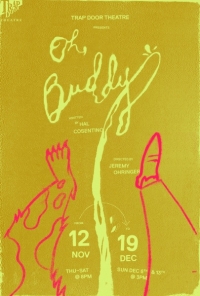
Trap Door Theatre Presents the World Premiere of OH, BUDDY, by Hal Cosentino. Opening November 12th, 2026
14 October 2026 in Upcoming TheatreTrap Door Theatre is thrilled to continue its 33rd season with a Chicago Premiere of Oh, Buddy, written by Hal…

Announcing the Cast of the 49th A CHRISTMAS CAROL
14 October 2026 in Upcoming TheatreTis the season, in spite of today's unseasonable temps, as A Christmas Carol begins rehearsals for The Goodman's 49th annual…

NOVA ENTERTAINMENT CURRENT AND UPCOMING 2026 CIRCA PINTIG UPDATES
14 October 2026 in Now PlayingNova Entertainment is pleased to announce the upcoming performance schedule and updates for CIRCA Pintig, with a visual rebrand and…
Steppenwolf Theatre Announces "ha ha ha ha ha ha ha" January 13 – February 7, 2027
14 October 2026 in Upcoming TheatreThe blurb is: hahahahahahahahahaha hahahahahahaha hihihi hahahahahahaha hoho hahahhahaha hehe hahahahahahahahahaha. Julia Masli's award-winning solo phenomenon ha ha ha ha…

'Sanctuary Stories' Ventures Into Emotional Drama Behind the News on Immigration
13 October 2026 in Theatre in ReviewSanctuary Stories plumbs the line between theater and journalism, and the powerful human dramas both can depict. Funded by a Northwestern…
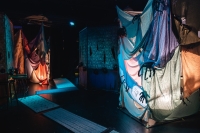
Inside Six Strange Worlds: Exquisite Corpse VI: LULLABIES
13 October 2026 in Theatre in ReviewFor its sixth Halloween season, Rough House Theater Co. has transformed Steppenwolf’s Merle Reskin Garage into a spectacular puppet haunted…
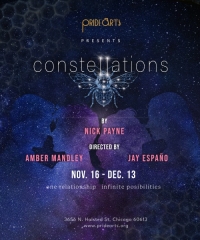
PrideArts announces cast and production teams for Nick Payne's CONSTELLATIONS, performed by alternating same-sex casts, November 13- December 13
12 October 2026 in Upcoming TheatreThursdays – Saturdays at 7:00 pm, Sundays at 3 pm Additional Saturday matinees at 3:00 pm on November 28 and December…

Robert Falls Directs a Sinfully Satisfying Don Giovanni at Lyric Opera of Chicago
11 October 2026 in Theatre in ReviewLet he without sin cast the first stone, Lyric’s “Don Giovanni” seemingly says when they bring up the house lights…

Teatro Vista Productions in collaboration with Audible presents Cafecito & Loops: A Mexodus Listening Tour Headed South Sundays, through November 1st
11 October 2026 in Now PlayingTeatro Vista Productions (TVP), the Midwest's only Latine-led Equity theatre company, in collaboration with Audible, presents Cafecito & Loops: A…
BrightSide’s Addams Family Musical Revives the Wonderfully Weird World of the Addams Clan
10 October 2026 in Theatre in ReviewThey're creepy and they're kooky, Mysterious and spooky, They're altogether ooky, The Addams Family. Yes, ooky. BrightSide Theatre’s production of…
Chicago City Opera Delivers a Rare Operatic Haunting with Der Vampyr
08 October 2026 in Theatre in ReviewWith Halloween creeping closer, there’s something fitting about revisiting one of opera’s earliest flirtations with macabre horror - especially in…

Avalanche Theatre stages the world premiere of They Broke Up by Skyler Tarnas November 6–22, 2026
08 October 2026 in Upcoming TheatreAvalanche Theatre announces the world premiere production of They Broke Up by Chicago playwright Skyler Tarnas, November 6–22, 2026. Opening…

Oil Lamp Theater Announces the cast and creative team for the return of IT'S A WONDERFUL LIFE: A LIVE RADIO PLAY, Nov. 20 - Dec. 27
08 October 2026 in Upcoming TheatreOil Lamp Theater is proud to announce the cast and creative team for its next production and the final production…
Adults-only holiday fun: Who's Holiday! brings R-rated Cindy-Lou Who back to Theater Wit for her sixth year, Nov. 27-Dec. 27
08 October 2026 in Upcoming TheatreChristmas Day is in our grasp. Why the vodka? Glad you asked! Who's Holiday! brings R-rated Cindy-Lou Who back to…
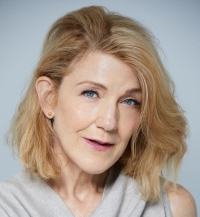
Two-Time Tony Award-Winning Actress Victoria Clark To Receive the Sarah Siddons Society Award at Annual Benefit on Monday, November 9, 2026
08 October 2026 in Theatre BuzzThe Sarah Siddons Society is pleased to present its 2026 Award to actress and director Victoria Clark, who recently starred…
Goodman's Dead Girl’s Quinceañera: When Fifteen Meets the Adult World
07 October 2026 in Theatre in ReviewAt fifteen, the world can feel like a television show you haven't quite figured out how to turn off. For…

Steppenwolf Theatre's ADIRONDACK CHAIR CIRCLE In Rehearsal – Playing October 22 – December 6, 2026 – World Premiere!
07 October 2026 in Upcoming TheatreSteppenwolf Theatre Company, the nation's premier ensemble theater company, is pleased to launch its 51st Season with the world premiere of…
Hell in a Handbag Productions Announces 25th Anniversary Season!
07 October 2026 in Upcoming TheatreHell in a Handbag Productions is thrilled to announce its 25th Anniversary Season, featuring three "camptacular" shows guaranteed to delight lovers of…
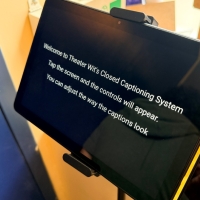
Chicago’s Theater Wit introduces new Watchword closed captioning system, dramatically improving access in all three of its theaters
07 October 2026 in Theatre BuzzChicago’s Theater Wit is now offering new, state-of-the-art closed captioning service, marking a dramatic improvement in making live theater more…

Paramount Theatre’s reimagined A Christmas Carol promises to be a dazzling new, all-ages spectacle for Chicago’s holiday theater season, November 11-January 3
07 October 2026 in Upcoming Theatre“God bless us, everyone,” because there’s a fresh, new, reimagined version of Charles Dickens’ classic tale A Christmas Carol debuting…





Latest Articles
-
 Chicago Shakespeare Makes Winter’s Tale a Story Worth Telling
Written by Angelo CamposChicago Shakespeare Theater’s production of The Winter’s Tale delivers a compelling evening of theater, showcasing an exceptional company of actors working at the top of their craft. Under the direction of Artistic Director Edward Hall, this staging marks an exciting…
-
 A Joe & Melanie Thing Theatre Company announces The Hanukkah Humbug at Greenhouse Theater Center - December 3-6
Written by Buzz Center StageThe world premiere of The Hanukkah Humbug brings ghosts, history, tradition, and a whole lot of family fun to the Greenhouse Theater Center just in time for the holidays, Melanie Ann Apel promises a lively, family-friendly experience with this new…
-
 Remy Bumppo’s Mud Row: A Family Haunted by the Past
Written by Wesley DavidRemy Bumppo opens its 30th anniversary season with Mud Row, a play by Tony Award nominee and MacArthur “Genius” Grant recipient Dominique Morisseau. Expertly directed by Malkia Stampley, this production is a sublime examination of family, inheritance, and the difficult…
-
Identity Performing Arts' Fifth Anniversary Gala: Movement That Keeps Becoming
Written by Wesley DavidFive years is an important milestone for any arts organization, but for a contemporary dance company it also marks an artistic coming of age. Identity Performing Arts celebrated its fifth anniversary at the Edlis Neeson Theater at the Museum of…


Does your theatre company want to connect with Buzz Center Stage or would you like to reach out and say "hello"? Message us through facebook or shoot us an email at This email address is being protected from spambots. You need JavaScript enabled to view it..
*This disclaimer informs readers that the views, thoughts, and opinions expressed in the text belong solely to the author, and not necessarily to Buzz Center Stage. Buzz Center Stage is a non-profit, volunteer-based platform that enables, and encourages, staff members to post their own honest thoughts on a particular production.