
Displaying items by tag: Judy Garland
Metropolis’ Wizard of Oz Rekindles Pure Childhood Wonder
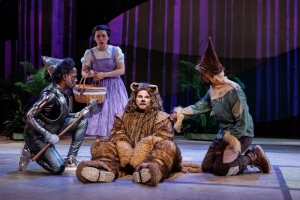
Metropolis Performing Arts Centre’s new staging of The Wizard of Oz sends audiences down the yellow brick road with a production that balances classic nostalgia with a warm, community centered spirit. Before the story unfolds, it’s worth remembering the legacy behind it: L. Frank Baum’s 1900 novel first introduced readers to Dorothy and the fantastical land of Oz, but it was the landmark 1939 MGM film that transformed the tale into a cultural touchstone. Judy Garland’s performance, the Technicolor world, and the Oscar winning score cemented the story’s place in American imagination. The film’s success inspired decades of stage adaptations, culminating in the Royal Shakespeare Company’s 1987 musical version by John Kane, which became the foundation for most modern theatrical productions, including Metropolis’ interpretation.
Under Tor Campbell’s direction and choreography, the familiar tale unfolds with clear narrative focus: Dorothy Gale’s unexpected journey from Kansas to the magical land of Oz, where she meets the Tin Man, Scarecrow, and Cowardly Lion and joins them on a quest to reach the Emerald City and seek help from the great and powerful Wizard of Oz. Along the way, the group navigates enchanted forests, poppy fields, and the looming threat of the Wicked Witch, discovering courage, heart, and the strength of friendship as their path winds toward home.
This stage version also introduces several comedic moments you won’t find in the classic film, a choice that gives the production a fresh, playful spirit. Campbell sprinkles in light audience interaction, small winks to the crowd, and character specific jokes that open up the world of Oz in ways only live theatre can. These additions never undermine the story’s sincerity; instead, they create a sense of shared fun between the performers and the audience, reminding viewers that Oz is not just magical - it’s delightfully unpredictable when experienced onstage.
While the larger roles across the cast are played with skill and presence, three performers emerge as the evening’s defining performances: Nora Wragg’s Dorothy, Jake Elkins’ Cowardly Lion, and Genevieve Thiers’s Wicked Witch. Wragg stands at the heart of the evening, offering a Dorothy shaped by sincerity, emotional clarity, and a vocal warmth and control that give her songs an effortless lift. Her speaking voice is particularly striking, at times uncannily reminiscent of Judy Garland, deepening the role’s authenticity without ever tipping into imitation. Elkins bursts onto the stage with bold humor and irresistible personality, turning the Cowardly Lion into a crowd-pleasing force of nature. Thiers brings commanding theatrical bite to the Wicked Witch, leaning into the character’s menace with sharp timing, confident presence, and seasoned comedic instincts that add a delicious flair to her villainy.
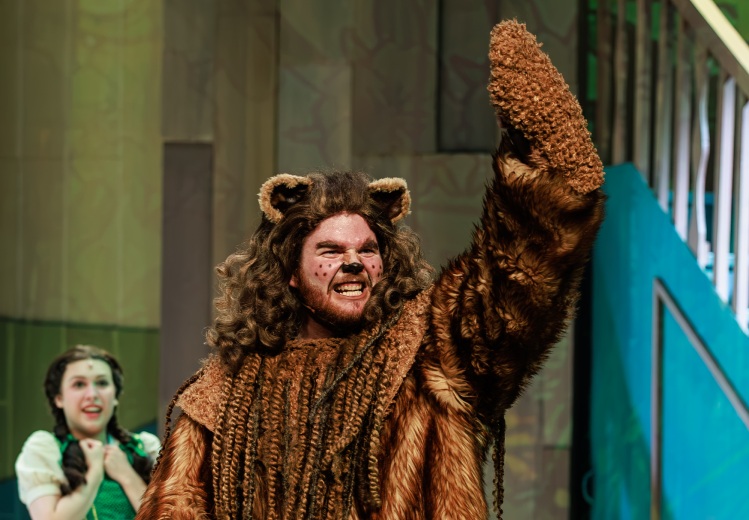
Nora Wragg as Dorothy Gale and Jake Elkins as Cowardly Lion in THe Wizard of Oz at Metropolis Performing Arts Centre. Nora Wragg as Dorothy Gale and Jake Elkins as Cowardly Lion. Photography by Jennifer Heim.
Around them, Gabriel Fries provides steady, grounded work in his dual roles as the Wizard and Professor Marvel, shifting between Marvel’s warmth and the Wizard’s bluster with ease. David Omari’s Tin Man adds soft vulnerability that complements the ensemble, and Corey Barlow, stepping in for Nolan F. Robinson II as the Scarecrow in the performance I saw, brings relaxed, playful movement and an easy charm that keeps the character loose-limbed throughout. Adding to the production’s appeal is Caliban Marie Spence, a real-life little dog who plays Toto and becomes an instant audience favorite with every appearance, a lovely touch of authenticity that heightens the show’s sense of wonder. Caliban was trained for the role by Danielle Spence, who is delightful onstage as Glinda the Good Witch, exuding kindness, confidence, and the gentle assurance that everything will be all right. Together, these performances guide the audience through Oz with warmth, personality, and a touch of real magic.
Two of the strongest forces pulling Dorothy toward home are the deep bond she shares with her dog Toto - whom she feels is her only true companion on the lonely Kansas farm and is threatened with being destroyed by the stern, vindictive neighbor Miss Gulch, who later appears in Oz as the Wicked Witch of the West - and the steadfast love of her hardworking Aunt Em, who has stepped into the role left vacant by Dorothy’s late mother. The Wizard of Oz is also one of the few films of its era to make a four‑legged companion feel like a true co‑star, and it’s always striking to me how naturally the actors work with Toto and how deeply he’s woven into Dorothy’s emotional world. In many ways, the entire story is set in motion because of him: Dorothy finding her inner self by rescuing Toto.
Metropolis’ use of a lightly trained dog reinforces that bond beautifully, grounding the story in something real and tender. Seeing an actual dog onstage makes the audience instantly understand Dorothy’s desperation to protect him from Miss Gulch’s threat, and her fierce devotion to Toto remains a surprisingly radical idea for a story of its time. He’s the companion who saved her from loneliness, and her determination to keep him safe becomes the catalyst for her entire journey - willing to leave everything she knows behind if it means preserving the friendship, love, and life of her dog.
As of 2026, animal abuse - especially toward domesticated dogs and cats - remains a heartbreaking problem around the world. That’s part of why stories like The Wizard of Oz still matter: they show a young person treating her pet with genuine love, loyalty, and protection, reminding audiences how powerful and important that bond can be.
Shifting back to the company, Metropolis Performing Arts Centre’s Youth Ensemble brings the Munchkins to life with fun energy and crisp character work- along with other roles played, enriching every scene they step into. Their musical numbers sparkle with bright, unified group vocals, and their choreography is impressively sharp, full of buoyant movement and clean formations that give Munchkinland its joyful pulse.
The production’s technical storytelling reaches an early high point with the tornado sequence, staged with impressive clarity and imagination. Dancers swirl across the stage, waving billowing grey scrims that evoke churning storm clouds, while Forrest Gregor’s sound design layers convincing wind roars, rattling impacts, and atmospheric rumble. Tony Churchill’s projection design adds spiraling debris and sweeping gusts that intensify the chaos, culminating in a striking moment when Alyssa Mohn’s scenic design reveals Dorothy’s house splitting cleanly in half. Once Dorothy lands in Oz, the creative team transforms the stage from plain Kansas farmland into a magical, richly colored world through Sierra Walker’s strategic lighting, Churchill’s dynamic projections, and Theresa Ham’s vivid, whimsical costumes. The projections also allow both the Wizard and the Wicked Witch to appear larger than life, giving their scenes an added theatrical punch that heightens the story’s sense of wonder.
All of this visual ingenuity supports the larger emotional themes at the center of Metropolis’ interpretation. As director Tor Campbell notes, “At its heart, The Wizard of Oz is not about a destination. It is about resilience,” and “After every storm comes the possibility of a rainbow,” a pair of reflections that beautifully frame the production’s spirit and its enduring message.
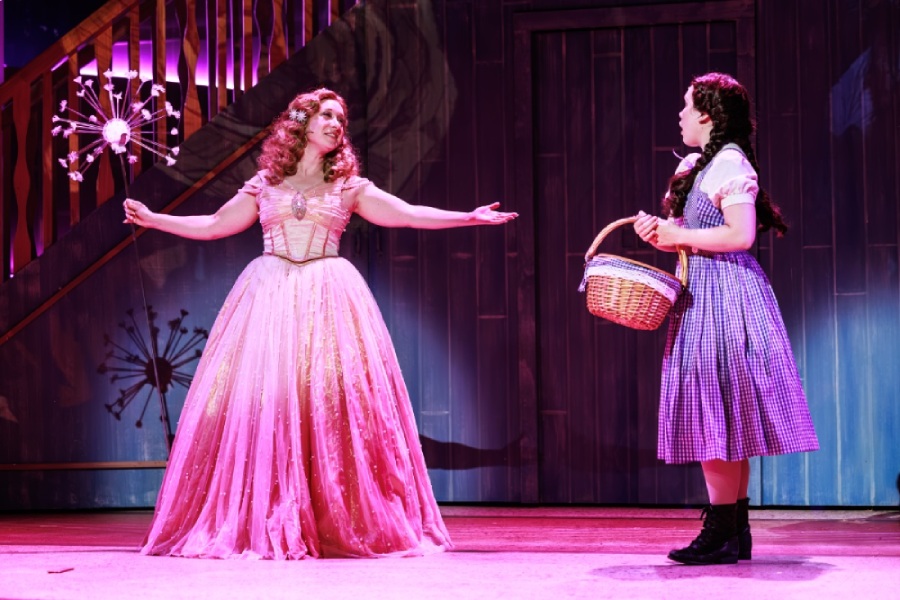
Danielle Spence as Glinda and Nora Wragg as Dorothy Gale in The Wizard of Oz at Metropolis Performing Arts Centre.
One of the joys of this production is hearing the show’s classic songs delivered with such affection. Metropolis keeps all the musical touchstones that audiences expect, from the sweeping simplicity of “Somewhere Over the Rainbow” (beautifully sung by Wragg) to the buoyant charm of “We’re Off to See the Wizard,” “If I Only Had a Brain,” “If I Only Had a Heart,” and “If I Only Had the Nerve.” The familiar melodies land with an easy warmth, and Sharon Mason’s music direction ensures each number feels both lovingly preserved and freshly energized. Whether you grew up with the film or are discovering Oz for the first time, the score remains one of the production’s most delightful anchors, offering moments of nostalgia, humor, and pure musical joy.
This staging taps into the broad, welcoming appeal that has kept The Wizard of Oz alive for generations, offering a family friendly experience that works just as well for first‑timers as it does for lifelong fans. Young audiences get the magic, color, and adventure, while adults appreciate the faithful storytelling, classic score, and standout character work. With its beloved characters, recognizable songs, and heartfelt performances, Metropolis’ production celebrates courage, companionship, and the reminder that home is never as far away as it seems. Most of all, it rekindles that unmistakable childhood wonder the story has carried for decades, letting audiences feel like kids again as they’re swept up in bright colors, familiar melodies, and the simple joy of watching Dorothy and her friends discover who they are. It’s the kind of show where adults smile at memories they haven’t visited in years and younger audiences fall in love with Oz for the first time, a blend of fun, heart, and theatrical playfulness that sends you out of the theatre lighter than you walked in.
What also stands out in revisiting The Wizard of Oz is how much strength Baum gave his female characters, especially considering the story’s early 20th century origins. Dorothy may be young, but she drives the narrative through her choices, her compassion, and her determination to return home. Glinda’s calm authority and the Wicked Witch’s fierce, commanding presence form a striking contrast - two powerful women shaping the world of Oz in very different ways. Even within a fantasy framework, there’s symbolic weight in that dynamic: Dorothy’s journey becomes a quiet assertion of agency, resilience, and moral clarity at a time when female protagonists were rarely allowed such depth. Metropolis’ production highlights that legacy, reminding audiences that beneath the magic and spectacle lies a story where women hold the narrative’s heart, its danger, and its wisdom.
Audience logistics at Metropolis are refreshingly convenient. A free, multi-level parking garage sits just around the corner, making arrival and departure remarkably easy, and the surrounding streets offer a wide range of restaurants only steps from the theatre for pre- or post-show dining. Inside, the venue’s cozy seating creates an intimate viewing experience, and while the concessions stand offers a fine assortment of drinks, snack options are extremely limited. Patrons may want to bring their own munchies for intermission, though outside food is prohibited inside the theatre, making a quick bite before or after the show the most practical choice.
With the practicalities so thoughtfully handled, what remains is the simple joy of being swept into a world where imagination leads the way. In the end, this Wizard of Oz proves that the road to Emerald City is still paved with imagination, heart, and just enough whimsy to make you believe in magic all over again.
Recommended.
For tickets and more show info, visit https://www.metropolisarts.com/.
Review: Judy & Liza - Once in a Lifetime: The London Palladium Concert — A Tribute' at Greenhouse Theater Center

With Renee Zellweger just having won the Academy Award for her portrayal of Judy Garland, focus on Garland’s legacy has been renewed. Local actresses Nancy Hays and Alexa Castelvecchi, along with music director Robert Ollis, reconstruct an iconic moment in pop culture history. A young Liza Minnelli performed just one time with her mother Judy Garland on the Palladium stage in London in 1964. The evening was recorded, and the album proved a highpoint for both Judy and Liza.
“Once in a Lifetime” is not exactly song for song as they appeared on the album, but this cabaret is a touching tribute to Judy and Liza. With Hays as Garland and Castelvechhi as Minnelli, the two take turns singing their favorite songs from the album and relay the history of how it came to be. Though they’re both dressed in character, this is more of a concert than a play.
What remains impressive about this once in a lifetime evening in 1964 is how great the arrangements were. Each song plays to the strengths of these two legendary performers. Judy Garland was in her prime in 1964 and Liza was about a year away from winning her first Tony Award. The song selection is quite a charming playlist. The evening was a love letter to each other. Given the tragedy Judy would endure by the late 60s (including her untimely death), this album remains a time capsule of a happier time in Judy’s life. It also foreshadows the show business powerhouse Liza would become in her own right.
Both Hays and Castelvecchi dispense with all too easy impressions of Judy and Liza. Instead, they both knock it out of the park in the intimate cabaret space at Victory Gardens’ Greenhouse. Castelvecchi really taps into the bluesier aspect of Liza Minnelli’s vocal range. Hays probably has a better voice in 2020 than Judy had by 1964, and her renditions of the jazzy standards are a real treat. All together, “Once in a Lifetime” is a fun hour and a half filled with the enchanting music of Harold Arlen, George Gershwin and Jerry Herman.
At Greenhouse Theater Center through April 5th
Review: Porchlight's "End of the Rainbow"

To say Judy Garland led a tumultuous life is an understatement. In a way, she was the mid-century equivalent of Amy Winehouse. A once brilliant, and at times triumphant star who faded out much too soon. Maybe some will only remember Judy as Dorothy Gale, but in her short career Judy was an international phenomenon. Her dependence on prescription pills and alcohol created a tortured existence of financial and emotional instability. Judy Garland died of a drug overdose in 1969. Her New York City funeral is often considered the catalyst of the Stonewall Riots.
There have been several TV specials, documentaries, and movies made about Judy's life. Some better than others. A small West End show, "The End of the Rainbow" about the final months of Garland's life became a smash hit in 2010. A huge part of the show's success was star Tracie Bennett's uncanny likeness to Judy. Bennett and "Rainbow" transferred to Broadway in 2012.
This show is popular right now in regional productions, but Porchlight Music Theatre's production is the Chicago premiere. Playing Judy is Angela Ingersoll. Under the direction of Michael Webber, Ingersoll turns in a tour de force. She's wise not to veer into impression and makes definitive choices for her Judy, focusing on character rather than accuracy. Though, she really brings it home in the cabaret-style musical sequences. She captures Judy's intimate performance techniques that make an audience feel warm.
The book by Peter Quilter is more of a dramatic play than musical, but the songs are all selected from Judy's regular repertoire. Quilter's script is a well-rounded account of Judy's life almost entirely composed of actual quotes and first hand accounts from her life. Judy's demise is an unpleasant story and "The End of the Rainbow" covers it without getting morbid or tabloid.
Porchlight's production of "End of the Rainbow" starring Angela Ingersoll is a deeply moving account of the hidden side of show business. It's also a bittersweet tribute to one of Hollywood's biggest legends. For Garland fans young and old, this show is not to be missed.
Through December 9th at Stage 773. 1225 W Belmont Ave. 773-327-5252


Latest Articles
-
 Metropolis’ Wizard of Oz Rekindles Pure Childhood Wonder
Written by Kimberly KatzMetropolis Performing Arts Centre’s new staging of The Wizard of Oz sends audiences down the yellow brick road with a production that balances classic nostalgia with a warm, community centered spirit. Before the story unfolds, it’s worth remembering the legacy…
Metropolis’ Wizard of Oz Rekindles Pure Childhood Wonder
Written by Kimberly KatzMetropolis Performing Arts Centre’s new staging of The Wizard of Oz sends audiences down the yellow brick road with a production that balances classic nostalgia with a warm, community centered spirit. Before the story unfolds, it’s worth remembering the legacy… -
 Cerqua Rivera Dance Theatre Announces 2026-2027 Season
Written by Buzz Center StageCerqua Rivera Dance Theatre (CRDT), the Chicago-based dance company, is proud to announce its 2026 - 2027 season. In the coming year, CRDT will join the historic Ruth Page Center for the Arts as an in-resident company. The season will also include…
Cerqua Rivera Dance Theatre Announces 2026-2027 Season
Written by Buzz Center StageCerqua Rivera Dance Theatre (CRDT), the Chicago-based dance company, is proud to announce its 2026 - 2027 season. In the coming year, CRDT will join the historic Ruth Page Center for the Arts as an in-resident company. The season will also include… -
Black Ensemble Theater continues its 50th Anniversary Season with the free outdoor concert series Fridays on the Green August 14, 21 and 29, 2026
Written by Buzz Center StageBlack Ensemble Theater continues its 50th Anniversary Season with the return of its outdoor musical celebration Fridays on the Green. The concert series is free and open to the public on theater's front lawn at the corner of Clark and Sunnyside from 6:30pm-8pm. Guests…
-
Refracted Theatre Company presents the Chicago Premiere of I’M GONNA MARRY YOU TOBEY MAGUIRE, Sept 18 - Oct 31
Written by Buzz Center StageAward-winning Refracted Theatre Company is proud to announce the cast and creative team of I’m Gonna Marry You Tobey Maguire, written by Samantha Hurley and directed by Tyler Struble, September 18 - October 31, at the Bookspan Theatre at Den Theatre, 1331 N Milwaukee Ave. Previews…
Does your theatre company want to connect with Buzz Center Stage or would you like to reach out and say "hello"? Message us through facebook or shoot us an email at This email address is being protected from spambots. You need JavaScript enabled to view it..
*This disclaimer informs readers that the views, thoughts, and opinions expressed in the text belong solely to the author, and not necessarily to Buzz Center Stage. Buzz Center Stage is a non-profit, volunteer-based platform that enables, and encourages, staff members to post their own honest thoughts on a particular production.