
Items filtered by date: November 2007
OPERATION MINCEMEAT: A NEW MUSICAL coming to CIBC Theatre September 29 – October 11
Broadway In Chicago is thrilled to announce that single tickets for Tony® and Olivier Award®-winning OPERATION MINCEMEAT: A NEW MUSICAL, Entertainment Weekly’s #1 Broadway Show of 2025, are now on sale. OPERATION MINCEMEAT: A NEW MUSICAL will play Broadway In Chicago’s CIBC Theatre (18 W. Monroe St.) for a limited two-week engagement, September 29 – October 11, on its North American leg of its World Tour.
In OPERATION MINCEMEAT: A NEW MUSICAL, it’s 1943, and the Allied Forces are on the ropes. Luckily, they’ve got a trick up their sleeve. Well, not up their sleeve, per se, but rather inside the pocket of a stolen corpse. Equal parts farce, thriller, and Ian Fleming-style spy caper (with an assist from Mr. Fleming himself), OPERATION MINCEMEAT tells the wildly improbable and hilarious true story of the covert operation that turned the tide of WWII.
Written by triple Tony Award nominees SpitLip (comprised of David Cumming, Felix Hagan, Natasha Hodgson, and Zoë Roberts), OPERATION MINCEMEAT began performances on Broadway on February 15, 2025, and continues to play at the historic Golden Theatre (252 West 45th Street), where it has been extended eight times and will soon celebrate its 500th performance. The West End production, which has been playing at the Fortune Theatre since March 29, 2023, is widely recognized as one of the best-reviewed shows in West End history, holding the record for the most five-star reviews for a new musical, with a tally of 131. OPERATION MINCEMEAT has just launched its world tour, beginning with a UK leg before heading across the pond.
Olivier Award nominated Robert Hastie (Standing at the Sky’s Edge, National Theatre – Best New Musical Olivier Award winner) will reprise his work for the tour, while Olivier Award nominated Jenny Arnold (Jerry Springer: The Opera, National Theatre) continues as Choreographer. The creative team will include Olivier nominated Set and Costume Designer Ben Stones (Standing at the Sky’s Edge), Tony and Olivier winning Lighting Designer Mark Henderson (The History Boys), Tony nominated Sound Designer Mike Walker (Charlie & The Chocolate Factory), Tony nominated Orchestrator Steve Sidwell (Beautiful: The Carole King Musical), and Olivier nominated Music Supervisor Joe Bunker (Spring Awakening). Georgie Staight is Associate Director and Paul Isaiah Isles is Associate Choreographer. Production Stage Management is by Geoff Maus, Casting is by Carrie Gardner, CSA, and General Management is by TT Partners.
OPERATION MINCEMEAT has been nominated for 64 awards since opening at the 77-seat New Diorama Theatre in 2019, winning 13, including Best Musical three times, from the Olivier Awards®, WhatsOnStage Awards, and Off-West End Awards. On Broadway, the show was nominated for four Tony Awards® in 2025, including Best Musical. The production won Best Featured Actor in a Musical for Jak Malone ’s portrayal of Hester Leggatt, who previously won the Olivier Award® in the same category. The production has also received nominations for Outstanding Production of a Musical at the Drama League Awards, Outstanding New Broadway Musical at the Outer Critics Circle Awards, Best Musical at the BroadwayWorld Theater Fans’ Choice Awards, and Favorite New Musical at the Broadway.com Audience Choice Awards.
Over 2,000 performances – from its origins on the London Fringe to the West End, to Broadway, OPERATION MINCEMEAT has cultivated a fervent fanbase, affectionately dubbed “Mincefluencers.” On Broadway alone, more than 2,000 audience members – roughly one in fifty – have bought tickets for multiple performances, including 53 superfans who have purchased tickets for ten or more shows.
OPERATION MINCEMEAT is produced on Broadway, in the West End and on its world tour by Avalon (in association with SpitLip). The show was commissioned by New Diorama Theatre, co-commissioned by The Lowry, and also supported by the Rhinebeck Writers Retreat.
For more information, visit operationmincemeat.com/tour/us
Follow OPERATION MINCEMEAT on TikTok, X, and Instagram.
TICKET INFORMATION (As of July 17, based on availability and subject to change)
Individual tickets for OPERATION MINCEMEAT: A NEW MUSICAL are on sale now and range from $40.00 - $135.00 with a select number of premium tickets available. Ticket price listed is when purchased in person at the box office. Additional fees apply for online purchases. Tickets are available now for groups of 10 or more by calling Broadway In Chicago Group Sales at (312) 977-1710 or emailing This email address is being protected from spambots. You need JavaScript enabled to view it.. For more information, visit www.BroadwayInChicago.com.
ABOUT BROADWAY IN CHICAGO
Broadway In Chicago was created in July 2000 and over the past 26 years has grown to be one of the largest commercial touring homes in the country. A Nederlander Presentation, Broadway In Chicago lights up the Chicago Theater District entertaining up to 1.7 million people annually in five theatres. Broadway In Chicago presents a full range of entertainment, including musicals and plays, on the stages of five of the finest theatres in Chicago’s Loop including the Cadillac Palace Theatre, CIBC Theatre, James M. Nederlander Theatre, The Auditorium, and just off the Magnificent Mile, the Broadway Playhouse at Water Tower Place.
For more information and tickets, visit www.BroadwayInChicago.com.
Follow @BroadwayInChicago on
Facebook ● Instagram ● TikTok ● Bluesky ● YouTube
#broadwayinchicago
Oil Lamp Theater Announces its New Home
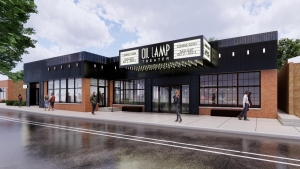
Oil Lamp Theater, currently at 1723 Glenview Road, announces its new future home will be at the former Ten Ninety Brewing Co. in Downtown Glenview, 1025 Waukegan Road. The opportunity to move to a larger performance space, that is adjacent to Oil Lamp Academy, became possible due to the founder of the Negaunee Foundation, client of Virginia Trux, who purchased the property as a personal project and looks forward to years of joy with Oil Lamp Theater. This new location pursues the goals of the “Light the Way” fundraising campaign that was announced in September of last year. The campaign included a 2028 opening of the new venue, a $5 Million fundraising goal, the expansion of its arts education, strengthening essential staff and establishing a larger performance venue with the goal of remaining in downtown Glenview. For more information or to support the campaign go to OilLampTheater.org/Light-the-Way or reach out to Oil Lamp at This email address is being protected from spambots. You need JavaScript enabled to view it..
At approximately 11,000 square feet, this new home will feature a warm and welcoming lobby, a flexible theater with seating for up to 150+ guests and thoughtfully designed spaces by Future Firm that will serve Oil Lamp’s artists, students and community.
MORE FROM OIL LAMP THEATER:
I Love You Because
August 14 – September 13, 2026
Book and Lyrics by Ryan Cunningham
Music by Joshua Salzman
Directed by Scott Shallenbarger
Music Directed by Aaron Kahn
Preview Performances: Friday, Aug. 14 at 7:30 p.m. and Saturday Aug. 15 at 3 p.m .
Opening Night: Saturday, Aug. 15 at 7:30 p.m.
Performance schedule: Thursdays and Fridays at 7:30 p.m.; Saturdays at 3 p.m. and 7:30 p.m. and Sundays at 3 p.m. with additional Wednesday performances Wednesday Aug. 19 at 11 a.m. and 3 p.m.; Wednesday, Aug. 26 at 7:30 p.m.; Wednesday September 2 at 11 a.m. and 3 p.m.; and Wednesday September 9 at 7:30 p.m.
Modern dating is a mess. Sometimes to find Mr. Right you need to find Mr. Wrong even if that means seeing someone stuck on their ex, awkward encounters of the intimate kind and lots of horrible coffee dates. Opposites attract in this feel-good musical that will transport audiences into the heart of your favorite guilty pleasure rom-com. Created by acclaimed musical team Ryan Cunningham and Joshua Salzman and inspired by Jane Austen’s gold-standard romance novel “Pride and Prejudice,” this delightful musical will make you fall head over heels.
Dial M for Murder
October 2 – November 1, 2026
Adapted by Jeffrey Hatcher from the original play by Frederick Knott
Directed by Daniel King
Preview Performances: Friday, Oct. 2 at 7:30 p.m. and Saturday, Oct. 3 at 3 p.m.
Opening Night: Saturday, Oct. 3 at 7:30 p.m.
Performance schedule: Thursdays and Fridays at 7:30 p.m.; Saturdays at 3 p.m. and 7:30 p.m. and Sundays at 3 p.m. with additional Wednesday performances Wednesday, Oct. 7 at 11 a.m. and 3 p.m.; Wednesday Oct. 14 at 7:30 p.m. (Understudy Performance); Wednesday Oct. 21 at 11:00 a.m. and 3 p.m. and Wednesday, Oct. 28 at 7:30 p.m.
Alfred Hitchcock’s adored, chilling thriller gets a modern twist that no one will see coming. A murderous misstep begins a high-stakes hunt for the real criminal as time is quickly running out. This captivating, heart-racing play leaves audiences on the edge of their seats while the mystery of the year unravels before their eyes. Will the clues unlock the right person, or will an innocent victim pay the price? The suspense is to die for…
It’s A Wonderful Life: A Live Radio Play
November 20 - December 27, 2026
Adapted by Joe Landry
Directed by Becca Holloway
Preview Performances: Friday, Nov. 20 at 7:30 p.m. and Saturday, Nov. 21 at 3 p.m.
Opening Night: Saturday, Nov. 21 at 7:30 p.m.
Performance schedule: Thursdays and Fridays at 7:30 p.m.; Saturdays at 3 p.m. and 7:30 p.m. and Sundays at 3 p.m. with additional Wednesday performances Wednesday, Dec. 2 at 11 a.m. and 3 p.m.; Wednesday Dec. 9 at 7:30 p.m. (Understudy Performance); Wednesday Dec. 16 at 11:00 a.m. and 3 p.m. and Wednesday, Dec. 23 at 7:30 p.m.
The holiday tradition returns for its 13th year. Audiences may experience unmatched holiday cheer with Frank Capra's beloved classic, “It's a Wonderful Life,” reimagined as a captivating live radio play, complete with foley sound effects and set in our own WBFR radio studio.
Journey to Bedford Falls, where George Bailey's troubles lead him to wish he was never born. Clarence, an angel sent to intervene, steps in to make his wishes come true and George quickly learns just how many lives he has touched and just how blessed he really is.
*All productions, dates, creatives, etc. are subject to change.
ABOUT OIL LAMP THEATER
Oil Lamp Theater is a professional nonprofit performing arts organization in Glenview, Illinois, welcoming over 10,000 patrons annually from more than 225 communities—41% from Glenview and others from across the North Shore and Chicago. Since establishing its intimate 60-seat home in downtown Glenview in 2012, Oil Lamp has grown into a cultural beacon, earning recognition as “Best Live Theatre in the North Shore” for four consecutive years.
With more than 70 productions to date, Oil Lamp is known for its dynamic Mainstage season, special events and its resilience during the pandemic, when it innovated with drive-in performances and outdoor productions. Today, the theatre continues to foster connection, broaden horizons and illuminate the human condition through professional theater and year-round programming.
In addition to its productions, Oil Lamp Theater operates Oil Lamp Academy, its education branch dedicated to “Training for Life Through the Performing Arts.” In 2025 alone, the program served more than 230 students ages three to 97 years old, offering classes that use theater as a pathway to build confidence, creativity and lifelong skills.
No Dogs’ Delivers an Unfamiliar Earnest
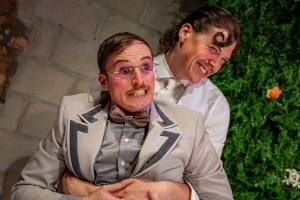
Oscar Wilde’s The Importance of Being Earnest is one of the greatest farces ever written. His wordplay caricatured high society, and clever pay-offs are hilarious when executed properly. The play was first performed on February 14, 1895 (Valentine's Day). The premiere took place at the historic St James's Theatre in London. Wilde famously subtitled the work “A Trivial Comedy for Serious People,” a reminder that its brilliance lies in treating absurdity with absolute sincerity. Unfortunately, No Dogs in the Kitchen Theatre Company’s recent production, directed by Genevieve Corkery, misses the mark when bringing this beloved play to the stage.
For those unfamiliar, the classic comedy follows two high-society bachelors, Jack Worthing and Algernon Moncrieff, who invent secret personas to escape the boredom of everyday life. Trouble arises, however, when Jack (going by the name of “Ernest”) proposes to Gwendolen, who is intent on only marrying a man with that specific name. Matters are complicated further when the carefree, mischievous Algernon also dons the moniker “Ernest” to woo Jack’s ward, Cecily, who shares the exact same romantic obsession with the name. To find happiness, the lovers must quickly untangle a web of ridiculous misunderstandings and mistaken identities. The true brilliance of Wilde’s script lies in its wordplay and sharp societal satire, taking the audience on a wild, hysterical ride where the utterly absurd is treated with the utmost importance.
Founded in 2023, No Dogs in the Kitchen is still a young company, and a certain learning curve is both natural and expected as they continue shaping their artistic identity. Their past work has already shown a clear interest in bold, unconventional staging, often embracing heightened physicality and playful absurdism. That adventurous spirit is a defining part of their aesthetic, and it’s evident the ensemble values experimentation and a willingness to push familiar texts in unexpected directions. While this production didn’t always find harmony between those impulses and Wilde’s finely tuned verbal wit, the company’s enthusiasm, imaginative framework, growing technical confidence, and emerging vision suggest they have the tools to grow into a distinctive and compelling presence within Chicago’s storefront theatre scene.
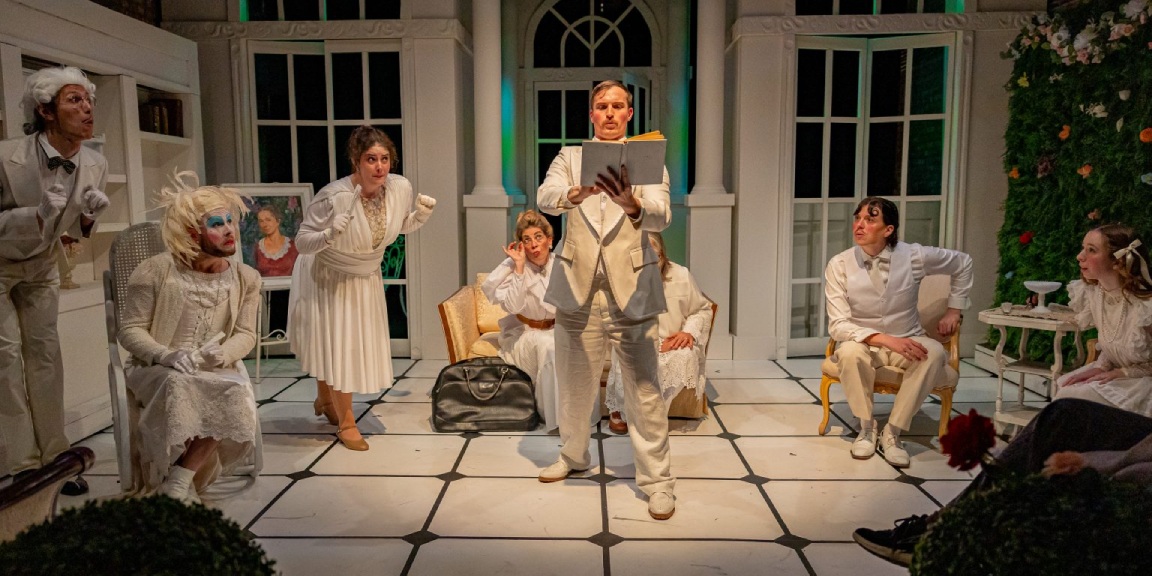
The cast of No Dogs in the Kitchen’s “The Importance of Being Earnest” at Facility Theatre.Photo: Alex Albrecht
That said, where this production struggles is in its apparent distrust of the script, adding jumbled and superfluous elements that only serve to undercut the humor it tries so hard to generate. It is as if the creative team didn't believe the script was funny enough on its own, choosing instead to pile on unnecessary subtext that needlessly deviated from - and was unsupported by - Wilde’s text.
This staging regularly undermines its own comedic timing with added, cartoonish sound effects that reduce wit to silly gags. From boinging springs to breaking plates, it felt as if someone was trying to use every button on a soundboard. Furthermore, a heavy hand of physical humor frequently distracts from the brilliant dialogue. During several monologues, cast members distracted the audience with routines like fighting on a sofa. Another oddity occurred in the final act when multiple cast members broke the fourth wall to deliver lines - a trick they hadn't used up until that point. It’s unclear why there was such distrust in the source material, and why a surplus of additions was believed to be the solution.
The performances also suffered from this same directive, often relying on over-the-top delivery. Mitch Karmis, who played two different butlers, mugged for the audience and utilized an almost cartoon-like physicality. David Lovejoy portrayed Lady Bracknell as a Mommie Dearest caricature instead of the formidable, sophisticated society matriarch who delivers scathing lines with dry, icy wit. The performance moved between widely contrasting vocal registers, creating an uneven tone that often felt out of step with Lady Bracknell’s traditionally controlled presence. It was also unclear why, in the final act, Lady Bracknell suddenly transformed into a flirtatious aggressor who growled at Jack and threw herself at the butler. Another odd decision was to have Dr. Chasuble played by Sara Corkery in a rubber race mask.
Amidst these choices, there was a bright spot in Garret Weigel’s Jack. For the most part, Weigel found the right balance between inventive character choices and a respect for the script. Jack could easily be played as a boring straight-man when up against the whimsical Algernon, but Weigel added a distinct flair to his interpretation without straying too far from the original play.
It is genuinely unfortunate that the production chose to deviate so drastically from the text. When done faithfully, The Importance of Being Earnest is a true theatrical gem. While there were moments that elicited genuine laughter, they occurred when the text was allowed to speak for itself, rather than being buried under extraneous gags.
While this hyper-stylized, over-the-top version might appeal to theatergoers seeking a radical, alternative spin on a classic, those looking for a faithful, witty adaptation of Wilde’s masterpiece will likely find this production is not the one.
The Importance of Being Earnest runs through July 26th at Facility Theatre. For more information and/or tickets, visit https://nodogsinthekitchen.org/.
Northlight Theatre inaugurates the first season in its new home in Evanston with the World Premiere of Jeffrey Hatcher's new adaptation of The Front Page

Northlight Theatre, under the direction of Artistic Director BJ Jones and Executive Director Timothy J. Evans, opens its new theater in Evanston with The Front Page, Jeffrey Hatcher's world premiere adaption of the rapid-fire classic comedy that also inspired the 1940 film His Girl Friday. The play, based on the original by Ben Hecht and Charles MacArthur and directed by Artistic Director BJ Jones, runs September 9-October 18, 2026, at the company's new home at 1012 Church Street in Downtown Evanston. The opening is Friday, September 18 at 7:30pm.
Tickets, starting at $36, are now available at northlight.org or 847.563.8400. Season subscriptions are also available at northlight.org/subscribe or 847.563.8400. With its wide range of ticket prices, discounted subscription packages and complimentary parking at the 1800 Maple Garage, Northlight remains of one of the best theatrical values in Chicagoland. Package options include traditional 5-Play Subscriptions and 4-Ticket Flex Passes.
In a 1930s Chicago press room, wise-cracking reporters are abuzz with the latest news: ace reporter Hildy Johnson is quitting her job and getting married. Editor Walter Burns has no intention of letting her go– out of the newsroom, or into the arms of another man. When a death row convict manages a daring escape, Walter wrangles Hildy into covering one last irresistible story, a tangle of rival reporters, crooked politicians, and a scoop too big to ignore!
The cast features Kate Fry (Hildy Johnson), Timothy Edward Kane (Walter Burns), Joe Dempsey (McCue), William Dick (Sheriff Hartman), John Drea (Earl Williams), Cindy Gold (Mrs. Hefflefinger), Mark David Kaplan (Bensinger), Tim Kazurinsky (Pincus), John Lister (The Mayor), Peter Moore (Brad Hefflefinger), Sadieh Rifai (Molle Malloy), Kelan Smith (Kruger), and Guy Van Swearingen (Endicott).
The creative team Jeff Kmiec (set design), Izumi Inaba (costume design), JR Lederle (lighting design), and Andre Pluess (sound design). The stage manager is Katie Klemme, resident properties supervisor is Nick Bartleson, and the resident violence and intimacy coordinator is Jyreika Guest.
BJ Jones comments, "To open our new home in Evanston, we are celebrating our roots with a brand new adaptation of The Front Page, a nearly 100-year-old play set in Chicago, by Chicago playwrights and with local stars, including Evanston residents Kate Fry, Tim Kane and Tim Kazurinsky. The play is refreshed and adapted by one of America's most produced playwrights Jeffrey Hatcher, who also wrote the adaptation of Dial M for Murder seen at Northlight in 2023."
The new state-of-the-art facility is a major component in the arts and cultural scene in Chicagoland and the North Shore and features approximately 285 comfortable seats with excellent sight lines, state-of-the-art sound and lighting systems, a dedicated box office and contemporary bar in the lobby, a second floor rehearsal and event space, and lounge and gathering areas on the first and second floors. Located in the heart of downtown Evanston, with easy, nearby access to parking and public transportation via CTA and Metra, Northlight will contribute to a vibrant local economy and will serve as an economic driver for downtown Evanston.
Convenient, free parking is available for all Northlight patrons at the 1800 Maple Self Park Garage. Details and locations, including ADA parking, are available at northlight.org/location.
The 2026-27 Season is sponsored in part by Paul Epner and Janet Gans Epner.
Northlight's production of The Front Page is sponsored in part by Sandra and Bill Farrow, Donna and Gene Frett, Susan and Henry Gaud, Barbara Goodman and Seth Weinberger, Joan and Guy Gunzberg, Paul and Leslie Lehner, Ginny Noyes, Bob Regan and Cindy Clark, Bob and Charlene Shaw, Anne and Greg Taubeneck.
The World Premiere of The Front Page
Adapted by Jeffrey Hatcher
From the original by Ben Hecht and Charles MacArthur
Directed by BJ Jones
Dates: September 9 - October 25, 2026
Cast: Kate Fry (Hildy Johnson), Timothy Edward Kane (Walter Burns), Joe Dempsey (McCue), William Dick (Sheriff Hartman), John Drea (Earl Williams), Cindy Gold (Mrs. Hefflefinger), Mark David Kaplan (Bensinger), Tim Kazurinsky (Pincus), John Lister (The Mayor), Peter Moore (Brad Hefflefinger), Sadieh Rifai (Molle Malloy), Kelan Smith (Kruger), and Guy Van Swearingen (Endicott).
Creative team: Jeff Kmiec (set design), Izumi Inaba (costume design), JR Lederle (lighting design), and Andre Pluess (sound design). The stage manager is Katie Klemme, resident properties supervisor is Nick Bartleson, and the resident violence and intimacy coordinator is Jyreika Guest.
Tickets:
Box Office: 1012 Church Street in Evanston, northlight.org, 847.563.8400
Previews (September 9-September 17): start at $36
Regular run (September 19-October 18): start at $50
Season-long discounts, subject to availability:
Student tickets: $20
Rush seats for evening performances available at 3pm daily: $20
Evanston resident discount: 10% off Friday performances
Schedule:
Tuesdays: 7:30pm
Wednesdays: 2:00pm and 7:30pm
Thursdays: 7:30pm
Fridays: 7:30pm
Saturdays: 2:00pm and 7:30pm
Sundays: 2:00pm and 7:30pm
Accessible Performances:
Audio Description/Touch Tour: Saturday, October 3 at 2:00pm
Open Captioning: Friday, October 2 at 7:30pm and Saturday, October 3 at 2:00pm
Notes of Interest:
- Northlight Theatre's new theater, education, and community space is a major component in the arts and cultural scene in Chicagoland and the North Shore and features 287 comfortable seats with excellent sight lines, state-of-the-art sound and lighting systems, a dedicated box office and contemporary bar in the lobby, a second floor rehearsal and event space, and lounge and gathering areas on the first and second floors. Located in the heart of downtown, with easy, nearby access to parking and public transportation via CTA and Metra, Northlight will contribute to a vibrant local economy and will serve as an economic driver for downtown Evanston.
- The opening of Front Page follows a series of opening events for Northlight's new home, including a ribbon cutting ceremony on July 28, 2026, and the Grand Opening Gala, "Celebrating our Past, Building our Future," on Saturday, August 15, marking the culmination of the company's 50th Anniversary Season and the beginning of a new era in Evanston.
- BJ Jones, Kate Fry, Timothy Edward Kane, Tim Kazurinsky, and John Lister are all Evanston residents and frequent artists at Northlight.
- Married couple Kate Fry and Timothy Edward Kane, who lead the cast of The Front Page, previously performed together in Birthday Candles and The Miser. Kate also appeared at Northlight in Mother of the Maid, The Beauty Queen of Leenane, and Outside Mullingar. Timothy has also been seen at Northlight in Gaslight, Faceless, Lost in Yonkers, and She Stoops to Conquer.
About the Artists
BJ Jones (Director and Northlight Artistic Director) is entering his 27th season as Artistic Director of Northlight. Mr. Jones is a two-time Joseph Jefferson Award-winning actor and a three-time nominated director. He's directed the world premieres of First Lady of Television, Brooklyn Laundry, Charm (Jeff Award Best New Play), The Outgoing Tide (Jeff Award Best New Play), White Guy on the Bus (Jeff Nominated Best New Play), Chapatti (Jeff Nominated Best New Play), Better Late, and Rounding Third. Notably, he has directed productions of Outside Mullingar, Grey Gardens, The Price, The Lieutenant of Innishmore, Andy Warhol in Iran, and The Beauty Queen of Leenane. As a producer, he has guided the three world premieres of The Christmas at Pemberley trilogy, Shining Lives, The Last Five Years, and Studs Terkel's The Good War. Additional directorial credits include Pitmen Painters (Timeline, Jeff Award Best Production); 100 Saints You Should Know (Steppenwolf); Glengarry Glen Ross (Alliance Theatre, Atlanta, Suzi Bass nomination Best Director); The Lady with All the Answers (Cherry Lane, New York); Animal Crackers (Baltimore Center Stage); Three Musketeers, The Tempest, Twelfth Night, Much Ado About Nothing (Utah Shakespeare Festival), and four productions at the Galway International Arts Festival. As a performer, he has appeared at Northlight, Goodman, Steppenwolf, Court, and other theatres throughout Chicago. Film/TV credits include The Fugitive, Body Double, Law and Order: Criminal Intent, Early Edition, Cupid, and Turks, among others.
Joe Dempsey (McCue) is so very happy to be in the inaugural production at Northlight's new home. Past Northlight shows include The First Lady of Television, The Mousetrap, Faceless, Inherit the Wind, and All in the Timing. He's also worked at Goodman, Chicago Shakespeare, Lookingglass, Court, Paramount, Theatre Wit, Remy Bumppo, many others, and most recently at Drury Lane Oak Brook, performing the titular role in Father of the Bride. Joe is an alum of the Neo-Futurists and The Second City National Touring Company. Congrats to BJ, Tim, and the Northlight staff on the new digs!
John Drea (Earl Williams) Northlight: Little Women (Jeff Nomination). Chicago: Little Bear Ridge Road (Steppenwolf), The Sound Inside (Goodman), The Da Vinci Code (Drury Lane), A Lie of the Mind (Raven). Broadway: Death of a Salesman, Little Bear Ridge Road. Regional: American Players Theatre, Constellation Stage & Screen. Television: Monster. Film: Patient.
William Dick (Sheriff Hartman) Northlight: The First Lady Of Television, The Book Of Will, The Odd Couple; Steppenwolf: Amadeus, Choir Boy (Jeff Award-Ensemble); Goodman: Inherit The Wind, A Christmas Carol, Bernhardt/Hamlet, Father Comes Home From The Wars, Blind Date; Chicago Shakespeare: The Comedy of Errors, All's Well That Ends Well, among many; TimeLine: The Pitmen Painters (Jeff Award-Ensemble). Regional: Guess Who's Coming To Dinner, The Little Foxes (Asolo Repertory); Henry IV, 1&2 (Notre Dame Shakespeare Festival); plus Milwaukee Repertory, Madison Repertory, and Los Angeles Theatre Center. TV: Dark Matter, Emperor of Ocean Park, A League of Their Own, 4400, Fargo, Chicago Fire, Empire. Film: Fred Claus, Stranger Than Fiction, The Break Up, The Merry Gentleman, Oz the Great and Powerful, The Company.
Kate Fry (Hildy Johnson) Northlight: Birthday Candles, Mother of the Maid, The Beauty Queen of Leenane, Outside Mullingar, and The Miser. Chicago: The Cherry Orchard, The Winter's Tale, Ah, Wilderness! (Goodman); The Belle of Amherst, Electra, The Hard Problem and others (Court); Leopoldstadt, Marjorie Prime, Hedda Gabler, A Minister's Wife, Oh Coward! (Writers); and productions with Victory Gardens, Chicago Shakespeare, Apple Tree Theatre, and Marriott Theatre. Regional: Center Theatre Group, McCarter Theatre Center, Repertory Theatre of St. Louis, and Lincoln Center. TV credits include: Empire (Fox), Boss (Starz), Chicago PD (NBC), and Proven Innocent (Fox). She has received four Joseph Jefferson awards, the local Sarah Siddons award, the After Dark award, and Chicago Magazine's actress of the year. Kate is married to actor/teacher Timothy Edward Kane; they have two sons.
Cindy Gold (Mrs. Hefflefinger) Chicago credits: The First Lady of Television, Pride and Prejudice, Jekyll and Hyde, Mothers and Sons, and Awake and Sing (Northlight); The Most Spectacularly Lamentable Trial of Miz Martha Washington (Steppenwolf); Measure for Measure, Christmas Carol (Goodman); Wipeout (Rivendell); Indecent (Victory Gardens); Cat on a Hot Tin Roof (Drury Lane); Taming of the Shrew (Chicago Shakespeare), Showboat, My Fair Lady (Lyric Opera). Regional: The Cake (Asolo Theatre); Showboat, Daughter of the Regiment (The Kennedy Center); Music Man (Glimmerglass Opera); and several summers with Peninsula Players. She won a Jeff Award for her performance in Loving Repeating. Recent TV appearances include Work in Progress, Empire, Chicago Fire, and Leverage. Film: Ghostlight, I Used to Go Here. Cindy is Professor Emeritus of Theatre at Northwestern University. Represented by Stewart Talent.
Timothy Edward Kane (Walter Burns) is pleased to return to Northlight, having previously appeared in Gaslight, Birthday Candles, Faceless, Lost in Yonkers, The Miser, and She Stoops to Conquer. Other Chicago credits include work with Court Theatre, Chicago Shakespeare Theatre, Writers Theatre, Rivendell, TimeLine, Goodman, and Steppenwolf. International and Regional credits: The Royal Shakespeare Company (UK), The Mark Taper Forum, Notre Dame Shakespeare, Peninsula Players, and the Illinois Shakespeare Festival. TV: Chicago P.D. (NBC), Chicago Fire (NBC), and Empire (FOX). Awards: two Jeff Awards, AfterDark, and Chicago Magazine's actor of the year. Mr. Kane is married to actress Kate Fry, with whom he has two sons; he is an Assistant Professor of Theatre at Loyola University Chicago.
Mark David Kaplan (Bensinger) has received three Joseph Jefferson Awards – for Les Misérables, Ragtime, and Forbidden Broadway. Select theatre: First Lady of Television and Mr. Dicken's Hat (Northlight); The Diary of Anne Frank (People's Light); Fiddler on the Roof (Drury Lane/Lyric Opera); Titanic (Marriott); No Man's Land (Steppenwolf); Clue (Mercury); The Band's Visit (TheatreSquared); Kinky Boots (Paramount); and premieres with Chicago Shakespeare, About Face, Goodman, and Skylight Theatres. Concert appearances: She Loves Me (w/Bryce Pinkham); Cabaret (Gulf Coast Symphony); and Ragtime - opposite Ashley Brown (Cincinnati Pops). Mark toured the US as Zazu in The Lion King. TV: Utopia (Amazon); Chicago Fire (NBC). Film: Adult Children and the upcoming Patient. Mark is a part of Season of Concern, an organization that supports those who work in the performing arts.
Tim Kazurinsky (Pincus) got his start at Chicago's Second City Theatre. Movie appearances include Neighbors, Somewhere in Time, and three Police Academy films. A former cast member of NBC's Saturday Night Live, Tim came home to Chicago to co-write such screenplays as My Bodyguard, About Last Night..., The Cherokee Kid, and For Keeps. He was nominated for a BAFTA and Writers' Guild Award for his screenplay for Strange Relations, starring Julie Walters, Paul Reiser, and dear friend George Wendt. Tim still loves performing and has appeared on Curb Your Enthusiasm, Still Standing, and According to Jim in guest star roles. He has previously appeared at Northlight in The Odd Couple and Funnyman. Tim lives in Evanston with his wife Marcia, kids Zoe & Pete, and Zippy the dog.
John Lister (The Mayor) returns for his sixth production with Northlight, having previously appeared in Tom Jones, She Stoops To Conquer, Inherit The Wind, Red Herring, and Lady Windermere's Fan. Theatre credits include numerous productions with Steppenwolf, Writers, The Goodman, Chicago Shakespeare, APT, and Lyric Opera. Film and TV credits include Public Enemies (Universal), Animals (Oscilloscope), The Secret Santa (TLC), Never Not Yours (Adult Children), Chicago Fire (NBC), Chicago Med (NBC), Patriot (Amazon), easy (Netflix), The Red Line (CBS), and Dark Matter (Apple TV+). John is a proud union member, represented by Stewart Talent Management. He is especially excited to be working for the first time with Artistic Director BJ Jones.
Peter Moore (Brad Hefflefinger) Is a founding member and Artistic Director of Steep Theatre where he has performed in numerous productions over the last 25 years, including A Slow Air, The Writer, Light Falls, Pomona, Birdland, Brilliant Adventures, Harper Regan, If There Is I Haven't Found It Yet, A Brief History of Helen of Troy, and some other impossibly long titles. Other credits: I am Not Your Perfect Mexican Daughter, The Crucible, and August: Osage County (U/S) (Steppenwolf); Ma Rainey's Black Bottom (Writers); In the Canyon (Jackalope); The Downpour, (Route 66 Theatre). Film & TV: Chicago Fire, Chicago PD, Chicago Med, Chicago Justice (NBC); Emperor of Ocean Park (MGM+); The Red Line (CBS); and the Bollywood blockbuster Dhoom 3. Pete is represented by Gray Talent Group.
Sadieh Rifai (Mollie Mallory) is a Chicago-based actor, playwright, and graduate of The School at Steppenwolf. A recipient of the prestigious 2011 Princess Grace Award, she is an ensemble member at A Red Orchid Theatre, where her credits include The Targeted, Do You Feel Anger?, An Evening at the Talk House, and the world premiere of Grey House. She is making her Northlight Theatre debut and has performed across major regional stages, appearing in You Will Get Sick (Steppenwolf); Support Group for Men, A Christmas Carol (Goodman); The Nativity Variations (Milwaukee Repertory); and the world premiere of The Humans (American Theatre Company). Film: All Happy Families and The Wise Kids. Television: Shining Girls, Somebody Somewhere, Patriot, The Red Line, and Bettendorf Talks.
Kelan M. Smith (Kruger) is thrilled to return to Northlight for this exciting world premiere! Chicago credits include The Porch on Windy Hill (Northlight); Spring Awakening, Pump Boys and Dinettes (Porchlight); Jekyll and Hyde, Amélie (Kokandy); Million Dollar Quartet Christmas, Buddy - The Buddy Holly Story (Marriott); Sunny Afternoon, The Lord of the Rings (Chicago Shakespeare); Ring of Fire (Drury Lane); The Choir of Man (Apollo); Camp Rock (The Beautiful City Project); Bright Star (Boho Theatre), Haymarket (Underscore Theatre). Regional/International credits include The Lord of the Rings (Auckland Civic Theatre); Plaid Tidings, Lost Highway, Buddy - The Buddy Holly Story (Timber Lake Playhouse); and Once (Bristol Valley Theatre). Love to Kara, and his late brother Riley.www.kelanmsmith.com
Guy Van Swearingen (Endicott) Northlight Theatre debut. Off-Broadway: The Opponent (59E59). Select Regional: Berlin, Arsenic and Old Lace (Court); Sweat (Huntington); Sign in Sidney Brustein's Window (Goodman); Simpatico (McCarter); The Time of Your Life (Steppenwolf, Seattle Rep, A.C.T.); Taking Care (Steppenwolf); Trouble In Mind (Timeline); Cleansed (Defiant); Eleven Rooms of Proust (Lookingglass, About Face, Goodman); Mann ist Mann (Famous Door). Founder of A Red Orchid with over 15 performance credits. TV: The Bear (FX); Power Book IV: Force (Starz); Chicago Fire (NBC); Fargo (F/X); The Red Line (CBS); Boss (Starz); The Beast (A&E). Film: Captive State (Lionsgate); Take Shelter (Sony); The Dilemma (Universal Pictures); The Merry Gentleman (Samuel Goldwyn); The Weatherman (Paramount); Ali (Sony Pictures). Former Chicago Fire Department Lieutenant. Agency: Paonessa Talent; Management: WEG Talent, NYC.
Northlight is supported in part by generous contributions from BMO; Bulley & Andrews; Byline Bank; ComEd, An Exelon Company; Dr. Scholl Foundation; Eckenhoff Saunders Architects, Inc.; Evanston Community Foundation; Franklin Square Foundation; Full Circle Foundation; Grumman Butkus Associates; Hagerty Consulting; Illinois Arts Council, a state agency; John R Halligan Charitable Fund; Kirkland & Ellis; LionBird; Lloyd A. Fry Foundation; Mabadi Realty; Mammel Family Foundation; Modestus Bauer Foundation; Northwestern University; Paul M. Angell Family Foundation; The Revada Foundation of the Logan Family; Patrick G. and Shirley W. Ryan Foundation; The Schubert Foundation, Inc.; SLOAN; The Harold and Mimi Steinberg Charitable Trust; The Sullivan Family Foundation; Tom Stringer Design Partners.
Northlight Theatre aspires to promote change of perspective and encourage compassion by exploring the depth of our humanity across a bold spectrum of theatrical experiences, reflecting our community to the world and the world to our community.
Founded in 1974 with its inaugural season in 1975-76, the organization has mounted over 250 productions, including more than 45 world premieres. Northlight has earned 238 Joseph Jefferson Award nominations and 37 Awards, as well as 11 Edgerton Foundation for New Play Awards. As one of the area's premier theatre companies, Northlight is a regional magnet for critical and professional acclaim, as well as talent of the highest quality.
TOPDOG/UNDERDOG - Steppenwolf Theatre - Through November 1st

Steppenwolf Theatre Company, the nation's premier ensemble theater company, is pleased to launch its 51st Season with Suzan-Lori Parks' Pulitzer Prize-winning drama Topdog/Underdog, helmed by Tony Award-winning director Kenny Leon, who returns to Steppenwolf following his hit production of King James. Ensemble members Glenn Davis (Windfall, Purpose–Chicago/Broadway, King James) and Namir Smallwood (Windfall, The Book of Grace, Bug–Chicago/Broadway) go head-to-head in this highly-anticipated revival, more than two decades after the company's celebrated 2003 production.
Topdog/Underdog will play a limited engagement September 17 — November 1, 2026 in Steppenwolf's Downstairs Theater, 1650 N. Halsted St. in Chicago. Single tickets go on sale Thursday, July 9, 2026 at steppenwolf.org or the Box Office at (312) 335-1650.
About the Production:
Brothers Lincoln and Booth, named in jest, are two Black men living in America just trying to get by. Lincoln dresses like his namesake, reenacting his assassination for money and laughs. Booth stays stuck in their apartment, working tirelessly on his three-card hustle. Sibling rivalry and a lifetime of resentment come to a head in this fast-paced and ferocious thrill ride. The deck is stacked with a Tony Award-winning director, a Pulitzer Prize-winning script and a tour-de-force showdown for ensemble members Glenn Davis and Namir Smallwood. "Take thuh cards and show me whatcha got!"
The creative team includes Arnulfo Maldonado (Scenic Design), Dede Ayite (Costume Design), Lee Fiskness (Lighting Design), Justin Ellington (Sound Design), Patrick Zakem (Creative Producer), Elise Hausken (Production Manager), JC Clementz, CSA (Casting), Laura D. Glenn (Production Stage Manager) and Jaclynn Joslin (Assistant Stage Manager). For full cast and creative team bios, click here.
Production Details:
Title: Topdog/Underdog
Playwright: Suzan-Lori Parks
Director: Kenny Leon
Cast: ensemble members Glenn Davis (Lincoln) and Namir Smallwood (Booth)
Understudies: Anthony Fleming III (Lincoln) and Patrick Newson Jr. (Booth)
Location: Steppenwolf's Downstairs Theater, 1650 N. Halsted St., Chicago
Dates: Previews: Thursday, September 17 – Saturday, September 26, 2026
Regular run: Tuesday, September 29 – Sunday, November 1, 2026
Curtain Times: Tuesdays, Wednesdays, Thursdays and Fridays at 7:30 pm; Saturdays at 3 pm & 7:30 pm; and Sundays at 3 pm. Please note: there will not be 7:30 pm performances on Tuesday, September 22, Thursday, October 1, Tuesday, October 6, Tuesday, October 13, Wednesday, October 21 or Thursday, October 22; there will be an added 2 pm matinee on Wednesday, October 21.
Tickets: Classic Memberships starting as low as $165 are now on sale for Steppenwolf's 2026/27 season at steppenwolf.org/myseason. Single tickets for Topdog/Underdog ($20 – $124*) go on sale Thursday, July 9, 2026 at steppenwolf.org and the Box Office at (312) 335-1650. Steppenwolf Flex Memberships are currently on sale: Black Card Memberships with six tickets for use any time for any production and RED Card Memberships for theatergoers under 30. *Pricing includes an $8.50 handling fee
Steppenwolf offers 20 tickets for $20 (no added fees) for each performance of every membership series production. Use promo code 20FOR20 to redeem this offer online, available in advance until they're sold out for every main series show. Limit 2 tickets per person. You can also purchase by phone at (312) 335-1650 on the day-of show at 12 pm for main series performances. Limit 2 tickets per person.
Accessible Performance Dates:
Audio-Described and Touch Tour: Sunday, October 25 at 3 pm (1:30 pm Touch Tour)
Open-Captioned: Thursday, October 8 at 7:30 pm & Saturday, October 17 at 3 pm
ASL-Interpreted: Friday, October 16 at 7:30 pm
Education and Engagement:
Throughout the 2026/27 season, Steppenwolf continues its commitment to the next generation of theatre learners, makers and appreciators with robust education and engagement programming. Programming includes dedicated student matinee performances during four of the five Membership Series productions including Topdog/Underdog, Adirondack Chair Circle, The Comeuppance and Ellen B., in-school residencies in partnership with Chicago Public schools, workshops, panels and events specifically geared towards teens, as well as professional development trainings and resources for educators. Additionally, Steppenwolf is reimagining their community engagement and will pilot new public programming, continue accessibility programming and offer opportunities for deeper explorations for audiences throughout the season. For additional information about Steppenwolf's Education and Engagement programming and to register your school for a field trip visit steppenwolf.org/education-and-engagement/steppenwolf-field-trip-series.
Artist Biographies:
Suzan-Lori Parks (Playwright) is a multi-award-winning writer and musician. She is the first African-American woman to receive the Pulitzer Prize for Drama for Topdog/Underdog, which recently won the 2023 Tony Award for Best Revival. Her other plays include Sally & Tom (2024), Plays for the Plague Year (Drama Desk Award, Best Music, 2023) and Father Comes Home From The Wars (2014). Parks' first marathon-writing "micro diary plays," 365 Days/365 Plays were produced worldwide in what was the largest grassroots collaborative theatre project to date. She is a MacArthur "Genius" Fellow, a novelist: Getting Mother's Body (Random House); and a screenwriter: Girl 6, Genius: Aretha, and The United States vs Billie Holiday. Parks also writes songs and fronts her band "SLP& The Joyful Noise," with her punk-couture medicine show, The Tune Up, world-premiering this summer. As a college student Parks is grateful to have studied creative writing with James Baldwin, who encouraged her to write for the theatre.
Kenny Leon (Director) is a Tony Award-winning director. Broadway: The Balusters, Othello, Our Town, HOME, Purlie Victorious: A Non-Confederate Romp Through the Cotton Patch, Topdog/Underdog, Ohio State Murders, A Soldier's Play, American Son, Children of a Lesser God, Holler If Ya Hear Me, A Raisin in the Sun, The Mountaintop, Stick Fly, August Wilson's Fences, Gem of the Ocean and Radio Golf. Off-Broadway: The Conversation (Astor Place Theatre), This World of Tomorrow (The Shed), King James, The Underlying Chris, Everybody's Ruby, Emergence-See! (The Public), Smart People (Second Stage). Opera: Amahl and the Night Visitors, Margaret Garner. Television: Robin Roberts Presents: Mahalia, Colin in Black & White, 4400, Amend: The Fight for America, American Son (adapted for Netflix), Hairspray Live!, The Wiz Live!, Steel Magnolias, Dynasty, In My Dreams. Author: Take You Wherever You Go. Artistic Director Emeritus: Kenny Leon's True Colors Theatre Company. Senior Resident Director: Roundabout Theatre Company. Awards: Obie, Actors Fund Medal of Honor, George Abbott Lifetime Achievement for American Theatre, Jason Robards Award for Excellence in Theatre.
Glenn Davis (Lincoln) is an actor, producer and Artistic Director of Steppenwolf Theatre Company, alongside Audrey Francis, where he has been an ensemble member since 2017. His Steppenwolf credits include Downstate, The Christians, You Got Older, The Brother/Sister Plays, Head of Passes, King James (also Mark Taper Forum), Describe the Night, Purpose and Windfall. Broadway credits include: Purpose; Bengal Tiger at the Baghdad Zoo (also Kirk Douglas Theatre, Mark Taper Forum). Off-Broadway credits include Transfers (MCC Theatre), Wig Out! (Vineyard Theatre), Downstate (Playwrights Horizons, Outer Critics Circle Nomination) and King James (MTC). Other regional credits include Moscow x6 (Williamstown Theatre Festival). International credits include Downstate (National Theatre, UK), Edward II, The Winter's Tale and As You Like It (Stratford Festival), Othello (The Shakespeare Company). Television credits include Billions, 24, The Unit, Jericho and The Good Wife. Glenn is an Artistic Associate at the Young Vic in London and at the Vineyard Theatre in New York. He is also a partner in Cast Iron Entertainment, a collective of artists consisting of Sterling K Brown, Brian Tyree Henry, Jon Michael Hill, Andre Holland and Tarell Alvin McCraney. Cast Iron is currently in residence at The Geffen Playhouse in Los Angeles. In 2021, Glenn founded The Chatham Grove Company along with his producing partner Tarell Alvin McCraney.
Namir Smallwood (Booth) joined the Steppenwolf Theatre Company ensemble in 2017. Steppenwolf: Windfall, Mr. Wolf, You Will Get Sick, The Book of Grace, Seagull, Bug, True West, BLKS, Monster, Man In Love, The Hot L Baltimore, Last Night and the Night Before. Broadway: Pass Over, Bug. Off Broadway: Pipeline, Pass Over (Lincoln Center). Chicago: The Lost Boys of Sudan (Victory Gardens Theater); Charm (Northlight Theatre); The Grapes of Wrath (The Gift Theatre); East Texas Hot Links (Writers Theater). Regional: Marin Theatre Company, Pillsbury House Theatre, Ten Thousand Things, Guthrie Theater. International: True West (Galway International Arts Festival). Television: Chicago Fire, Betrayal, Elementary, American Rust (Showtime/FreeVee); Power Book IV: Force (STARZ). Film: Rounding, About Time, Bailey's Blues.
Accessibility:
As a commitment to make the Steppenwolf experience accessible to everyone, performances featuring American Sign Language Interpretation, Open Captioning and Audio Description are offered during the run of each STC production. Assistive listening devices (ALDs), large-print programs and Braille programs are available for every performance and all our spaces are equipped with an induction hearing loop. Our building features wheelchair accessible seating and restrooms, push-button entrances, a courtesy wheelchair and all-gender restrooms, with accessible counter and table spaces at our bars. For additional information regarding accessibility, visit steppenwolf.org/access or e-mail This email address is being protected from spambots. You need JavaScript enabled to view it..
Sponsor Information:
United Airlines is the Official and Exclusive Airline of Steppenwolf. Steppenwolf is also grateful for the significant season support from lead sponsors Allstate Insurance Company, Paul M. Angell Family Foundation, Bloomberg Philanthropies, Crown Family Philanthropies, Caroline and Keating Crown, Julius Frankel Foundation, Lefkofsky Family Foundation, Northern Trust, Anne and Don Phillips, John Hart and Carol Prins, Shubert Foundation, Inc, Walder Foundation, and Zell Family Foundation. Steppenwolf also acknowledges generous support from premier sponsors Anonymous, Andrew and Amy Bluhm, Michael and Cathy Brennan, Ann and Richard Carr, Chicago Community Trust, Conagra Brands Foundation, Rich and Margery Feitler, FROST CHICAGO, John D. and Catherine T. MacArthur Foundation, The Orlebeke Foundation, Polk Bros. Foundation, Sacks Family Foundation, Harold and Mimi Steinberg Charitable Trust, Thoma Bravo and Bryan Traubert and Penny Pritzker. Steppenwolf also acknowledges support from the Illinois Arts Council and the City of Chicago Department of Cultural Affairs and Special Events.
About Steppenwolf Theatre Company:
Steppenwolf Theatre Company is the nation's premier Ensemble Theater with 50 members who are among the top actors, playwrights and directors in the field. Thrilling, powerful, groundbreaking productions have made this theatre legendary. From the early phenomenon of Balm in Gilead, to The Grapes of Wrath, August: Osage County, Downstate, The Brother/Sister Plays, and more recently, the Pulitzer Prize and Tony Award-winning Purpose, Steppenwolf Theatre has had a long-running and undeniable impact on American Theatre and Chicago's cultural landscape. Founded in 1974 by Terry Kinney, Jeff Perry and Gary Sinise, Steppenwolf started as a group of friends in their teens and early 20s performing in the basement of a school in Highland Park, Illinois. Today, the company's artistic force remains rooted in the original vision of its founders: an artist-driven theatre, whose vitality is defined by its appetite for bold and innovative work. Every aspect of Steppenwolf is rooted in its Ensemble ethos, from the intergenerational artistic programming to the multi-genre performance series LookOut, to the nationally recognized work of Steppenwolf Education and Engagement which serves nearly 15,000 teens annually. While grounded in the Chicago community, more than 40 original Steppenwolf productions have enjoyed success nationally and internationally, including Broadway, Off-Broadway, London, Sydney, Galway and Dublin. Steppenwolf also holds accolades that include the National Medal of Arts, 14 Tony Awards, two Pulitzer Prize-winning commissions and more. Led by Artistic Directors Glenn Davis and Audrey Francis, Executive Director E. Brooke Flanagan and Board of Trustees Chair Keating Crown — Steppenwolf continually redefines the boundaries of live theater and pushes the limits of acting and performance.
Steppenwolf's Mission: Steppenwolf strives to create thrilling, courageous and provocative art in a thoughtful and inclusive environment. We succeed when we disrupt your routine with experiences that spark curiosity, empathy and joy. We invite you to join our ensemble as we navigate, together, our complex world. steppenwolf.org, facebook.com/steppenwolftheatre, twitter.com/steppenwolfthtr and instagram.com/steppenwolfthtr.
A Thoughtful Evolution of Her Own Making: Overshadowed Theatrical Productions’ My Fair Lady
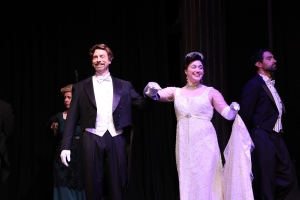
Overshadowed Theatre Productions brings fresh energy to one of musical theatre’s most enduring classics, offering a spirited and thoughtful take on My Fair Lady. This production leans into the story’s sharp contrasts - class and aspiration, control and independence - and invites audiences to see Eliza Doolittle’s transformation with new clarity. It’s a familiar tale, but Overshadowed’s staging makes it feel newly engaged and unexpectedly resonant.
Taking place in 1912, Edwardian London, My Fair Lady is the story of Eliza Doolittle (Kimberly Nicolosi), a resilient young woman who sells flowers for tuppence and whose Cockney accent marks her as invisible to the upper-class Londoners who pass her by. When she crosses paths with Henry Higgins (John Hacker), a brilliant but insufferably arrogant linguist, he boasts that he can remake her into someone society will accept - someone who can pass as a duchess at an embassy ball. What begins as a bet between scholars becomes a transformation that neither fully anticipates.
As Eliza endures Higgins’ relentless drills and dismissive temperament, she begins to outgrow the very mold he tries to force her into. Her ascent exposes the absurdity of class performance, the fragility of male ego, and the uncomfortable truth that respectability often demands erasing the people who need it most. By the time Eliza steps into high society, she is no longer Higgins’ creation but her own person - one who refuses to be spoken for, spoken over, or spoken down to.
The musical’s enduring tension lies in the question it never answers neatly: whether transformation is liberation or simply another form of confinement. My Fair Lady may dazzle with its elegance, but its heart beats in Eliza’s insistence that dignity is not something granted by others - it’s something claimed.
Lerner and Loewe’s My Fair Lady entered the musical theatre canon in 1956, following its development in 1955–56 and a Broadway premiere led by Julie Andrews and Rex Harrison. The story later reached an even wider audience with the 1964 film adaptation, starring Audrey Hepburn as Eliza and Rex Harrison reprising his stage role as Higgins, released on October 21, 1964.
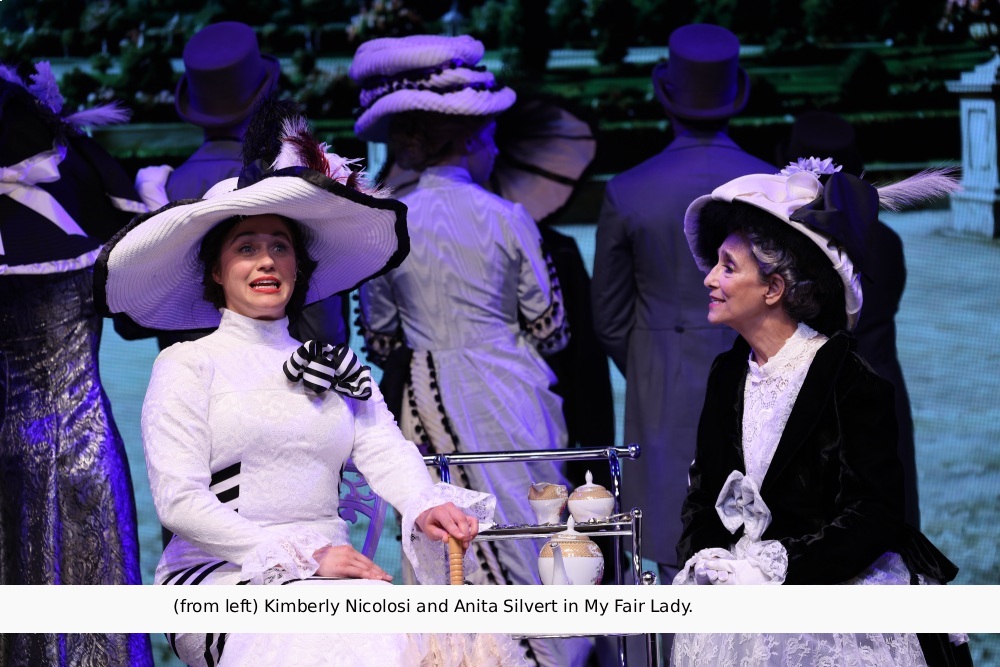
Overshadowed’s current production of this defining musical is anchored by Kimberly Nicolosi, whose Eliza Doolittle grows with steady assurance and a clear emotional arc that makes her transformation feel genuinely earned. Nicolosi is an absolute whirlwind of conviction, with vocals that match her intensity beat for beat, and a charm that makes her Eliza impossible to resist. Opposite her, John Hacker offers a thoughtfully restrained Henry Higgins, capturing both the character’s intellectual rigidity and the subtle shifts that reveal his dependence on Eliza, and his performance brings a compelling, understated complexity to the role. They shape the show’s strongest and most engaging dynamic. Surrounding them, Glen Lindemann brings gentle dignity to Colonel Pickering, while Madeline Frederick’s composed Mrs. Pierce adds welcome stability to Higgins’ household. Brad Holloman provides lively humor as Alfred P. Doolittle, and the Eynsford-Hill family - Sharon Lindemann as Mrs. Eynsford-Hill and Aren Dawson as Freddy - adds a touch of sweetness and refinement. Anita Silvert’s poised Mrs. Higgins offers a calm counterbalance to her son’s bluster, and she delivers a few of the play’s most pointed one-liners with crisp, knowing precision. Under Reba Hervas’ direction, the ensemble works together with easy cohesion, and Hervas guides the production with a steady, confident hand that keeps the storytelling clear, warm, and consistently engaging.
Though wrapped in Edwardian charm, My Fair Lady carries a clear feminist undercurrent, rooted in Eliza’s fight for self-determination. Her journey is not simply one of refinement but of agency - choosing to reshape her life, challenge the limitations imposed by class and gender, and ultimately assert her independence from Higgins’ control. The production highlights how her transformation belongs to her alone, not to the men who presume to mold her, allowing the story’s critique of patriarchal entitlement and its celebration of female autonomy to resonate beneath the musical’s elegance.
The production’s musical backbone shines through beloved highlights such as “Wouldn’t It Be Loverly,” “The Rain in Spain,” “I Could Have Danced All Night,” and “On the Street Where You Live,” each handled with care under Karen Archbold’s attentive music direction. The staging moves with an easy flow thanks to Katy Smith’s well-shaped choreography, which keeps the transitions light and the ensemble well-coordinated. These elements honor the classic craftsmanship of Alan Jay Lerner, who penned the book and lyrics, and Frederick Loewe, whose score remains one of musical theatre’s most enduring treasures.
The set design stands out as one of the production’s most impressive achievements, delivering a level of polish that will surprise audiences unfamiliar with Overshadowed’s work. Thoughtfully constructed and visually cohesive, it creates an environment that supports the storytelling without ever overwhelming it. This marks the first production by the company to utilize a massive video board, and its use is highly successful - enhancing the world of the play with vivid, effective projections that expand each location with striking clarity. The video board works in concert with well-crafted props and scenic pieces that are seamlessly brought in when needed, creating transitions that feel both fluid and purposeful. The scenic and projection work by Yohannan Lee adds depth and atmosphere, giving each setting a sense of place and intention. Complementing the world onstage, Megan Wilburn’s costume design brings the period to life with authenticity, from the tailored silhouettes to the women’s elaborate Edwardian picture hats, which add a flourish of social detail and visual charm. All of these design choices elevate the production with a craftsmanship that feels both ambitious and warmly inviting.
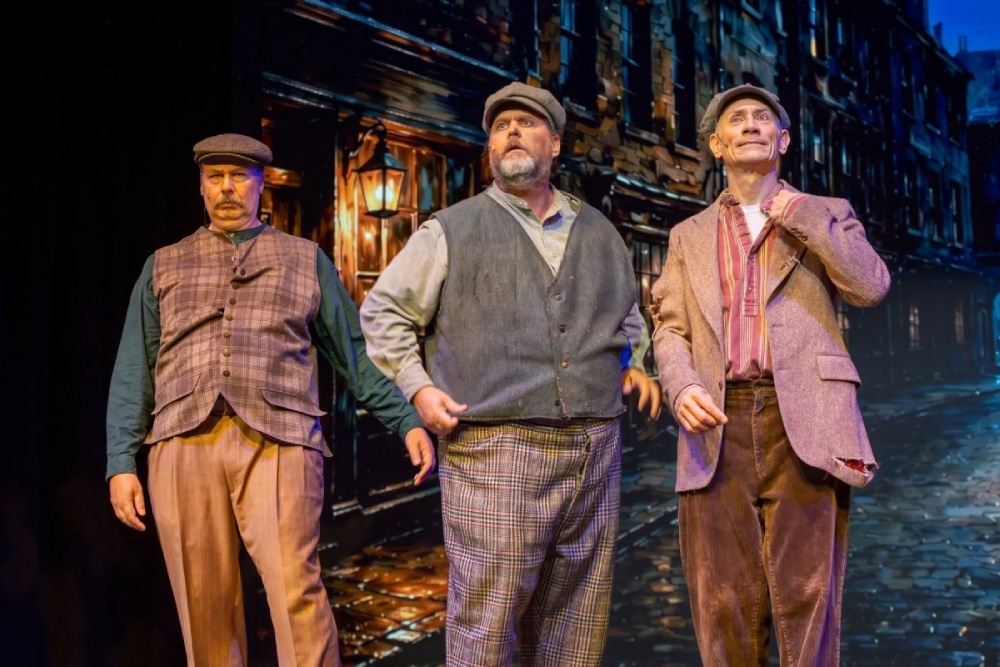
(from left) - Al Gorr, Brad Holloman and Tony Lopez in My Fair Lady.
Stepping back from the production itself, Overshadowed Theatre reveals a company with a purpose that complements the kind of storytelling seen on their stage. I was struck by how deeply rooted their mission is in creating a welcoming, family-friendly space where storytelling and community go hand in hand. Their history reflects a commitment to mentorship and faith-centered values, with an emphasis on giving young performers a place to grow while offering audiences productions that uplift rather than overwhelm. Overshadowed cultivates an environment built on encouragement, accessibility, and shared experience. The company resides within Jubilee Bible Church in Medinah, IL, and the theatre is fully ADA accessible, with vast and easy parking, spacious corridors, and plentiful concessions that make the audience experience comfortable from the moment you arrive.
Audiences can also look forward to a whimsical shift in tone as the company prepares to stage A Midsummer Night’s Dream, bringing Shakespeare’s mischievous magic, tangled romances, and fairy-filled forest to life. Following that, their upcoming season offers a wide range of titles: Flame of Fire (Sep 18–Oct 10, 2026), an original play written and directed by Artistic Director Reba Hervas. Based on the true 1956 story of Operation Auca, the production recounts the lives of missionaries Jim Elliot, Nate Saint, Pete Fleming, Ed McCully, and Roger Youderian, who were killed while attempting peaceful contact with the isolated Huaorani tribe in Ecuador. The play also explores the extraordinary aftermath, as their wives chose to return to the jungle to forgive the tribe and continue living among them. The season continues with It’s a Wonderful Life (Nov 27–Dec 19, 2026), James and the Giant Peach (Jan 22–Feb 6, 2027), The Stranger by Agatha Christie (Mar 12–20 and Apr 1–10, 2027), and Titanic the Musical (July 9–31, 2027). It’s an ambitious slate that blends classic storytelling, family favorites, and dramatic intrigue, promising a season with something for every kind of theatre-goer.
Overshadowed Theatre’s My Fair Lady emerges as a thoughtful production with a clear point of view, delivered with care both onstage and behind the scenes.
Recommended.
For more show information and tickets, visit https://www.overshadowed.org/.
A Legendary Transformation: John Mulaney’s Historic Night at Wrigley Field
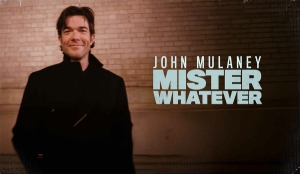
John Mulaney didn’t just perform at Wrigley Field. He made history there. In a venue synonymous with baseball legends, rock icons, and century-old Chicago lore, Mulaney became the first comedian ever to headline a full stand-up show at Wrigley Field, and, depending on which version of the truth you prefer, possibly the largest live audience for a comedian in history. Whether or not the record is airtight, the scale of the night was undeniable. Chicago turned out in force for one of its own.
A New Chapter: The Mister Whatever Tour
Mulaney’s Mister Whatever tour marks a tonal shift from the raw confessionals of Baby J. Where that show dissected his intervention, addiction, and the wreckage of his personal life, Mister Whatever leans into the absurdity of middle age, fatherhood, and domestic unpredictability. The storytelling remains fast, sharp, and unmistakably Mulaney, but now filtered through the lens of a man navigating toddlers, in-laws, and the strange mundanity of being a grown-up with a past.
Family Life and Fatherhood: Comedy in the Trenches
Mulaney’s material about family life is some of his richest yet, especially when he dives into the sprawling constellation of his new in-laws. Marrying into Olivia Munn’s Vietnamese-Chinese family gives him endless fodder, and he mines it with precision: overbearing relatives, cultural misunderstandings, and the kind of familial chaos that feels both universal and deeply specific. He even slips into a Vietnamese accent, a move he preemptively defends by insisting he has “earned the right” because they are his actual family now. It’s classic Mulaney: self-aware, slightly provocative, and delivered with a wink.
His bits about raising two toddlers are equally sharp. He compares dealing with a three-year-old to working in a toxic workplace, complete with unreasonable demands, emotional volatility, and a boss who has no concept of time. The late-night meltdowns, the negotiations over snacks, the existential exhaustion of parenting: he turns it all into a comedic autopsy of modern fatherhood.
And then there is the “wallet allowance,” a running gag about his post-rehab financial oversight. According to Mulaney, his wife and even bank cashiers treat him like a teenager with limited privileges. It’s a sly, self-deprecating way of acknowledging his past without dwelling in it.
Absurd Observations and Pop Culture: Mulaney’s Sweet Spot
Where Mulaney truly thrives is in the absurdity of everyday grievances, and his extended rant about modern $1,000 drying machines is a highlight of the night. He builds an entire comedic architecture around the decline of appliance quality: how dryers now seem designed to not dry clothes, how they beep like needy robots, how they offer dozens of settings but none that actually work. It’s the kind of bit only Mulaney can stretch into a full routine, turning a mundane annoyance into operatic frustration.
His pop culture and political impressions land just as hard. His RFK Jr. impression is a showstopper: wild, unhinged, and delivered with a kind of manic sincerity that had the stadium roaring. He skewers billionaires, public figures, and the bizarre circus of current events with the same blend of sharpness and silliness that has always defined his best work.
And then comes one of the night’s funniest detours. His bit about being possessed by Satan, specifically how Satan always does it the exact same way, with someone jolting upright in bed and unleashing a string of profanity, becomes one of the night’s sharpest and most ridiculous highlights. It’s pure Mulaney: theatrical, absurd, and delivered with the timing of a performer who knows exactly how long to let a joke breathe before landing it.
A Chicago Homecoming with Legendary Guests
What made the night feel truly monumental were the surprise guests, each adding their own flavor to the celebration.
Buddy Guy, Chicago blues royalty, took the stage and tore into a couple of songs, including a blistering rendition of “Sweet Home Chicago.” Seeing Buddy Guy at Wrigley Field would be a thrill on its own. Seeing him as part of a John Mulaney comedy show felt like a surreal Chicago fever dream.
Fred Armisen followed with a brilliantly odd set that blended music and comedy. Switching between guitar and drums, he delivered the kind of deadpan, musically infused humor that only Armisen can pull off. It was weird, delightful, and perfectly calibrated for a stadium crowd.
Richard Kind served as a sort of comedic emcee, popping in with jokes, introductions, and the warm, slightly bewildered charm that makes him such a beloved character actor. His presence added a theatrical looseness to the night.
And then, in a moment that felt like a benediction, David Letterman stepped out to introduce Mulaney. Letterman may be from Indiana, but in Chicago terms, that is close enough. His dry, understated introduction gave the night a sense of occasion, like a passing of the comedic torch from one generation to the next.
A Night That Felt Bigger Than Comedy
What made Mulaney’s Wrigley Field show remarkable wasn’t just the scale, or the guests, or the historic firsts. It was the sense of homecoming. Mulaney performed with the confidence of someone who knows the city in his bones: its rhythms, its humor, its contradictions. The stadium setting didn’t dilute his intimacy. It amplified it. His storytelling reached throughout the Friendly Confines without losing its specificity.
In a venue built for legends, Mulaney delivered a night worthy of the space.
Powerhouse Performances on Display in Gwydion's Dry Powder
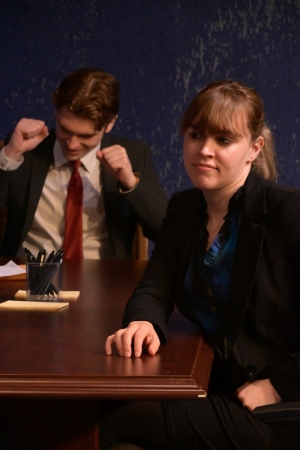
In the sharp-tongued world of Sarah Burgess’s Dry Powder, presented by Gwydion Theatre Company at the Greenhouse Theater Center, the pursuit of money is a blood sport. The play centers on a high-stakes private equity firm caught in a massive public relations nightmare after laying off thousands of grocery store workers the same week its co-founder threw a flashy engagement party featuring an elephant – but it was just one elephant!
All hope isn’t lost for their reputation, however. A potential way out comes thanks to a struggling, American-made luggage company that believes the firm can save them. Of course, as the firm weighs the acquisition, their definition of “help” may not align with the company’s. At the helm is Rick, the ultimate decision-maker, who has two distinct angels on his shoulders: Seth, the optimistic partner who brought the deal to the table, and Jenny, his cold-hard-cash counterpart. From Seth’s perspective, the deal is a perfect fit; they can rescue an American brand without layoffs and emerge as heroes. For Jenny, this luggage company is just baggage—unless it can be downsized, moved overseas, and engineered into something it once stood against.
Directed with precision by Ellie Thomson, Dry Powder completes Gwydion Theatre’s season, which has explored themes of class, money, and power, and how all three can entangle the soul. The production asks what happens to our humanity when everything is reduced to a column on a balance sheet.
The production thrives on the electric, friction-filled chemistry of its cast, anchored by a series of standout performances.
Carol Kelleher delivers a masterclass performance as Jenny. Playing the de facto villain of the piece, Kelleher crafts a remarkably complex and compelling performance that is utterly enjoyable to watch. She doesn’t just play the role; she completely becomes the character, infusing Jenny’s brutal, unrelenting perspective of greed with a sharp humor. Her performance ensures that even at Jenny’s most calculating, you cannot look away.
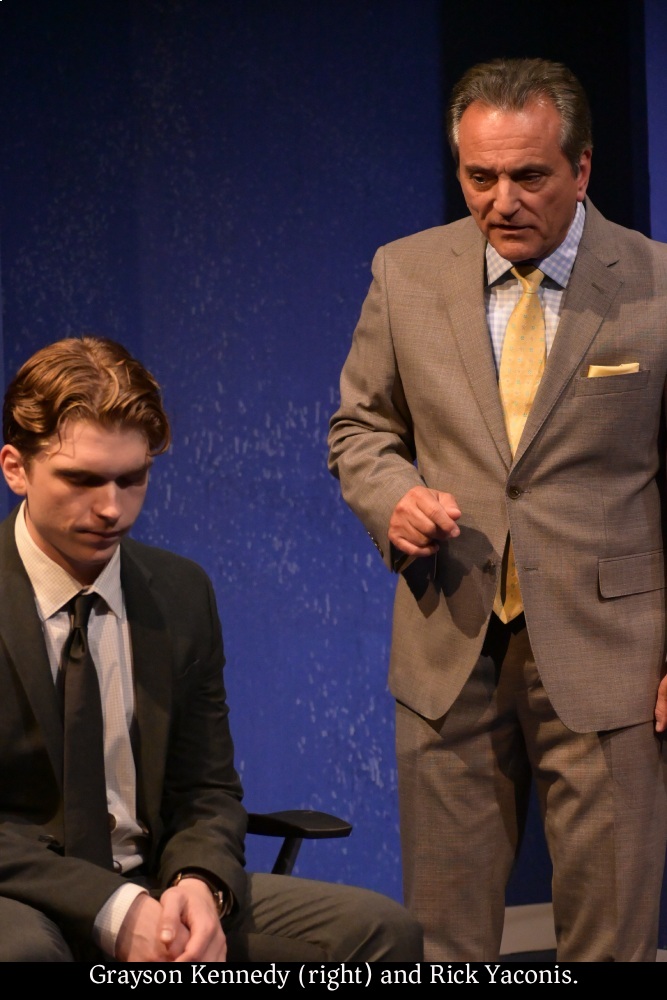
As the firm’s head, Rick Yaconis turns in a powerful performance, deftly striking the balance between a paternal mentor and a greasy titan. He shifts effortlessly between a ruthless opponent and a pat-you-on-the-back salesman.
Grayson Kennedy, a founding member of Gwydion Theatre, brings immense depth to Seth, the firm’s supposedly earnest, morally grounded partner. His clean-cut delivery fits the role perfectly.
Tommy Thams, co-founder of the theatre company, rounds out the dynamic as Jeff, the CEO of the targeted luggage company. Thams infuses Jeff with the relaxed, easygoing charm of an old buddy, making the audience root for the company’s success and feel genuinely betrayed by what unfolds in the final act.
Burgess’s script is complex, mining dark humor from the shifting dynamics and war of words between these characters.
Ultimately, Dry Powder leaves the audience reflecting inward. It might be easy to dismiss this play if we aren't personally in a position to dismantle - or attempt to save - a multimillion-dollar company, but the narrative transcends the boardroom. The play holds up a mirror and forces us to look closely at ourselves: Are we good or are we just being nice?
As Jenny pointedly notes, she never lies to the client. Her emotions, her greed, and her hawkish nature are never disguised. Seth, conversely, hides behind a comforting “nice guy” persona, genuinely believing he occupies the moral high ground. But in trying to appease both sides – a greedy firm and a company that needs help – is he actually better or just deceiving himself?
It’s these thought-provoking questions that make Gwydion Theatre’s production a gripping triumph that lingers long after the final blackout.
Dry Powder plays at the Greenhouse Theater until July 26. Tickets and show information here.
The Beautiful Overthinking of Gary Gulman’s 7th Hour
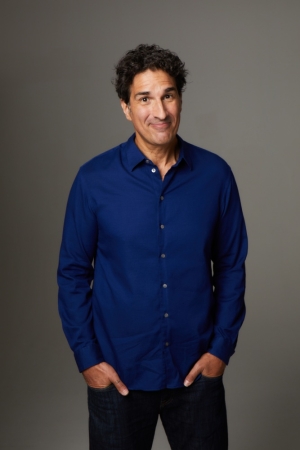
Gary Gulman brings his new tour, 7th Hour: An All New Standup Show, to The Den Theatre, offering Chicago audiences a chance to see a comic who has spent decades refining the long-form, slow-burn style that has become unmistakably his. His five sold-out shows over the weekend are being recorded for an upcoming comedy special, giving each performance an added spark as he works through material with both confidence and care. Gulman’s comedy has always lived in the space between sharp observation and gentle self-reflection, and this latest set continues that progression with a mix of wry honesty and carefully shaped storytelling. His stop at The Den feels less like a routine tour date and more like a chance to watch a veteran performer stretch into new territory while still delivering the precision that has made him one of stand-up’s most quietly dependable voices.
The evening opened with Evanston’s own Sam Froum, whose set proved to be a sharp and genuinely funny warm-up for the night. He brought an easy confidence and a quick, clever rhythm to the stage, landing jokes with the kind of timing that immediately pulls a room in. It was a strong showing, and a fitting lead-in to Gulman’s tightly built headlining act.
Across 7th Hour, Gulman moves through a wide constellation of personal history, weaving together stories that span his depression, his admiration for his father’s unwavering integrity despite the loss of friends it may have cost him, and the realities of growing up with a single mother while navigating the rough edges of two bullying older brothers. His Jewish upbringing becomes a recurring thread, most notably in an extended, delightfully overthought retelling of the story of Moses - a bit that shifts from biblical epic to neurotic character study in a way only he can pull off. From there, he wonders aloud why Jewish people didn’t simply “like” Jesus so that Christianity might have evolved into an upbeat, colorful, pastel-tinted sect of Judaism, only to immediately challenge his own premise with the kind of self-correcting logic that fuels his best material. That exploration leads him into Jesus’ Sermon on the Mount, where he zeroes in on “do unto others as you would have them do unto you,” a phrase he deeply takes to heart, breaking it down with methodical curiosity as he imagines Jesus trying it out in front of smaller crowds at "open mounts" before delivering it on the big stage. Along the way, he has fun with the apostles - especially John and “Doubting” Thomas - treating them less as distant religious figures and more as characters he can analyze, tease, and reinterpret through his own gently overthinking lens. He even slips in a detour to Christian Bale’s Batman, acting out a hilarious gravel‑voiced exchange with Gary Oldman’s Commissioner Gordon that fits seamlessly into his stream of overthought observations.
He also devotes time to the values and education he drew from PBS, especially the steady presence of Mr. Rogers, whom he references with undeniable affection. Gulman lights up when recalling – and briefly singing – the closing song, “It’s Such a Good Feeling,” along with the simple but radical reassurance Mr. Rogers offered at the end of each episode: “I like you just the way you are.” He treats that sentiment with an earnest respect that shows how deeply it shaped him, even as he wonders aloud how anyone can truly live as their full, unfiltered self outside of a very small circle of people. He folds in humorous family stories tied to pledge drives, broadening the emotional palette of 7th Hour and grounding the comedy in the cultural touchstones that helped him make sense of the world long before he ever stepped onstage.
Gulman’s humor is a distinct blend of long-form storytelling, analytical overthinking, gentle self-examination, and slow-burn observational detail. He builds jokes the way essayists build arguments - layering premises, revisiting ideas, correcting himself mid thought, and letting the comedy emerge from the precision of his logic as much as from the punchline. His style is warm, meticulous, literary, and deeply human, often turning small moments from childhood, religion, or pop culture into sprawling, carefully engineered comedic set pieces.
And in 7th Hour, he brings that entire toolkit with him - sharper, fuller, and more emotionally grounded than ever. The show feels like Gulman operating at the height of his powers, shaping personal history into comedy with a confidence that suggests he knows he’s building material worthy of an upcoming special. What stands out most is how fully he leans into that mastery; 7th Hour plays like a comic working with total clarity of purpose and delivering exactly the kind of work only he can create.
Gulman’s career has been shaped by a steady run of smart, carefully built specials that highlight his gift for long-form comedy. From Boyish Man and In This Economy? to the critically praised It’s About Time and The Great Depresh, he has assembled a body of work defined by warmth, clarity, and an almost literary sense of structure. His stand-up has also been a reliable presence on late-night television, with memorable sets on Conan, The Late Show with Stephen Colbert, Jimmy Kimmel Live, and The Tonight Show, each showcasing his ability to turn everyday frustrations and cultural quirks into slow-building, sharply observed stories. Together, these appearances have cemented him as one of the most consistent and quietly influential voices in contemporary stand-up.
If you get the chance to see Gulman live, take it. 7th Hour shows a comedian in full command of his craft, delivering work that is thoughtful, funny, and unmistakably his. It’s the kind of performance that reminds you why stand-up, at its best, feels both intimate and expansive at the same time.
Production of THE IMPORTANCE OF BEING EARNEST Does Not Fully Recognize Its Importance at Oak Park Festival
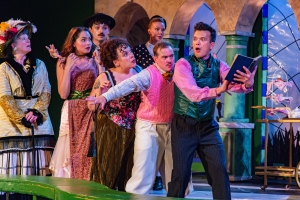
It is possible that Oak Park Festival Theatre’s production of Oscar Wilde’s 1895 “trivial comedy for serious people,” The Importance of Being Earnest, was suffering from some opening night jitters and that the actors will settle in and trust the verbal comedy in the script, but on this beautiful evening under the stars, there was too much mugging and nudging going on. Nevertheless, Wilde’s play, about two young men, Algernon (August Forman) and Jack (Chad Bay), who have both invented alibis - Algernon an invalid friend named Bunbury in the country and Jack a degenerate younger brother in town--to allow them to indulge their socially questionable whims, leading to the difficulty of having to explain why neither is Ernest, is still funny. And, despite the excesses on display, this staging still holds many delights for fans of Wilde, verbal comedy, and, particularly in the second act, some smartly choreographed slapstick. What is missing from much of the evening is earnestness. Many of the actors seemed to be in search of motivation and the stakes that propel them through this admittedly effervescent frolic.
Working with a talented cast of regional stage actors, director Kathryn Walsh has not created a secure world for her creative team to inhabit, resulting in an often funny but not dynamic production, with shrill delivery and broad physical comedy undermining human-scale relationships. The tone and gestures of the various characters range wildly, as do the design elements. The whimsical, vaguely Victorian costumes, while fun, support the cartoonish elements of the production, while not always clearly defining the characters. The lighting design by Devin Cameron is appropriately warm and effectively saturated but also deploys unnecessary flourishes to support the comedic business. The scenic design by Evan Frank likewise captures the locations of the play and allows the actors to find many levels - literally - as they shift allegiances and stratagems. Justin Cavazos’s sound design and compositions lend unobtrusive support, except for one hilariously developed cue that draws attention to itself in a good way. Overall, Walsh’s production would be better served by trusting the script and the audience, especially in the first act, when we are getting to know the characters and their desires. That said, both Walsh’s direction and her cast fully commit to the amorous and combative collisions at the beginning of the second act, which showcases the physical and verbal comedic gifts of all to uproarious effect.
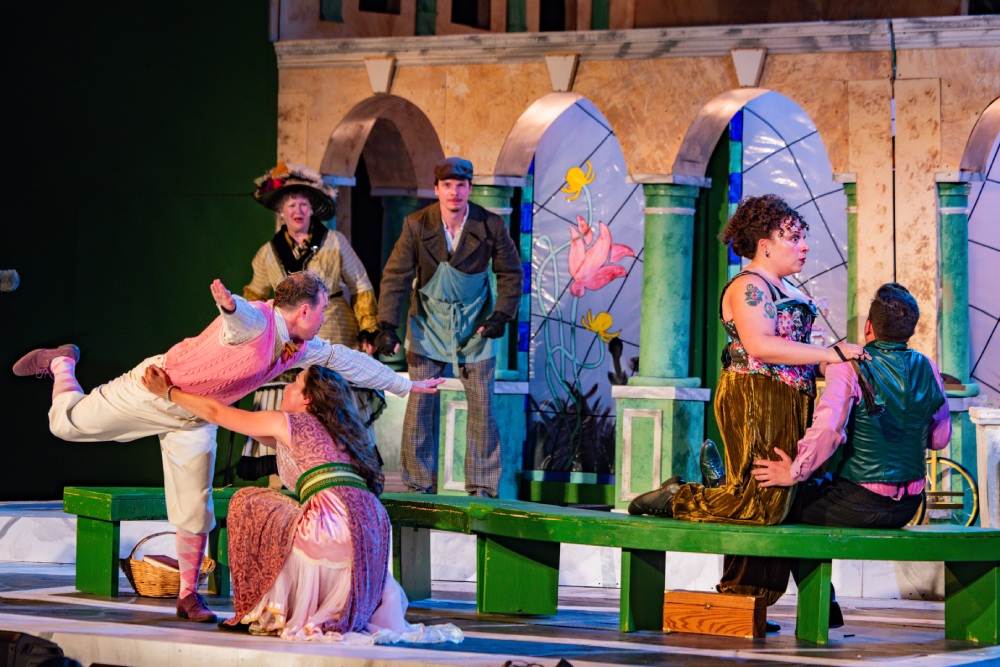
As part of the Oak Park Festival Theatre's 51st season (left to right) August Foreman, Barbara Zahora, Aurora Pennepacker, Drew Bos, Sonia Goldberg and Chad Bay in The Importance of Being Earnest at Austin Gardens.
One of the things that makes The Importance of Being Earnest work is the moral certitude that the characters bring to their pronouncements, no matter how absurd they are or whether their actions correspond to their words. This certitude also grounds the characters in their truths and forms the foundation of their interactions, but too often the actors are checking in with the audience to see if they got the joke (especially when many of Wilde’s observations still resonate) or negotiating with the lines. By the middle of the second act, the characters begin to define themselves, but much opportunity for connection is lost in the first. August Forman as Algernon flings himself into the role with wild abandon and invites the audience along for the ride. An adept comedian, Forman’s strategy often pays off but undermines Algernon’s insecurity as he balances his needs with society’s demands. All that aside, his Algernon’s compulsion for muffins is not to be missed. As his friend Ernest, who is actually Jack, Chad Bay does a good job of playing the less self-aware of the friends and playing up the character’s completely unjustified horror at Algernon’s embrace of Bunburyism. As Jack’s romantic interest, and Algernon’s cousin, Gwendolen, Sonia Goldberg at times overplays her character’s pretensions, some of which Gwendolen is still struggling to master, making Goldberg’s characterization overwhelmingly self-possessed at times. Conversely, Barbara Zahora lacks the imperiousness of many Lady Bracknells, giving the character an interesting warmth, but making her power solely transactional, which could be an interesting choice if it were played more fully. Aurora Pennepacker as Cecily strikes the most effective balance between the verbal and physical comedy, making the most of the opportunities to show Cecily’s willingness to exploit others’ assumptions about her character and her real understanding of her powerlessness without this ability. In Jodi Gage’s performance, Ms. Prism is a refreshingly insightful tutor to Cecily, while doggedly hanging onto youthful romanticism. Gabriel Armstrong is a very youthful Reverand Chasuble, celebrating his sudden relevance in parish life. Drew Bos may be the youngest actor to play the dual roles of Lane and Merriman in a professional production and wisely focuses on the class commentary afforded by the butlers of their respective households. His droll Lane gives Algernon food for thought in Act I, while his Merriman, already suffering from the physical strain of servitude despite his youth, effectively times his long-suffering pauses at each new demand (though Bos may need a visit to a chiropractor after the run). The experienced cast expertly and clearly delivers Wilde’s witticisms, which are always worth revisiting and occasionally resonate with the current social dynamics.
As the run continues, the production will most likely settle in and allow the script to propel the pacing and action more fully, especially in the more expository first act. There is much to appreciate in Oak Park Festival Theatre’s The Importance of Being Earnest, including a smart cast who find both the verbal and physical humor inherent to the play. Director Kathryn Walsh and her cast also explore fresh takes on the characters, some more successful than others, but always welcome. For those unfamiliar with Wilde’s play, this production is a solid introduction.
The Importance of Being Earnest runs in repertory with Hamlet, through August 14, outdoors in Austin Gardens in Oak Park, Illinois. Visit Season 51 | Oak Park Festival Theatre or call (708) 300-9396 for tickets and more information. Note: a number of the actors perform in both Earnest and Hamlet, and Oak Park Festival Theatre is offering discounted tickets for audiences who want to see both.
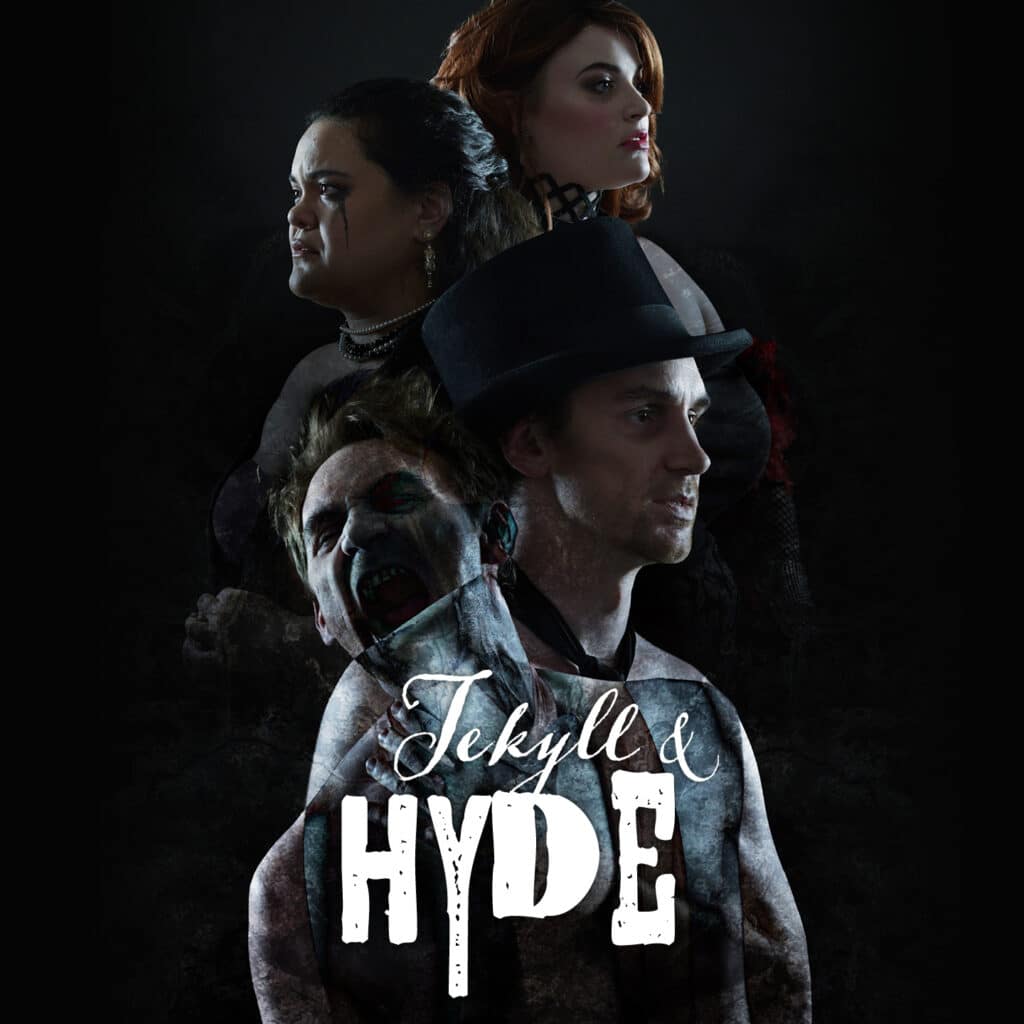



Latest Articles
-
 3Arts distributes $860,000 in unrestricted grants to Chicago artists at 3Arts Awards, surpassing $10M in lifetime funding
Written by Buzz Center Stage3Arts, the Chicago-based nonprofit grantmaking organization, awarded $860,000 to Chicago artists and announced the recipients of its 3Arts Next Level Awards—$50,000 unrestricted awards given to past 3Arts awardees—during a festive celebration held last night at the Harris Theater for Music…
3Arts distributes $860,000 in unrestricted grants to Chicago artists at 3Arts Awards, surpassing $10M in lifetime funding
Written by Buzz Center Stage3Arts, the Chicago-based nonprofit grantmaking organization, awarded $860,000 to Chicago artists and announced the recipients of its 3Arts Next Level Awards—$50,000 unrestricted awards given to past 3Arts awardees—during a festive celebration held last night at the Harris Theater for Music… -
Guarneri Hall announces two-day series REVOLUTIONS on the intersection between music, politics, and social change November 11-12, 2026
Written by Buzz Center StageThe nonprofit Guarneri Hall, a state-of-the-art, custom-built classical music venue in the heart of downtown Chicago at 11 E. Adams St., proudly announces Revolutions, a two-day music series exploring the intersections of political, social, technological, and musical change at two…
-
The Front Theatre announces casting for the North American Premiere of Sap February 25 - March 27, 2027
Written by Buzz Center StageThe Front Theatre announces casting for the North American premiere of Rafaella Marcus's highly acclaimed play Sap, directed by Charles Riffenburg. Sap is a timely and poetic thriller, in which a woman's lie to her girlfriend threatens to grow out of control when…
-
Hyde Park School of Dance presents annual performances of The Nutcracker December 11–13 at Mandel Hall
Written by Buzz Center StageHyde Park School of Dance, now in its 33rd year of training, performance, and community, welcomes families and dance enthusiasts to its annual, one-of-a-kind presentation of The Nutcracker. Performances are December 11–13 at Mandel Hall on the University of Chicago…


Does your theatre company want to connect with Buzz Center Stage or would you like to reach out and say "hello"? Message us through facebook or shoot us an email at This email address is being protected from spambots. You need JavaScript enabled to view it..
*This disclaimer informs readers that the views, thoughts, and opinions expressed in the text belong solely to the author, and not necessarily to Buzz Center Stage. Buzz Center Stage is a non-profit, volunteer-based platform that enables, and encourages, staff members to post their own honest thoughts on a particular production.